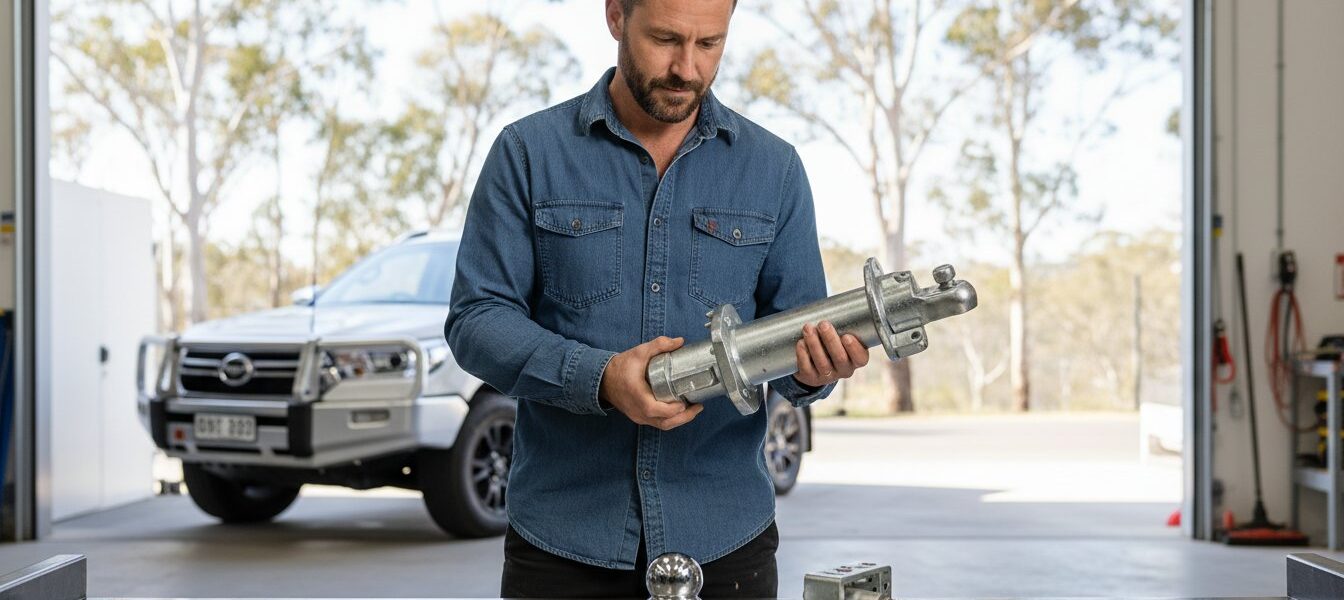
Your trailer coupling is the only mechanical link standing between a successful haul and a catastrophic highway failure. It is a high-stakes component where a simple mistake in selection leads to road-side breakdowns or voided insurance policies. Most towers feel the same uncertainty when faced with technical mounting specs and strict Australian safety standards. Understanding how to choose a trailer coupling involves more than just picking a part that fits. It requires a precise match for your trailer’s weight and braking configuration.
We understand the frustration of choosing between 2-hole and 4-hole mounting patterns while trying to remain ADR compliant. You shouldn’t have to guess if your hardware can handle the stress of Australian roads. This article provides the technical clarity you need to select a coupling based on specific load ratings, braking systems, and mandatory safety requirements. We will examine the differences between fixed, override, and off-road couplings to ensure your trailer remains safe and road-legal for every journey. By the end, you will know exactly which hardware fits your specific towing needs.
Key Takeaways
- Identify the Aggregate Trailer Mass (ATM) and braking configuration of your trailer to establish the necessary coupling strength.
- Understand how to choose a trailer coupling based on mounting geometry, ranging from standard 2-hole fixed units to 4-hole over-ride systems.
- Verify that all components carry the required markings for ADR 62/02 compliance to ensure your setup remains street-legal.
- Distinguish between on-road 50mm ball couplings and articulating poly block options for trailers intended for rough terrain.
- Implement a routine maintenance schedule involving regular lubrication and bolt inspections to prevent mechanical failure during transit.
Primary Factors for Selecting a Trailer Coupling
Selecting the right connection for your trailer is a matter of safety and legal compliance. You cannot simply pick a component because it looks sturdy or fits the budget. Learning how to choose a trailer coupling starts with a clear assessment of your trailer’s physical specifications and intended use. In Australia, the 50mm tow ball is the standard interface for most light and medium trailers. However, the internal mechanism of the coupling must align with your specific setup to prevent mechanical failure. You must evaluate weight, braking, and environment before making a purchase.
Understanding Aggregate Trailer Mass (ATM)
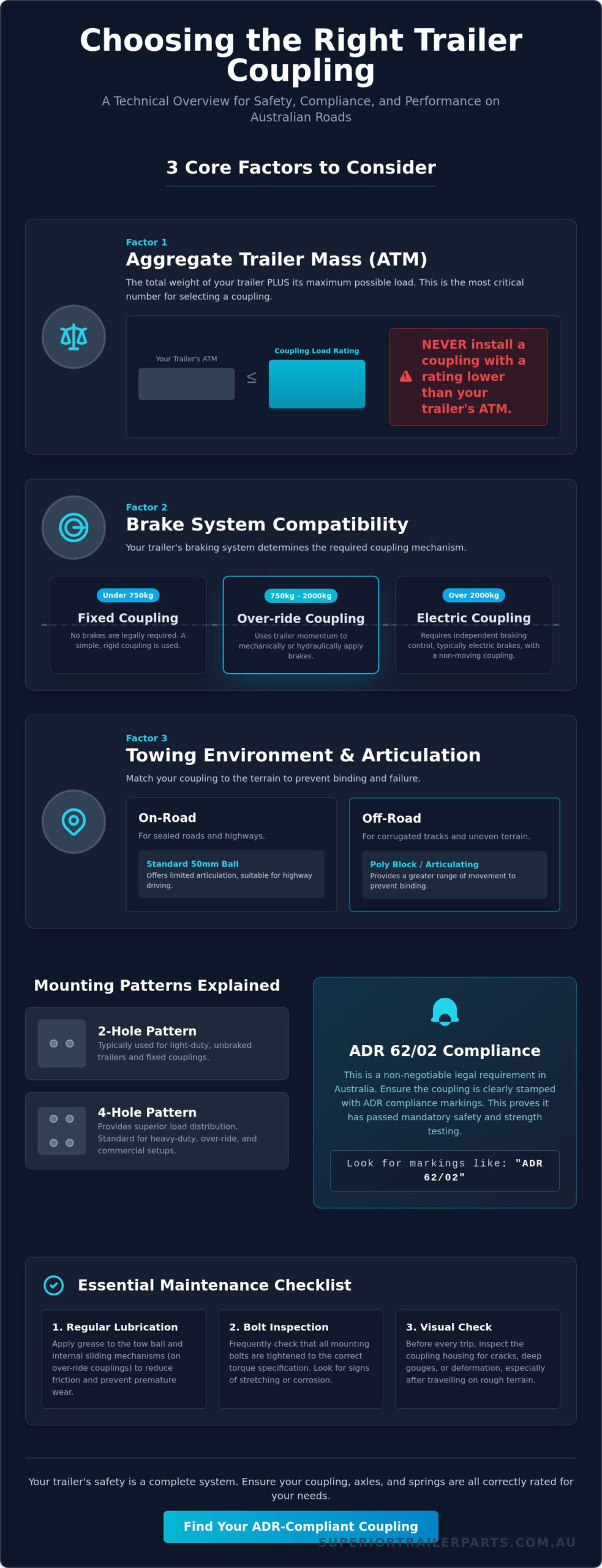
The Aggregate Trailer Mass (ATM) is the most critical figure in your selection process. This value represents the total weight of the trailer plus its maximum possible load. It’s different from the Gross Trailer Mass (GTM), which only measures the weight supported by the trailer axles. Check the manufacturer’s compliance plate to find this number. Most standard couplings and parts come with specific weight ratings, commonly 2000kg or 3500kg. Never install a coupling with a rating lower than your trailer’s ATM. Using an undersized component risks shearing the mounting bolts or snapping the housing under heavy braking loads. When researching how to choose a trailer coupling for a new build, always round up your weight estimates to ensure a margin of safety.
Brake System Compatibility
Your trailer’s braking system dictates the mechanical design of the coupling. For trailers with an ATM under 750kg, brakes are not legally required. These trailers typically use a fixed coupling that remains rigid during travel. If your trailer weighs between 750kg and 2000kg, you generally need an over-ride system. This setup uses the momentum of the trailer to compress a sliding shaft, which then activates mechanical or hydraulic trailer brakes and calipers. For trailers exceeding 2000kg, Australian law requires independent braking control, usually in the form of electric brakes. These require specialized electric couplings that don’t rely on physical movement to trigger the brakes. Understanding these trailer hitch types ensures you maintain control during emergency stops and stay compliant with road rules.
Environment and Articulation
Matching Weight Ratings to Trailer Type
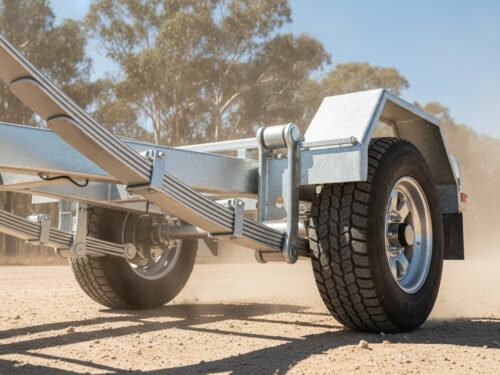
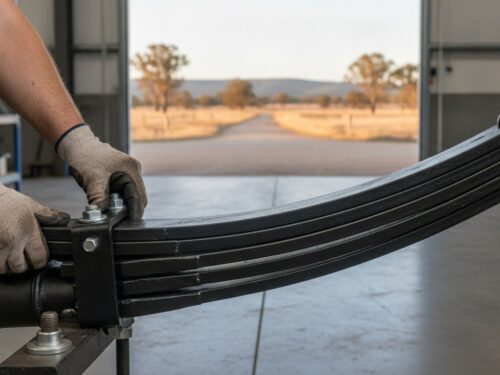
A trailer is only as strong as its weakest link. You cannot look at a coupling in isolation from the rest of the chassis. When researching how to choose a trailer coupling, you must ensure the rating aligns with your trailer axles and leaf springs. If your axles are rated for 2000kg but your coupling is only rated for 750kg, your trailer is legally and mechanically limited to that lower figure. Structural balance is the key to a safe tow and long-term durability.
Light-duty trailers, such as basic garden trailers, typically use a 2-hole fixed coupling. These are simple and reliable for unbraked loads. Once you move into medium-duty territory between 750kg and 2000kg, over-ride systems become mandatory. These setups use the trailer’s own weight to apply the brakes. For heavy-duty tandem trailers or large caravans, 3500kg electric or pintle couplings are the standard. Adhering to Australian towing regulations ensures your weight distribution remains within legal limits and prevents structural failure under load.
Ratings for Single Axle Box Trailers
Standard 6×4 or 7×4 single axle box trailers usually require 2000kg rated hitches. These trailers often feature 39mm round or 40mm square axles. It’s vital that the hitch capacity doesn’t exceed the axle’s structural limits. Always check the coupling body for ADR compliance marks. These stamps prove the hardware has passed rigorous stress testing for Australian roads. A mismatch here leads to premature wear on the tow ball and mounting bolts. If you’re replacing an old hitch, verify the existing bolt hole spacing before purchasing new hardware.
Ratings for Dual Axle and Tipper Trailers
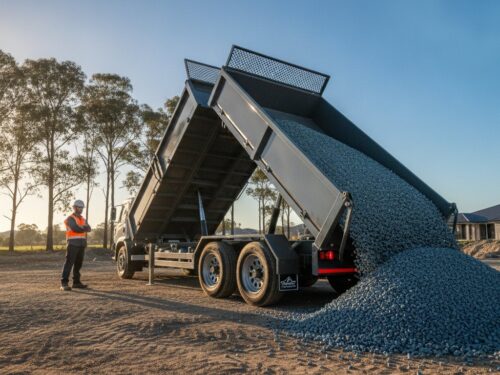
Tandem trailers and hydraulic tippers face unique stresses. These trailers frequently exceed 2000kg and require 4-hole over-ride or electric setups. The 4-hole pattern provides a larger footprint for load distribution across the drawbar, which is essential for heavy hauling. Hydraulic tippers are particularly demanding because the load weight shifts significantly during operation. Pairing these trailers with a 50mm square axle provides the necessary rigidity to handle heavy, shifting masses. If you are building a custom heavy-duty trailer, start by matching your suspension components to your coupling rating for a balanced build. This ensures the trailer tracks straight and handles predictably at highway speeds.
Comparing Mounting Patterns and Installation Styles
Physical fitment is just as critical as weight capacity. If the bolt holes don’t align, the coupling won’t distribute forces correctly across the drawbar. Learning how to choose a trailer coupling requires a precise measurement of your mounting plate’s geometry. Most Australian trailers follow standardized patterns, but variations exist across different age groups and trailer types. You must match the hole count and spacing to ensure a secure, rigid connection that meets safety standards.
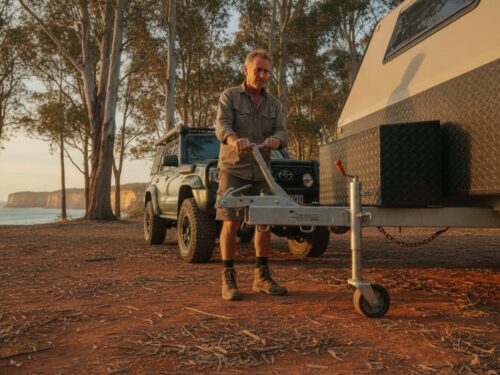
The 2-hole fixed coupling is the standard for unbraked light trailers. These are utilitarian and rely on two high-tensile bolts for mounting. They are common on small 6×4 box trailers where simplicity is preferred. For older Australian frames, you might encounter 3-hole couplings. These often appear on legacy over-ride setups. If you have this pattern, ensure the replacement housing matches the triangular spacing exactly. The industry standard for braked trailers up to 2000kg is the 4-hole over-ride coupling. This pattern provides a larger footprint for mounting, which is necessary to handle the mechanical stresses of over-ride braking systems.
Standard Bolt Hole Dimensions
Measure the distance between bolt centers before you purchase a replacement. Most Australian 4-hole couplings and parts use a standardized 184mm x 54mm pattern. Use a caliper or a precise steel rule to verify these dimensions. Hole diameters typically accommodate M12 or M16 bolts. Never reuse old mounting bolts when installing a new hitch. Always use new high-tensile hardware to prevent shearing under load. If your mounting plate is rusted or deformed, it must be repaired or replaced before the new coupling is bolted down.
Specialized Coupling Designs
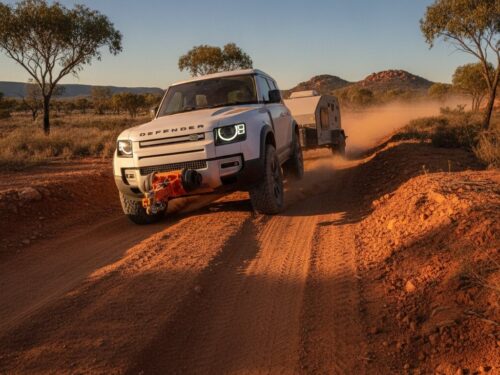
Off-road environments require more flexibility than a standard ball can provide. Poly block off-road couplings are designed for high articulation. These replace the traditional ball with a pin and block system, allowing the trailer to pivot at extreme angles without binding. This is essential for preventing vehicle roll-over on steep or uneven tracks. For heavy plant trailers and agricultural equipment, pintle rings are often used due to their sheer strength, though they offer a noisier ride. Quick-release latches are another specialized feature. These are ideal for operators who perform frequent hitching and unhitching throughout the day. Selecting the right style depends entirely on your specific operational needs and the terrain you intend to cover.
Compliance with Australian Design Rules (ADR)
Compliance is not optional. Every coupling used on Australian roads must meet the Vehicle Standard (Australian Design Rule 62/02 – Mechanical Connections Between Vehicles) 2007. This regulation has been mandatory for all vehicles since July 1, 2009. If you use a non-compliant hitch, you risk heavy fines and the total cancellation of your insurance policy in the event of an accident. Learning how to choose a trailer coupling requires more than checking the fit; you must verify the legal certification of the hardware.
Identifying Compliant Hardware
Start by inspecting the physical housing of the coupling. Genuine ADR-compliant hardware features a clear stamp including the manufacturer’s name or trademark and the maximum load rating. For 50mm ball couplings up to 3.5 tonnes, look for references to Australian Standard AS 4177.3. Avoid unbranded or generic imports that lack these markings. They often fail to meet the structural requirements of our harsh road conditions. For heavy-duty commercial setups, you should also look for the “D-Value.” This is a mathematical rating that accounts for the combined weight of the tow vehicle and the trailer. Ensure the coupling is specifically designed for the standard 50mm Australian tow ball to prevent a loose or dangerous fit.
Safety Chain and D-Shackle Requirements
The coupling is only half of the safety equation. You must also consider the safety chains and D-shackles. Australian law is specific about these connections. For trailers with an ATM up to 2,500kg, you need at least one safety chain. If your trailer falls between 2,501kg and 3,500kg, two chains are mandatory. These chains must be permanently attached to the trailer and should be short enough to prevent the drawbar from hitting the ground if the coupling fails. Ensure your D-shackles are load-rated. They must match or exceed the capacity of the safety chain. Using a standard hardware-store shackle on a 3.5-tonne trailer is a major safety violation.
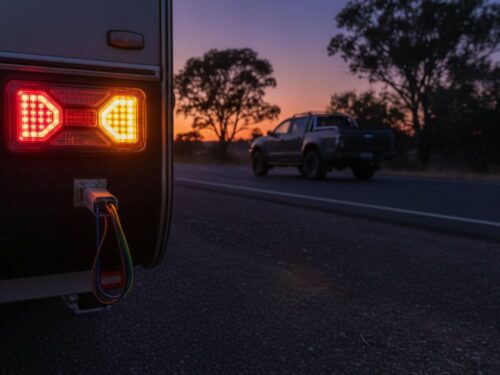
Electrical integration is the final step in a compliant setup. If you are using an electric coupling for a trailer over 2,000kg, your trailer plug wiring must be perfect. This connection ensures the in-car brake controller can communicate with the trailer’s electric magnets. Without a reliable electrical link, your trailer has no braking power. Check your plugs and sockets for signs of corrosion monthly to maintain a strong signal.
Ensure your trailer meets all legal safety standards by browsing our range of ADR-compliant couplings and parts today.
Maintenance and Troubleshooting for Trailer Hitches
Maintenance is the final stage of learning how to choose a trailer coupling. Even the highest quality ADR-compliant hardware fails without proper care. Grease the internal ball housing regularly to reduce friction. Metal-on-metal contact eventually thins the casting and weakens the connection. Inspect your mounting bolts every month. Look for surface rust or signs of shearing. These bolts are the primary structural link to your drawbar; they must remain in perfect condition. Replace any hardware that shows signs of stretching or thread damage.
If you use an over-ride system, test the dampener frequently. It should provide consistent resistance and shouldn’t bottom out during normal stops. A clunking sound when you accelerate or brake usually indicates a failed dampener or a loose mounting. Replace any coupling immediately if you find visible cracks or distorted bolt holes. Metal fatigue cannot be repaired; once the housing is compromised, it’s no longer safe for the road. Regular inspections prevent small issues from turning into highway failures.
Adjusting the Ball Fit
Most couplings include an adjustment screw to maintain a snug fit on the tow ball. Use this to take up any slack in the mechanism. A loose hitch causes constant rattling and increases the shock-load on the mounting bolts. This leads to premature wear of both the ball and the coupling. However, don’t over-tighten the screw. A fit that is too tight causes binding during tight turns, which can damage the tow bar or the vehicle’s chassis. The goal is a firm connection that still allows for smooth, unhindered rotation.
When to Replace Your Coupling
Excessive play in the handle mechanism is a clear sign of internal wear. If the handle doesn’t snap into place securely, the locking trigger may be failing. Look for heavy rust pitting that reduces the thickness of the metal housing. If the casting looks thin or flaky, its load rating is compromised. Always replace your coupling after a significant collision or a jackknife incident. Internal stresses from these events are often invisible but can lead to sudden failure under load. Browse our range of couplings and parts for high-quality replacements designed for Australian conditions.
Secure Your Load with the Right Hardware
Superior Trailer Parts is an Australian-owned and operated business. We provide durable components specifically designed to endure harsh local conditions and intense heat. We offer reliable nationwide shipping on all trailer parts to keep your equipment moving without delay. View our full range of ADR-compliant trailer couplings to find the exact fit for your specific towing needs. Take the guesswork out of your next build and ensure your trailer is ready for any road.
Frequently Asked Questions
What is the difference between an over-ride and a fixed coupling?
A fixed coupling is a rigid connection used on unbraked trailers with an ATM under 750kg. An over-ride coupling features a sliding shaft that compresses when the tow vehicle slows down, which mechanically or hydraulically activates the trailer’s brakes. This design is required for most trailers between 750kg and 2000kg. Using the correct type is essential for both legal compliance and stopping performance.
Can I use a 2000kg rated coupling on a 3500kg trailer?
You cannot use a 2000kg rated coupling on a 3500kg trailer under any circumstances. Doing so is a major safety violation and will likely void your insurance policy. The coupling rating must always meet or exceed the Aggregate Trailer Mass (ATM) stated on the trailer’s compliance plate. If you’re unsure how to choose a trailer coupling for a heavy-duty build, always select the higher-rated option to maintain a safety margin.
How do I know if my coupling is ADR compliant?
ADR compliance is verified by inspecting the stamps on the coupling housing. Every unit sold for Australian roads must feature the manufacturer’s name, the maximum load rating, and the ball size, which is typically 50mm. These markings prove the hardware meets ADR 62/02 standards. If the housing is unbranded or lacks these technical details, it is likely non-compliant and should not be used on public roads.
What mounting bolt pattern is standard for Australian trailers?
The industry standard for 4-hole over-ride couplings in Australia is a 184mm x 54mm mounting pattern. For 2-hole fixed couplings, the holes are generally centered on the drawbar with standard longitudinal spacing. Always use a caliper to measure your existing mounting plate before purchasing a replacement. This ensures the bolts align perfectly without the need for dangerous modifications to the trailer’s drawbar.
Do I need a special coupling for off-road towing?
Standard 50mm ball couplings are designed for on-road use and offer limited articulation. If you plan to tow on uneven terrain or steep tracks, you need a specialized off-road coupling like a poly block or articulating hitch. These designs allow for a 360-degree rotation and extreme vertical angles. This prevents the hitch from binding or snapping when the vehicle and trailer are at different orientations on rough ground.
How often should I grease my trailer coupling?
Apply a high-quality multi-purpose grease to the internal ball housing every month or before any long-distance journey. This reduces friction between the tow ball and the coupling casting, which prevents the metal from thinning over time. Regular lubrication also ensures the locking mechanism operates smoothly. This makes it much easier to hitch and unhitch your trailer while preventing the handle from seizing.
Can I convert a fixed coupling trailer to an over-ride system?
You can convert a fixed coupling to an over-ride system, but it requires significant modifications to the trailer’s braking setup. You will need to install a 4-hole mounting plate on the drawbar and fit either mechanical drum or hydraulic disc brakes. This upgrade is common when increasing a trailer’s load capacity. The final build must still comply with ADR 62/02 requirements for its new weight class.
What causes a trailer coupling to rattle while towing?
Rattling is usually caused by a loose adjustment screw or a worn tow ball. If the internal tongue isn’t pressing firmly against the ball, the coupling will bounce during transit. Use the adjustment bolt on top of the housing to tighten the fit. If the rattle persists after adjustment, inspect the tow ball for wear. It may have dropped below the standard 50mm diameter and require immediate replacement.