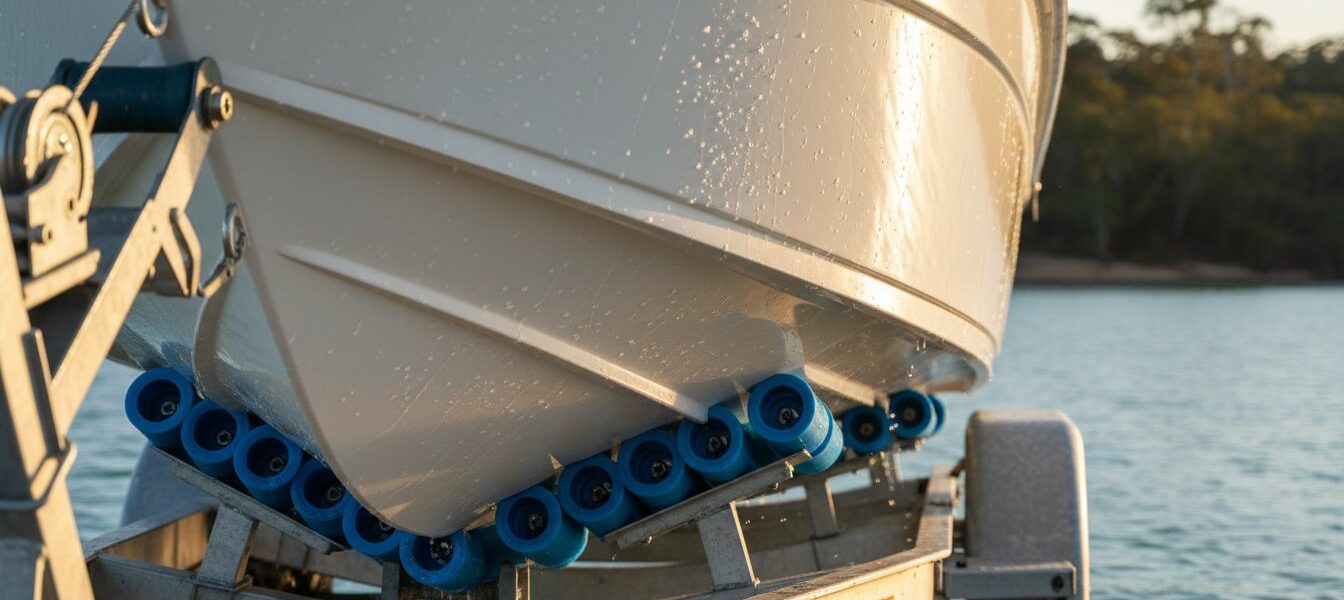
The wrong keel roller material will damage your hull faster than a submerged rock. Your trailer relies on these components to support the heaviest part of the boat and facilitate a straight, effortless retrieval. Selecting the right boat trailer keel rollers australia is about more than just finding a part that fits. It’s about matching material density to your hull type to prevent permanent gouging or gelcoat damage.
You likely understand that salt and UV rays are the primary enemies of trailer hardware. It’s frustrating when rollers crack or stop spinning after only a few seasons. This article provides the technical knowledge needed to choose rollers that withstand harsh coastal conditions. You’ll learn how to identify the correct bore size and material for your specific boat. We’ll cover the performance differences between polyurethane, nylon, and rubber so you can ensure your boat stays centered and protected every time you hit the ramp.
Key Takeaways
- Identify why keel rollers must support the majority of your boat’s weight to prevent hull stress and structural damage.
- Select the right material for your hull type when sourcing boat trailer keel rollers australia to avoid gelcoat marking or metal abrasion.
- Accurate measurements of bore sizes and roller lengths are essential for a stable and centered loading process.
- Proper maintenance in saltwater environments involves regular freshwater rinsing rather than using dirt-attracting lubricants.
- High-quality rollers and galvanised hardware ensure long-term durability against UV exposure and coastal corrosion.
Understanding Boat Trailer Keel Rollers and Their Function
Keel rollers are the structural foundation of any reliable trailer setup. They sit along the center of the trailer frame to support the boat’s keel, which is the strongest part of the vessel. Without functional boat trailer keel rollers australia, the combined weight of the motor, hull, and fuel tanks can place immense stress on the boat’s structure during transit. This leads to structural fatigue that is often expensive to repair.
Understanding boat trailer basics is critical for safe towing and efficient launching. While some trailers use longitudinal bunks, roller-style trailers are the standard in Australia for their performance in tidal waters and shallow ramps. It’s important to distinguish between different roller types. Keel rollers are heavy-duty spools designed to take the vertical load. In contrast, wobble rollers are smaller, adjustable wheels that cradle the sides of the hull. Wobble rollers keep the boat upright and centered, but they don’t support the main weight of the craft. Relying on side rollers for weight support often leads to hull dimpling or gelcoat cracking over time.
The Role of Keel Rollers in Load Distribution
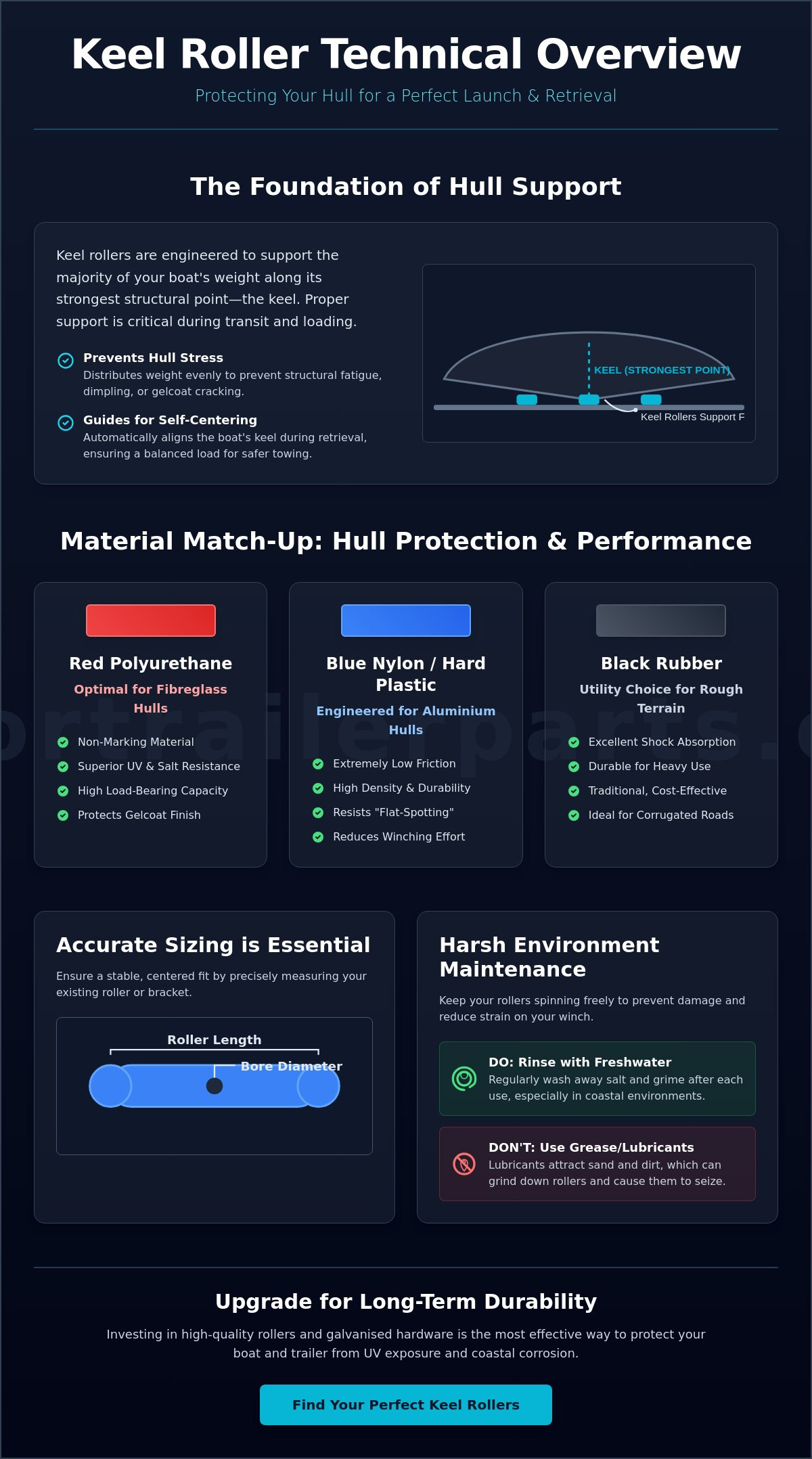
The keel acts as the spine of your boat. It’s engineered to handle significant pressure, making it the ideal contact point for the trailer. Keel rollers align with this spine to distribute weight evenly across the trailer frame. During long-distance hauls on corrugated roads, the boat experiences constant vertical movement. High-quality rollers absorb these shocks and prevent the hull from deforming under its own weight. They also act as a self-centering guide. As you winch the boat in, the rollers catch the keel and force it toward the center. This ensures the boat sits balanced for the drive home, maintaining even pressure on your axles and leaf springs.
Why Quality Rollers Matter for Your Boat Hull
Friction is the primary enemy of a smooth launch. When a roller seizes due to saltwater corrosion or develops flat spots, it stops turning. This forces the winch to pull the boat over a stationary object, which increases cable tension and puts unnecessary strain on your manual boat winches. Investing in performance-grade boat trailer keel rollers australia reduces this resistance. It protects the gelcoat from abrasive damage and prevents the black streaks often left by degraded rubber. Choosing the right material ensures the rollers spin freely under load, making retrieval faster and safer for everyone at the boat ramp.
Choosing Between Poly, Nylon, and Rubber Rollers
Selecting a roller based on color alone is a common mistake. The material composition of your hardware determines how it interacts with your hull’s surface and how long it survives the Australian climate. When sourcing boat trailer keel rollers australia, you must match the roller’s density to your boat’s construction. Using the wrong material leads to gelcoat staining, hull gouging, or rollers that split under pressure. Each material offers distinct physical properties suited for specific marine applications.
Red Polyurethane Rollers for Fibreglass Hulls
Fibreglass boats require a softer touch to protect their gelcoat finish. Polyurethane, typically identified by its red or orange color, is the premium choice for these vessels. It’s a non-marking material, so it won’t leave the stubborn black streaks often caused by traditional rubber. Polyurethane is significantly more resilient than rubber when exposed to high UV levels. It maintains its structural integrity without cracking or perishing in the sun. It also offers a higher load-bearing capacity, ensuring it doesn’t deform under the weight of heavy offshore cruisers. If you want to maintain your boat’s resale value, using poly rollers is a practical investment in hull preservation.
Hard Plastic and Nylon Rollers for Aluminium Boats
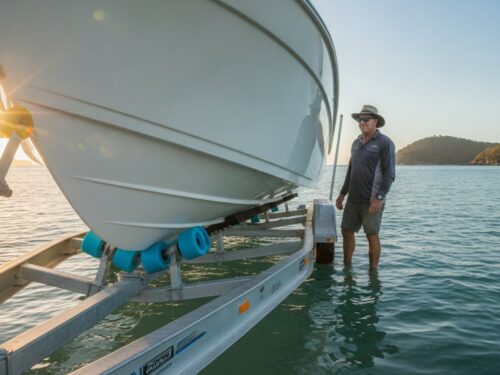
Aluminium hulls are rugged but can be difficult to slide off a trailer due to surface friction. Hard polyethylene or blue nylon rollers are the standard for aluminium boats. These materials are incredibly dense and don’t compress under static loads. This prevents the “flat-spotting” that makes launching difficult after the boat has sat in storage for months. Because these rollers are harder than the hull’s surface, they provide a low-friction pathway during the winching process. This reduces the physical effort required at the ramp. You can find these high-density keel rollers and other essential hardware to streamline your retrieval process.
The Utility of Heavy-Duty Rubber Rollers
Black rubber rollers are the traditional utility option. They are valued primarily for their shock-absorption qualities. If you frequently tow your boat over corrugated inland roads or uneven terrain, rubber helps dampen the vibrations transferred from the trailer frame to the hull. This can prevent stress fractures in lighter boat designs. However, rubber has limitations. It’s prone to marking fibreglass and tends to break down faster in saltwater environments. Use rubber for light-duty “tinnies” or utility trailers where cost is a factor and the boat is stored under a cover to minimize UV exposure.
- Polyurethane: Best for fibreglass; non-marking; high UV resistance.
- Nylon/HDPE: Best for aluminium; low friction; prevents flat-spots.
- Rubber: Best for shock absorption; cost-effective; requires more frequent replacement.
Sizing and Technical Specifications for Australian Trailers
Precision is non-negotiable when replacing trailer hardware. A roller that is “close enough” in size will eventually fail, leading to uneven wear or a seized spindle. When sourcing boat trailer keel rollers australia, you must match the physical dimensions of your existing brackets and spindles exactly. Technical accuracy ensures the roller functions as a bearing rather than a friction point. If the roller is too narrow for the bracket, it will slide side-to-side, potentially allowing the keel to strike the metal frame. If it is too wide, it simply won’t fit.
Standard lengths for these components typically include 4-inch (approx. 100mm), 6-inch (approx. 150mm), and 8-inch (approx. 200mm) variations. Larger offshore vessels often require 10-inch or 12-inch rollers to provide a wider target during retrieval. You must also consider the outer diameter. A larger diameter roller provides more clearance between the boat’s keel and the trailer’s cross-members. This is vital for deep-V hulls that sit lower in the trailer frame. Check your frame clearance before upgrading to a different roller style to ensure the hull doesn’t bottom out on the metalwork.
Measuring Keel Roller Length and Bore Diameter
To find the correct length, measure the internal distance between the two “ears” of your roller bracket. Your new roller should be slightly shorter than this gap, usually by 2mm to 4mm, to allow for heat expansion and free rotation. Next, measure the bore size. This is the internal diameter (ID) of the hole where the spindle passes through. Use a digital caliper for this task. Measuring the old roller is helpful, but measuring the spindle itself is more accurate. If the bore is too large, the roller will wobble and wear unevenly. If it is too small, it won’t slide onto the pin.
Identifying Common Bore Sizes: 14mm vs 17mm ID
Spindle compatibility is the most frequent cause of installation errors. While some older or light-duty utility trailers utilize 14mm pins, modern standards for boat trailer keel rollers australia have shifted. The most common bore sizes found on Australian boat trailers today are 16mm, 17mm, 20mm, and 22mm. Most heavy-duty keel rollers are designed for 16mm or 17mm spindles. Using a 17mm bore roller on a 14mm pin creates excessive play. This causes the roller to vibrate during transit, which eventually ovalizes the bore and ruins the component. Always match your spindle material to the environment; use galvanised pins for general use or stainless steel for maximum corrosion resistance in high-salinity areas.
Installation and Maintenance for Marine Environments
Effective installation turns a simple plastic part into a high-performance bearing. When fitting boat trailer keel rollers australia, the goal is to create a frictionless pivot point that carries the boat’s weight without binding. If the spindle is too tight, the roller won’t spin. If it’s too loose, the roller will tilt and gouge the bracket. Align the rollers so they contact the keel simultaneously. This prevents point loading where a single roller bears the entire weight of the vessel, leading to rapid material failure.
Proper alignment also ensures the boat centers itself as it moves up the trailer. If your rollers are offset, the boat will pull to one side, making retrieval difficult in wind or current. Test the rotation of each roller by hand before you head to the ramp. It should spin freely with no resistance or grinding sounds. If you notice any friction, check for a bent spindle or a bracket that has been crushed inward during a previous trip.
Mounting Brackets and Spindle Selection
Choosing the right bracket is just as important as the roller itself. Flat brackets are standard for single rollers, while tandem or rocker brackets allow two rollers to pivot together. This is useful for navigating the curve of the bow during retrieval. Always use galvanised U-bolts and hardware to secure these components to your trailer frame. Saltwater will quickly corrode untreated steel, causing brackets to shift or snap under load. Secure your spindles with stainless steel split pins or nyloc nuts. This ensures the hardware remains tight despite the constant vibrations of highway travel.
Maintenance Tips to Prevent Roller Seizing
Saltwater is the primary cause of seized rollers. After every launch, perform a thorough freshwater washdown of the entire roller assembly. Focus on the gap between the roller bore and the spindle. While it might seem intuitive to apply grease, avoid using it on the roller surface. Substances like grease, lanolin, or Vaseline attract sand and road grit. This creates an abrasive paste that grinds down the roller’s internal bore and prevents it from spinning. Clean, dry surfaces are often more reliable in sandy Australian coastal environments.
Inspect your rollers every three months for signs of trouble. Look for deep grooves, flat spots, or internal cracking. If a roller feels crunchy when you spin it by hand, the spindle is likely corroded or the bore is filled with debris. Replace any damaged components immediately to avoid scratching your hull. You can browse a full range of high-performance keel rollers and mounting hardware to keep your trailer in peak condition. Regular replacement is a practical way to prevent expensive repairs to a damaged fibreglass keel.
Selecting Superior Keel Rollers for Your Setup
Reliable trailer hardware must withstand the extremes of the Australian climate. From high UV exposure in the north to the high-salinity coastal regions, your components face constant environmental stress. Selecting premium boat trailer keel rollers australia ensures your setup remains functional for years. We provide hardware engineered for durability and ease of use. This focus on quality prevents mechanical failures that can ruin a weekend on the water. High-performance rollers reduce the drag on your trailer, which also helps lower the strain on your vehicle’s transmission during the retrieval process.
Finding the right part shouldn’t be a guessing game. Professional support is available to help you navigate technical sizing and material compatibility. If you aren’t sure whether a 17mm or 20mm bore is required for your specific spindles, it’s best to ask an expert before ordering. Getting the specifications right the first time saves you from the frustration of a half-finished repair at the driveway. We prioritize clear communication and technical accuracy to ensure every customer gets the exact hardware their trailer requires for safe operation.
High-Performance Components for National Delivery
Replacing old rollers is often easier when you swap the entire bracket assembly. This ensures all components, including the spindle and split pins, are fresh and corrosion-free. You can explore our full range of boat trailer parts to find specific poly and nylon options for your hull. We offer national delivery to ensure boaters across the country have access to professional-grade hardware. Whether you need a single 4-inch spool or a complete set of tandem rollers, we supply the parts needed to maintain a safe and efficient trailer. Our inventory is managed to provide quick turnarounds for those who need immediate solutions to mechanical problems.
Matching Rollers to Winch and Bow Systems
Your keel rollers are part of a larger mechanical system. They must align perfectly with your bow stop and manual boat winches. If the rollers sit too high or too low, the boat won’t meet the bow V-block correctly. This creates instability during transport and can lead to the boat shifting on the road. Use this final checklist before your next trip to ensure everything is secure:
- Check that all rollers spin freely by hand without grinding.
- Verify that the keel makes contact with every roller in the sequence.
- Ensure all galvanised U-bolts and bracket fasteners are tight.
- Confirm that the winch cable pulls the boat straight over the roller centers.
- Inspect the rollers for flat spots that could hinder a smooth launch.
Upgrade Your Trailer for Reliable Performance
Maintaining your trailer is a practical requirement for any boat owner who values their vessel’s longevity. By matching your roller material to your hull type and ensuring technical alignment, you prevent structural fatigue and expensive gelcoat damage. Selecting the correct boat trailer keel rollers australia is the most effective way to streamline your time at the boat ramp. We’re an Australian owned and operated specialist committed to providing marine-grade components that withstand our harsh coastal conditions. Our team understands the importance of resilience and provides nationwide shipping to get your hardware delivered quickly.
Don’t let seized hardware or incorrect fittings compromise your boat’s safety during transit. Invest in high-performance hardware that facilitates smooth, centered loading every time you retrieve your craft. This ensures your trailer functions as a reliable system rather than a source of frustration. Shop our range of heavy-duty boat trailer rollers to secure the specialized components your trailer needs. Safe towing starts with the right hardware. Get your boat ready for the water with total confidence in your equipment.
Common Questions About Boat Trailer Rollers
What is the best material for boat trailer keel rollers?
Material selection depends on your boat’s hull composition. Hard blue nylon or high-density polyethylene rollers are the standard for aluminium boats because they offer low friction and resist flat-spotting. Red polyurethane is the preferred choice for fibreglass hulls due to its non-marking properties and UV resilience. Choosing the correct boat trailer keel rollers australia based on these technical requirements prevents hull damage and ensures long-term performance in coastal conditions.
How do I know what size keel roller I need for my trailer?
You must measure the internal width of your mounting bracket and the diameter of your spindle pin. Standard Australian rollers are typically 4, 6, or 8 inches long. Use a digital caliper to confirm your spindle’s outside diameter, as this determines the required bore size for the roller. A proper fit prevents the roller from sliding excessively or vibrating during transit, which protects both the hardware and your boat’s keel.
Can I use rubber rollers on a fibreglass boat?
Avoid using black rubber rollers on fibreglass hulls because they often leave permanent black streaks on the gelcoat. Rubber also perishes faster when exposed to high UV levels and saltwater. While rubber provides good shock absorption for utility trailers, polyurethane is a far better investment for fibreglass. It maintains its shape under heavy loads and provides a non-marking surface that keeps your hull looking clean and professional.
Why do my boat trailer rollers keep seizing?
Rollers typically seize due to internal corrosion on the spindle or the accumulation of salt and road grit. Saltwater evaporates and leaves behind crystals that lock the roller to the pin. If you use grease, it can actually make the problem worse by trapping abrasive sand inside the bore. Regular freshwater washdowns are the most effective way to prevent seizing and ensure your boat trailer keel rollers australia continue to spin freely.
What is the difference between a 14mm and 17mm bore roller?
The difference lies in the diameter of the spindle pin the roller is designed to fit. A 17mm bore is the modern standard for most heavy-duty Australian boat trailers. 14mm bores are generally found on older trailers or light-duty utility setups. Using a 17mm roller on a 14mm pin creates excessive play, leading to vibration and premature wear. Always match the bore size to your spindle for a secure fit.
How often should I replace my boat trailer keel rollers?
Replace your rollers as soon as you identify signs of structural failure like deep cracking, flat spots, or a seized internal bore. Most rollers last several seasons with proper care, but you should inspect them every three months. If the roller no longer spins freely or has worn down to the point where the keel sits too close to the trailer frame, it’s time for a replacement to avoid hull damage.
Do I need to grease my boat trailer rollers?
Don’t apply grease to the internal bore of your rollers. Grease acts as a magnet for sand and grit, creating an abrasive compound that grinds away at both the roller and the spindle. This eventually causes the roller to fail or seize entirely. Keep the contact surfaces clean and dry. Regular freshwater rinsing after every launch is the best maintenance protocol for ensuring smooth operation in marine environments.
Are poly rollers worth the extra cost over rubber?
Polyurethane rollers are a superior investment for most boaters because they offer significantly better UV resistance and longevity. They don’t perish or crack like rubber and are specifically engineered to be non-marking. While the initial cost is higher, you’ll replace them less frequently. They also maintain their shape under the heavy static loads of offshore boats, making them more reliable for long-distance towing across Australia.