Did you know that 24% of heavy vehicles inspected in New South Wales carry some form of brake fault? This statistic from Transport for NSW highlights a major risk for every driver on the road. Understanding the legal requirements for trailer brakes in australia isn’t just about avoiding a heavy fine. It’s about ensuring your equipment performs under pressure. You might feel overwhelmed by confusing weight terminology like GTM and ATM. It’s common to worry that the wrong hardware choice could lead to an insurance rejection or a dangerous roadside failure.
We provide a definitive breakdown of Australian trailer braking laws and the specific weight thresholds you must follow. You’ll learn exactly when to install 10 inch electric drum brakes or when a mechanical over-ride system is sufficient. This analysis covers the mandatory rules for trailers over 2,000kg, including breakaway systems and driver-operable hardware. Use this technical overview to select compliant components and build a roadworthy trailer that meets all national standards.
Key Takeaways
- Differentiate between GTM and ATM to accurately calculate your trailer’s weight tier and specific braking needs.
- Navigate the legal requirements for trailer brakes in australia to ensure your hardware meets mandatory ADR standards and VSB1 guidelines.
- Select the correct braking system, such as 10 inch electric drum brakes or hydraulic kits, based on your specific Gross Trailer Mass.
- Verify that trailers over 2,000kg utilize a compliant breakaway system with a battery capable of holding for at least 15 minutes.
- Implement proactive maintenance protocols for cable tensioning and friction material inspections to maintain long-term operational safety.
Weight Thresholds and Legal Braking Categories
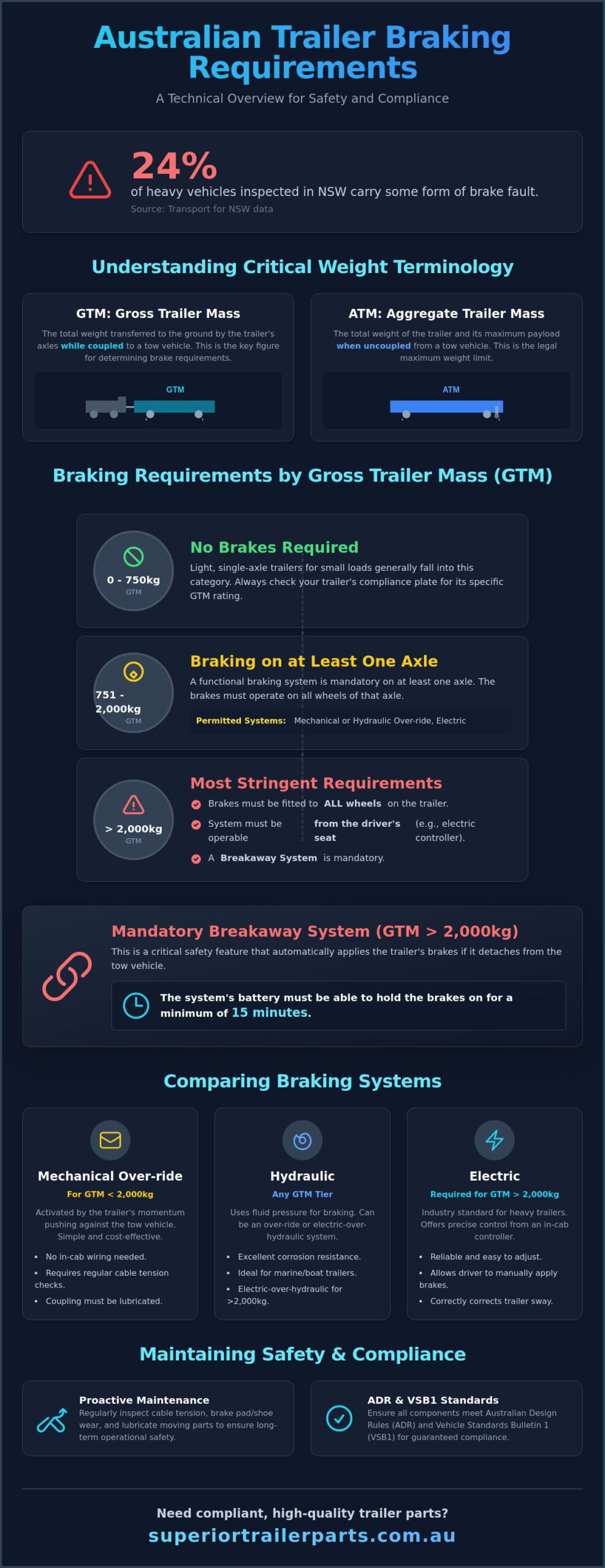
Compliance starts with understanding how the law views weight. Two primary metrics define your legal standing: Aggregate Trailer Mass (ATM) and Gross Trailer Mass (GTM). ATM refers to the total weight of the trailer plus its maximum payload when it is not coupled to a vehicle. GTM is the weight transmitted to the ground by the trailer wheels when it is hitched. For most trailer types used in Australia, the GTM is the critical figure used to determine which braking tier applies. These measurements are not suggestions; they are firm legal boundaries.
The legal requirements for trailer brakes in australia follow a strict weight-based hierarchy. Trailers with a GTM of up to 750kg are generally exempt from braking requirements. These are typically light, single-axle units used for local transport. Once you exceed 750kg, the law changes. Any trailer between 751kg and 2,000kg GTM must have a functional braking system on at least one axle. Over-ride brakes are permitted in this category. However, trailers exceeding 2,000kg GTM face the most stringent rules. These units require brakes on all wheels. They must also feature a breakaway system that activates automatically if the trailer detaches. This system must keep the brakes applied for at least 15 minutes to meet safety standards.
Calculating Your Trailer Weight for Compliance
Locate your trailer’s compliance plate to find its rated capacity. This plate lists the ATM, which acts as your legal ceiling. Your actual payload is the difference between the tare weight (the empty trailer) and the ATM. Never guess these figures. Exceeding the plated ATM voids your legal status and can lead to insurance rejection or heavy fines. If your trailer is rated for 750kg but your load pushes the total weight to 800kg, you are operating an unbraked trailer illegally. Always weigh your loaded trailer at a public weighbridge to confirm your equipment is within its legal operating range.
Axle Configurations and Legal Limits
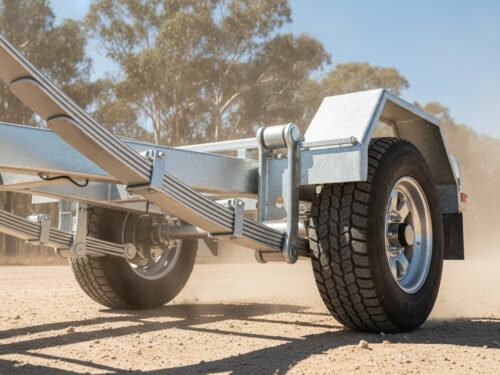
Your choice of axles must align with your braking capacity and weight tier. A single axle trailer under 2,000kg can often use 45mm square axles paired with 9 inch mechanical drum brakes. Tandem axle setups are standard for heavier loads to distribute weight effectively across the chassis. Each axle must be rated to handle its specific portion of the GTM. The relationship between axle load and braking force is direct; the braking torque must be sufficient to overcome the momentum of the total axle load during emergency stops. Heavy-duty builds often require 50mm square axles to maintain structural integrity under the high torque generated by 10 inch electric drum brakes.
Comparing Mechanical, Hydraulic, and Electric Braking Systems
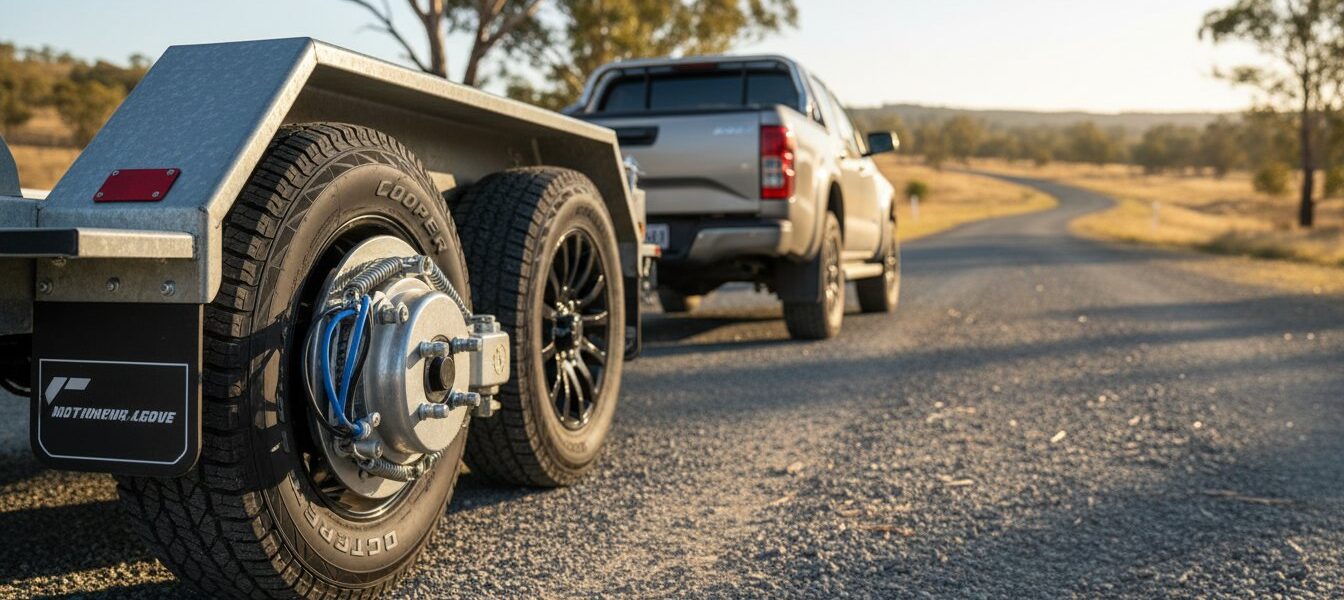
The legal requirements for trailer brakes in australia dictate that the technology you choose must match your trailer’s GTM. Different systems offer varying levels of control and stopping power. Mechanical override brakes are common for trailers under 2,000kg. Hydraulic systems provide excellent resistance to corrosion, making them ideal for marine environments. Electric drum brakes have become the industry standard for caravans and heavy-duty transport due to their reliability and ease of adjustment. Staying compliant with the legal requirements for trailer brakes in australia means choosing hardware that allows for smooth, controlled deceleration under load.
A critical legal distinction exists for trailers exceeding 2,000kg GTM. These trailers must have brakes that are operable from the driver’s seat. This mandate ensures the driver can manually activate the trailer brakes to correct sway or assist in emergency stopping. Override systems do not meet this specific requirement. You must use an electric controller or an electric-over-hydraulic actuator to remain road-legal. All braking hardware must align with the technical standards outlined in Vehicle Standards Bulletin 1 to ensure safety and performance.
Mechanical Override Systems (Under 2000kg)
Mechanical override brakes use the trailer’s own momentum to function. When the tow vehicle slows down, the trailer pushes against the hitch. This force activates a sliding shaft within the coupling. This shaft pulls a cable that engages the brake shoes. These systems are simple and cost-effective because they don’t require electrical wiring from the car. However, they require consistent maintenance. You must check cable tension regularly to prevent slack. Lubricate the sliding internal parts of the coupling to ensure smooth movement. If the coupling seizes, the brakes won’t activate. You can find robust replacement couplings and parts to keep your mechanical system in peak condition.
Electric and Hydraulic Solutions (Over 2000kg)
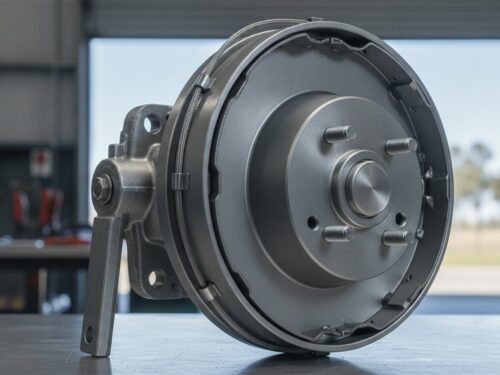
Electric-over-hydraulic systems are the preferred choice for heavy boat trailers. They combine the stopping power of hydraulic discs with the legal requirement for in-cab control. For most other heavy trailers, 10 inch electric drum brakes are the practical choice. They offer high torque and integrate easily with breakaway kits. These systems use an electromagnet to pull the brake shoes against the drum when the driver applies the vehicle’s brakes. This setup provides superior control on steep descents. Ensure your setup is road-legal by browsing our range of brakes and calipers today. Proper hardware selection ensures your trailer stops safely every time you hit the pedal.
Breakaway Systems and Safety Chain Requirements
A breakaway system is a mandatory safety feature for any trailer with a GTM exceeding 2,000kg. This system acts as a fail-safe. If the trailer detaches from the tow vehicle while in motion, the breakaway kit automatically applies the trailer brakes. Under the legal requirements for trailer brakes in australia, this system must operate independently of the tow vehicle’s power once triggered. It relies on a dedicated on-board battery. This battery must have enough capacity to keep the brakes fully applied for at least 15 minutes. This duration ensures the trailer remains stationary until it can be properly secured or recovered.
Remote battery monitors are increasingly important for compliance. In certain jurisdictions like New South Wales, the driver must be able to see the breakaway battery’s charge level from the driver’s seat. A visual or audible alert notifies the operator if the battery voltage drops below a functional level. This prevents the risk of towing a heavy load with a dead safety system. Regular maintenance of the battery is non-negotiable. Most systems charge via the auxiliary pin of the trailer plug while driving, but you should still perform manual voltage checks periodically.
How Breakaway Systems Function in Emergencies
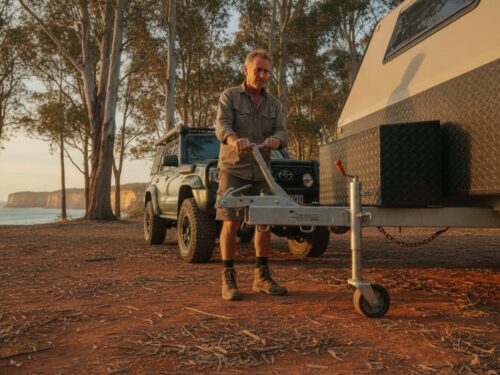
The system uses a small switch mounted to the trailer drawbar, connected to the tow vehicle by a thin steel cable and a pull-pin. If the trailer separates, the cable pulls the pin out of the switch. This completes the circuit and sends immediate power from the breakaway battery to the electric drum brakes. Always check that the cable is slightly shorter than the safety chains. This ensures the brakes activate before the chains reach their full extension. Test the system before every trip by pulling the pin manually and checking if the trailer wheels lock.
Safety Chain Compliance and Ratings
Safety chains provide the final line of defense. For trailers up to 2,500kg ATM, you must use at least one safety chain that complies with Australian Standard AS 4177.4. Trailers between 2,500kg and 3,500kg ATM require two compliant chains. These chains must feature stamped markings that indicate their rating and compliance. Never use generic hardware store chain for towing. It lacks the tensile strength to survive a sudden detachment force. Attach the chains to the tow bar using rated shackles that match the chain’s capacity.
Proper mounting is just as critical as the hardware itself. You must cross the chains under the drawbar when using a dual-chain setup. This creates a “cradle” that catches the drawbar if the coupling fails, preventing it from digging into the road surface. Ensure the chains are long enough to allow for tight turns but short enough to keep the drawbar off the ground. This setup maintains control and allows for a safer stop in an emergency. If you’re building a new chassis, browse our range of couplings and parts to ensure your attachment points meet all legal requirements for trailer brakes in australia.
ADR Standards for Braking Components and Hardware
Compliance isn’t just about having brakes. It’s about having the right hardware to support them. Vehicle Standards Bulletin 1 (VSB1) provides the blueprint for these components. Every part of your trailer, from the coupling to the u-bolts, must handle the forces generated during braking. If your hardware is underrated, the entire system fails. The legal requirements for trailer brakes in australia mandate that all components must meet these national standards to ensure roadworthiness and safety on public roads.
Your axle choice is the most critical decision in this process. An axle does more than carry weight; it provides the mounting point for your brake backing plates. If you use a light-duty 39mm round axle on a heavy trailer, you risk structural failure during an emergency stop. The torque from 10 inch electric drum brakes requires a sturdier foundation. Similarly, your springs and u-bolts must maintain the correct braking geometry. If your axle shifts because of weak u-bolts, your brakes won’t apply evenly. This leads to dangerous swaying or wheel lock-up.
Selecting Compliant Axles and Hubs
You must match your axle size to your trailer’s GTM. For unbraked trailers under 750kg, 39mm round or 40mm square axles are common. However, once you move into braked territory, you need more mass. Most braked tandem setups require 45mm or 50mm square axles. These sizes provide the necessary surface area to weld brake flanges securely. A 50mm square axle is the standard for 3,500kg ATM builds. Ensure your hubs and bearings match the axle’s load rating to avoid overheating. You can browse our range of heavy-duty axles to find the right fit for your build.
Standard Couplings and Over-ride Hitches
Your coupling is the primary link between your vehicle and the trailer. You can’t just bolt on any hitch. A 2-hole fixed coupling is only suitable for unbraked trailers or those with independent braking systems. If you’re using a mechanical system, you need a 4-hole over-ride coupling. This component allows the trailer to slide forward and activate the brakes. Weight ratings are absolute. A coupling rated for 2,000kg is illegal on a trailer with a 2,500kg ATM. Always check the stamped rating on the coupling body. If you’re upgrading your hardware, shop our compliant couplings and parts to ensure your setup meets the legal requirements for trailer brakes in australia. Matching your hitch to your GTM is the only way to stay road-legal and safe.
Maintenance Protocols for Legal Compliance
Installation is only the start of roadworthiness. Ongoing maintenance ensures you continue to meet the legal requirements for trailer brakes in australia. Neglecting your braking system leads to mechanical failure, insurance rejection, and liability risks. You must implement a strict inspection schedule focusing on friction materials, fluid levels, and electrical connectivity. A well-maintained system provides the consistent stopping power needed for harsh Australian conditions.
Friction material is the heart of your stopping power. Inspect your brake shoes and pads every 5,000 kilometres or at least once a year. Replace them when the lining reaches 1.5mm to 2mm in thickness. For mechanical systems, cable tension is a common point of failure. Cables stretch over time, creating slack that prevents the over-ride coupling from engaging the brakes effectively. Adjust the turnbuckles to ensure the brakes activate as soon as the coupling begins its rearward stroke.
Hydraulic systems require dry fluid to function. Brake fluid absorbs moisture from the air, which causes internal corrosion and air locks. These issues result in a spongy brake feel and reduced performance. Flush your lines with fresh DOT 3 or DOT 4 fluid every two years. If you use electric brakes, your 7-pin or 12-pin plug is the most vulnerable link. Clean the pins with contact cleaner and check for corrosion that could interrupt the signal to your 10 inch electric drum brakes.
Routine Inspection Checklist
Perform a low-speed brake test before every long trip. Apply the brakes at approximately 10km/h to ensure the trailer pulls straight and slows the vehicle without surging. Remove the hubs periodically to check for grease contamination. A blown bearing seal can leak grease onto the brake drums, which ruins the friction material. Use high-quality trailer parts for all repairs to maintain the integrity of your original build.
Signs of Component Failure
Identify problems early to avoid roadside breakdowns. Surging or pulsing during deceleration often indicates warped brake drums or air trapped in hydraulic lines. Noisy brakes, such as high-pitched squealing or metal-on-metal grinding, mean your shoes or pads are worn through to the backing plate. This damage requires immediate attention to prevent destroying the drums or rotors. If your in-cab breakaway monitor indicates a low battery, you must stop the vehicle immediately and charge or replace the battery before continuing to tow. Staying proactive with these checks ensures you remain compliant with the legal requirements for trailer brakes in australia.
Secure Your Trailer for the Road Ahead
We are an Australian-owned and operated specialist providing hardware engineered for harsh regional conditions. Our inventory features ADR-compliant axles, couplings, and braking kits ready for immediate dispatch. We provide nationwide shipping on all parts to support fleet managers and individual builders across the country. Contact Superior Trailer Parts for Expert Advice on Braking Compliance to find the right solution for your specific weight tier. Build a trailer that stays roadworthy for every journey.
Frequently Asked Questions
Do all trailers in Australia need brakes?
No, not all trailers require brakes. Only those with a Gross Trailer Mass (GTM) over 750kg must have a braking system installed. If your trailer is a light, single-axle unit that stays under this weight limit when fully loaded, it can remain unbraked. Always verify your trailer’s compliance plate to ensure you don’t exceed its rated capacity while operating without brakes.
What is the maximum weight for a trailer without brakes?
The maximum weight for a trailer without brakes is 750kg GTM. This figure includes the weight of the trailer itself plus its maximum payload. If your loaded trailer exceeds this limit by even a small margin, you are in breach of the legal requirements for trailer brakes in australia. You must then install a system that brakes at least one axle to remain road-legal and safe.
Can I use mechanical override brakes on a 3000kg trailer?
No, you cannot use mechanical override brakes on a trailer with a 3,000kg GTM. The legal limit for override systems is 2,000kg. Any trailer over this weight requires a system that applies brakes to all wheels. Additionally, the driver must be able to operate the brakes from the towing seat. This usually involves installing 10 inch electric drum brakes or an electric-over-hydraulic system.
How do I know if my breakaway battery is still legal?
A breakaway battery is legal if it can maintain full braking force for at least 15 minutes after detachment. You should check the battery’s health using a dedicated monitor or a voltmeter. If the voltage drops below the manufacturer’s specified level, the system is no longer compliant. Test the system manually by pulling the breakaway pin to ensure the magnets engage the drums immediately.
Are electric brakes better than hydraulic for boat trailers?
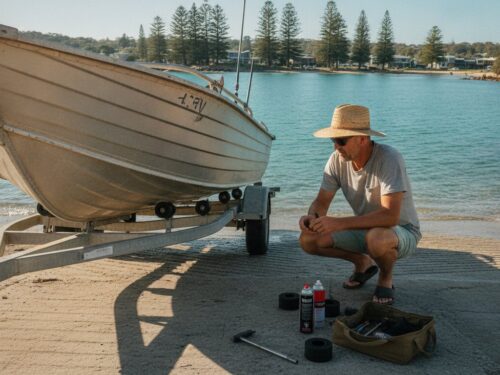
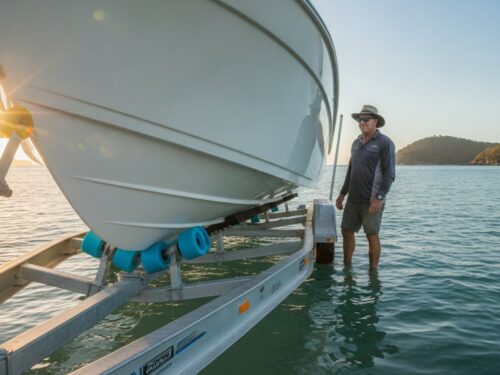
Hydraulic disc brakes are generally better for boat trailers due to their superior resistance to salt water corrosion. Electric drum brakes contain magnets and springs that can seize quickly when submerged. If your boat trailer exceeds 2,000kg, you must use an electric-over-hydraulic actuator. This setup combines the durability of hydraulic discs with the legal requirement for a driver-controlled braking system.
Do I need a brake controller inside my car for all braked trailers?
You don’t need an in-cab controller for all trailers. Only trailers with a GTM over 2,000kg require a braking system that the driver can operate manually from the car. Trailers in the 751kg to 2,000kg range often use mechanical override couplings. These systems rely on the trailer’s momentum to activate the brakes and don’t require any electrical connection to the vehicle’s dashboard.
What happens if I tow a trailer that doesn’t meet braking requirements?
Towing a non-compliant trailer leads to severe consequences, including heavy fines and the loss of your insurance coverage. If you’re involved in a collision, your insurer will likely reject the claim because the vehicle was not roadworthy. Police can also issue a defect notice, which grounds the trailer until it is fitted with compliant hardware like 9 inch mechanical drum brakes.
If you find that an old towing vehicle or car is no longer worth the cost of repairs to meet these safety standards, Melbourne residents can turn to rapidcarremoval.com.au for an efficient way to dispose of unwanted vehicles and receive immediate cash.
How often should I service my trailer braking system?
You should service your trailer’s braking system every 5,000km or once a year, whichever comes first. Harsh conditions like dust or salt water may require more frequent inspections. Check for worn brake shoes, leaking hydraulic seals, and frayed mechanical cables. Regular maintenance ensures your setup continues to meet the legal requirements for trailer brakes in australia while preventing costly damage to your axles and hubs.