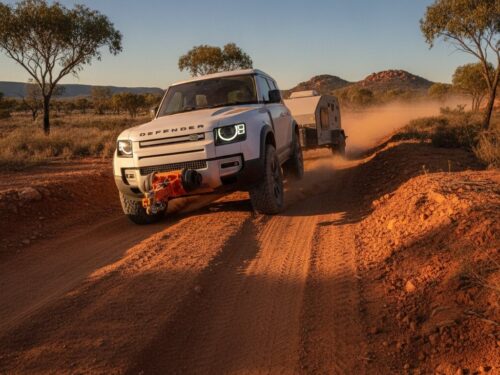
A trailer is only as strong as its weakest weld. In the Australian bush, that weakness usually shows up when you’re miles from the nearest workshop. Choosing the right custom trailer builders australia depends on more than just a competitive quote; it requires a builder who understands the engineering needed for heavy loads and unforgiving terrain.
You likely agree that there’s nothing more frustrating than a bent axle or a braking system that fades under pressure. These failures don’t just cost money; they compromise safety on the road. You need a transport solution that’s matched to your specific load and built to endure hard work without constant repairs.
We’ll show you how to source a high-quality trailer that meets Australian Design Rules and utilizes industry-standard components like 50mm square axles and 10-inch electric drum brakes. You’ll learn how to navigate safety management system requirements and specify a build that offers long-term durability. We’ll break down the technical details of couplings, springs, and frames to ensure your next trailer is a reliable asset rather than a mechanical liability.
Key Takeaways
- Compare custom engineering to mass-produced options to ensure your trailer handles specific load distributions without structural failure.
- Identify critical hardware specifications, such as axle types and spring sets, used by professional custom trailer builders australia to guarantee long-term integrity.
- Determine the correct braking and coupling configurations required to meet legal compliance and Australian Design Rules for your specific towing needs.
- Learn how to source high-quality components and built-to-order trailers that offer nationwide reliability and simplified maintenance.
Custom Trailer Builders vs. Standard Mass-Produced Options
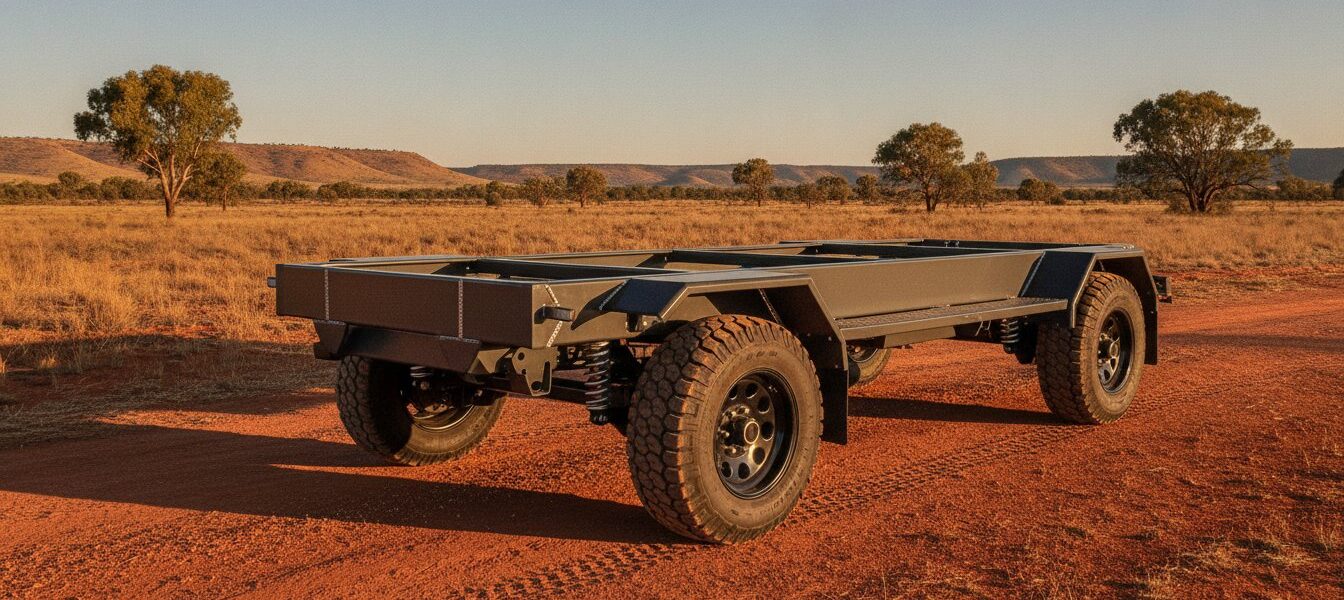
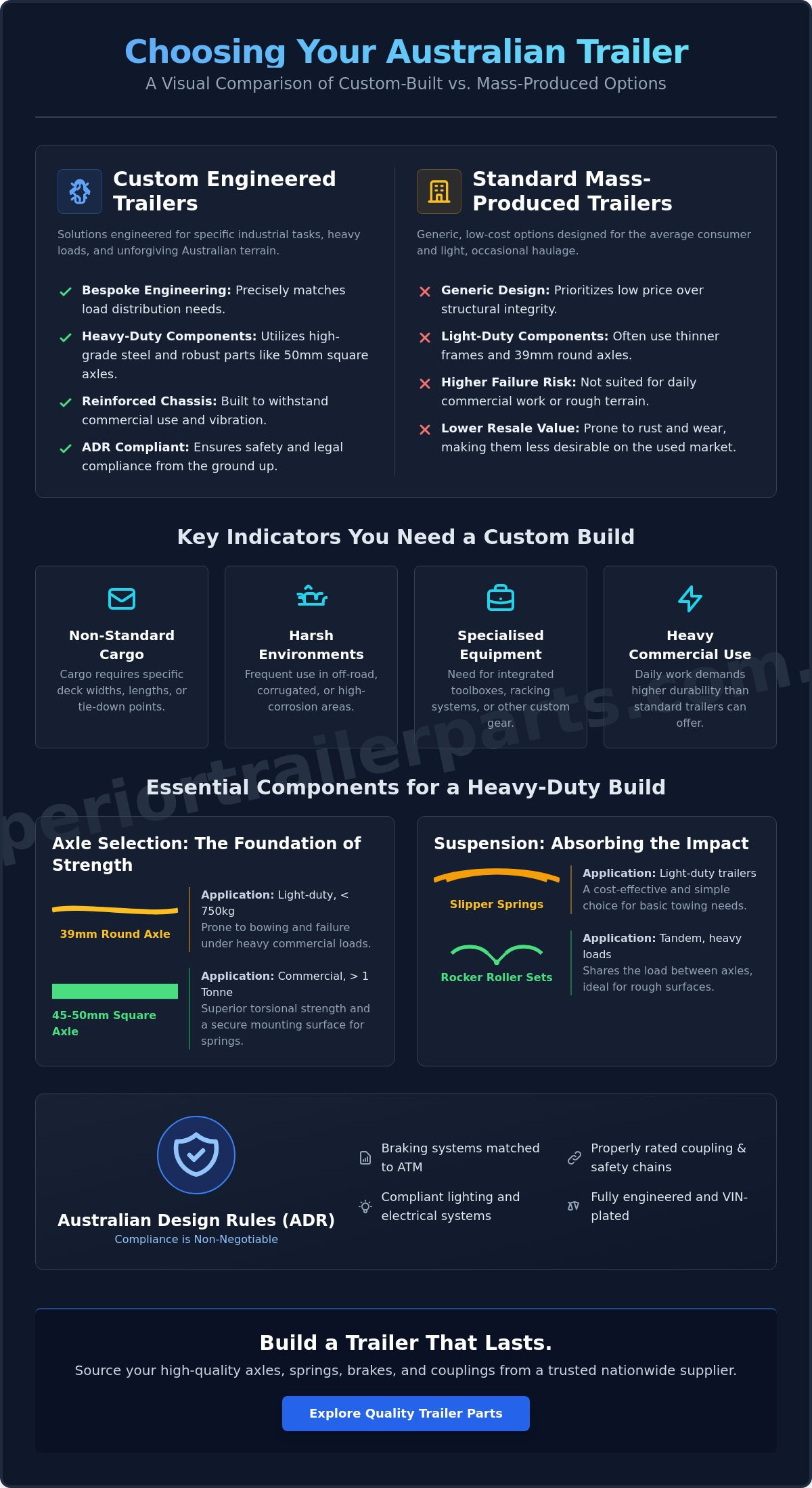
Mass-market trailers are designed for the average consumer who needs a basic solution for light haulage. These standard units often prioritize low price points over long-term structural integrity. In contrast, custom trailer builders australia engineer transport solutions for specific industrial tasks and environmental stressors. A bespoke build allows for precise load distribution and reinforced chassis designs that mass-production lines cannot accommodate. You get a tool built for your specific trade rather than a generic box on wheels.
Identifying When You Need a Custom Build
Standard sizes like a 6×4 single axle box trailer work for many, but they aren’t universal. You need a custom build if your cargo has non-standard dimensions that require specific deck widths or lengths. Frequent use in off-road or high-corrosion environments also necessitates a specialized approach. This often includes heavier galvanisation and the integration of specialised racking systems or toolboxes. If your gear doesn’t fit a standard footprint, forcing it onto a small trailer compromises safety and balance.
The Long-Term Value of Bespoke Engineering
Investing in bespoke engineering reduces maintenance costs over the life of the vehicle. Heavy-duty parts like 50mm square axles and rocker roller spring sets are designed for durability. These components handle the vibration and impact of Australian roads better than light-duty alternatives. Compliance with the Australian Design Rules (ADR) is a critical requirement for any road-going vehicle in Australia. Custom builders ensure that every aspect of the trailer, from the lighting to the safety chains, meets these national standards. This adherence to regulation increases safety when towing at maximum Aggregate Trailer Mass (ATM). It also ensures a higher resale value. A well-maintained, Australian-made unit built with quality hardware is always a more attractive prospect on the used market than a rusted, mass-produced import.
Essential Components for Heavy-Duty Australian Trailers
Every reliable build starts with the undercarriage. The axle serves as the foundation of your trailer’s capacity and stability. It bears the entire weight of the load while managing the lateral forces generated during cornering. Professional custom trailer builders australia prioritize axle thickness and material grade because these factors dictate the vehicle’s safe operating limits. Selecting the wrong axle leads to bowing, uneven tire wear, and eventual structural failure. You must match the axle rating to your expected Aggregate Trailer Mass (ATM) to ensure the unit remains legal and safe on the road.
Axle Selection for Custom Projects
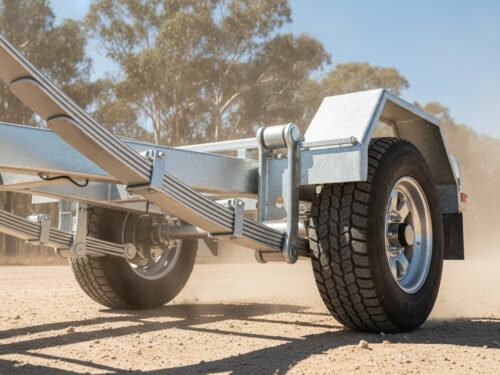
Axle geometry significantly impacts performance. Standard 39mm round axles are suitable for light-duty 750kg applications, such as small garden trailers. However, commercial and heavy-duty projects require the increased surface area and torsional strength of square profiles. You should specify 45mm or 50mm square axles for tandem configurations or loads exceeding one tonne. Square axles provide a more secure mounting surface for leaf springs, which reduces the risk of the axle twisting under heavy braking. You can find technical specifications and load ratings in our axle category to help determine the right fit for your chassis.
Suspension and Leaf Spring Varieties
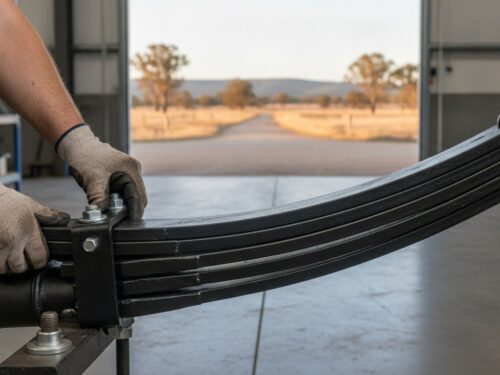
Australian roads are notorious for vibrations and corrugated surfaces that can shake a poorly built trailer apart. Your suspension system must absorb these impacts to protect both the trailer frame and your cargo. Slipper springs are a cost-effective and reliable choice for light-duty towing where simplicity is preferred. For tandem trailers carrying heavy equipment, rocker roller sets are the industry standard. These systems use a central rocker arm to share the load between both axles, ensuring that one axle doesn’t take the full impact of a bump. Refer to our guide on leaf springs for a detailed comparison of load capacities and mounting styles.
Hardware quality is the final piece of the engineering puzzle. Use high-tensile galvanised U-bolts to secure your springs to the axles. Standard bolts can stretch or corrode, leading to component shifting that ruins your alignment. Secure hardware prevents the suspension from migrating along the axle beam during sudden stops. When Sourcing Reliable Custom Trailers, always verify that the builder uses Australian-standard hardware rather than unrated imports. If you are currently planning a build, you can browse our galvanised U-bolt kits to ensure your suspension stays locked in place under stress.
Specifying Brakes and Couplings for Safety and Compliance
Determining your Aggregate Trailer Mass (ATM) is the first step in specifying safety gear. Under Australian law, any trailer with an ATM exceeding 750kg must be fitted with an efficient braking system. Professional custom trailer builders australia use this weight rating to select the appropriate hardware for legal compliance. If your build sits between 750kg and 2,000kg, you have several options for stopping power. Once you exceed 2,000kg, requirements become stricter, necessitating breakaway systems that automatically apply brakes if the trailer detaches from the tow vehicle.
Braking System Options
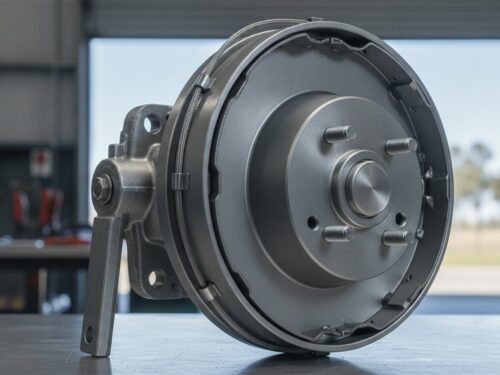
9-inch mechanical drum brakes offer a simple and effective solution for trailers up to 2,000kg. They don’t require a cab controller; they rely on the physical momentum of the trailer pushing against the hitch to activate. For heavier loads or more precise control, 10-inch electric drum brakes are the industry standard. These allow the driver to adjust braking force on the fly from the driver’s seat. If you’re engineering a boat trailer or a high-performance unit, hydraulic disc brake kits are the right choice. They offer superior heat dissipation and handle immersion in water better than drum alternatives.
Coupling Types and Fitment
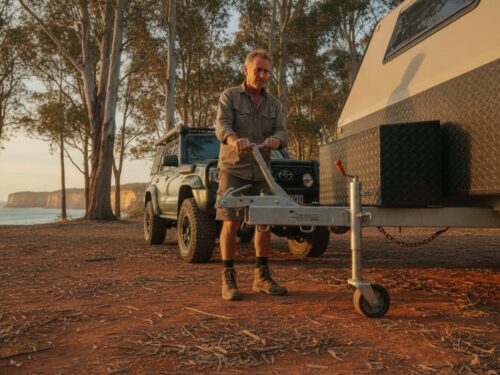
The coupling is the primary connection point between your vehicle and the load. Choosing the right one depends on your ATM and the terrain you intend to cover. Fixed 2-hole and 3-hole couplings are standard for light-duty road use. For trailers in the 750kg to 2,000kg range, 4-hole over-ride couplings provide the necessary mechanism to trigger mechanical brakes. These units are built for durability and are easy to maintain over years of service.
If your work takes you off the sealed road, standard ball couplings often lack the necessary movement. Poly block off-road couplings allow for maximum articulation. This prevents the hitch from binding when you’re traversing steep angles or uneven ground. You can find technical drawings and specific models for these units in our section for couplings and parts. It’s a vital resource for ensuring your hitch matches your intended application.
Safety isn’t just about the hitch itself. Every heavy build must include rated safety chains and functional breakaway systems for trailers over 2,000kg. These components ensure that even in a worst-case scenario, the trailer remains under control. High-quality hardware is a small price to pay for reliability on the highway. Don’t cut corners on the gear that keeps your load attached to your vehicle.
Fabrication Standards and Australian Design Rules (ADR)
Compliance is the difference between a road-legal asset and a liability. In Australia, every trailer with an Aggregate Trailer Mass (ATM) of 4.5 tonnes or less must comply with Vehicle Standards Bulletin 1 (VSB1). This bulletin serves as the primary technical guide for custom trailer builders australia, detailing strict requirements for dimensions, safety chains, and reflectors. Following these standards ensures your trailer meets the necessary safety benchmarks for public roads. Fabrication involves precise engineering; it’s not just about joining steel. Every weld must be structurally sound and every component must be rated for the intended load.
Hot-Dipped Galvanising vs. Painted Finishes
Hot-dipped galvanising is the industry standard for long-term durability in harsh environments. While painted finishes are cheaper initially, they fail quickly under the abrasive conditions of Australian roads. Galvanising involves submerging the entire chassis in molten zinc, which coats the steel both inside and out. This is critical for hollow box sections where rust can eat through the frame from the inside where you can’t see it. A galvanised trailer resists corrosion even in coastal environments or on salt-covered roads. Maintenance is straightforward; simply wash down the frame with fresh water to remove salt and mud after use. This simple step keeps the protective zinc layer intact for decades.
Trailer Wiring and Lighting Standards
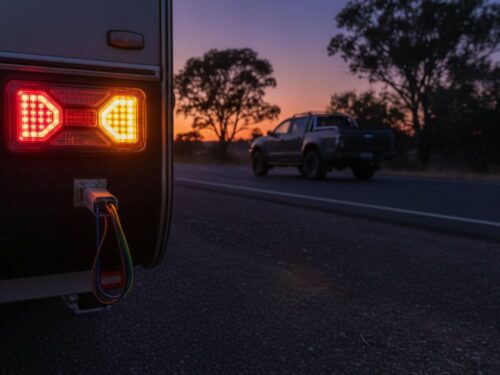
Electrical reliability depends on the quality of your lighting and wiring. LED submersible tail lights are non-negotiable for anyone launching boats or driving in heavy rain. Unlike traditional bulbs, LEDs have no delicate filaments to break from road vibration. They also consume less power and offer higher visibility in bright daylight. Wiring must follow the standard Australian colour codes for universal compatibility. This prevents short circuits and ensures that indicators, tail lights, and brake lights function correctly across different tow vehicles. High-quality 7-pin or 12-pin plugs provide a robust connection that won’t shake loose on corrugated tracks.
Reliable custom trailer builders australia always prioritize these electrical standards to prevent roadside failures. You can refer to our trailer plug wiring reference for a clear diagram of these essential connections. If you’re building or upgrading your current setup, you can source ADR-compliant lighting and electrical components from our warehouse to ensure your trailer stays visible and legal on the highway.
Sourcing Reliable Custom Trailers and Parts Nationwide
Logistics matter as much as engineering. Ensure your supplier offers nationwide shipping for replacement parts. Australia is a vast country, and a broken leaf spring or a failed bearing shouldn’t sideline your operations for weeks. At Superior Trailer Parts, we provide both fully assembled units and individual components to keep your fleet on the road. This dual approach allows you to source a complete vehicle or the specific hardware needed for a repair or a DIY build.
Custom Solutions for Every Industry
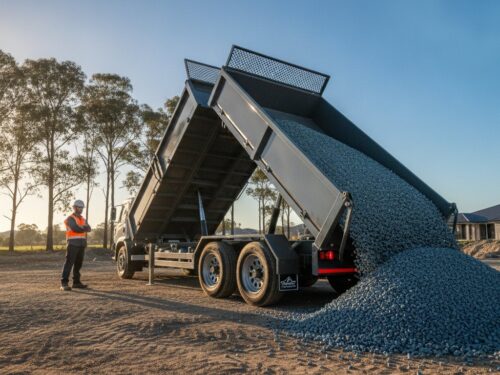
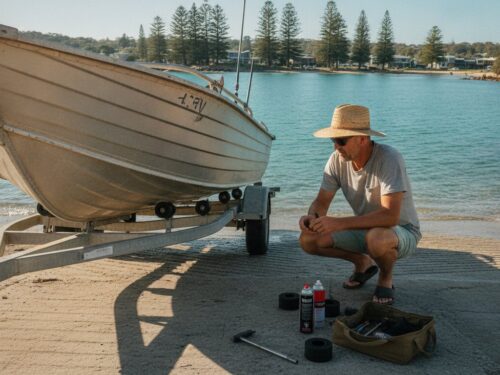
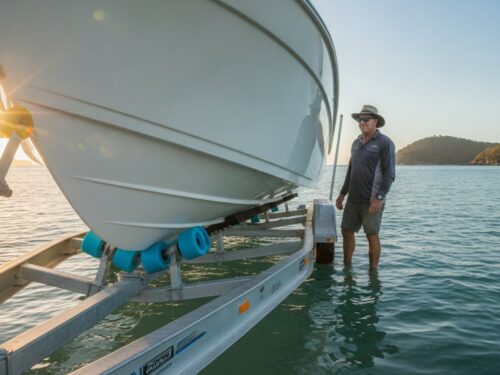
Different trades demand different specifications. We offer heavy-duty box trailers designed for the rigours of trade and residential use. These units feature reinforced frames and high-quality axles to handle daily haulage. For earthmoving and landscaping, our specialised hydraulic tippers provide efficient unloading capabilities with robust lifting mechanisms. We also cater to the marine sector with jet ski trailers. These are engineered for saltwater resistance, utilizing galvanised steel and waterproof LED lighting to prevent corrosion.
The Superior Trailer Parts Advantage
We’re a proudly Australian-owned and operated business with deep industry expertise. Our team understands the specific challenges of towing in local conditions, from extreme heat to corrugated rural tracks. We maintain an extensive inventory of axles, brakes, and springs ready for immediate dispatch. This ensures you get the parts you need without unnecessary delays.
We offer direct support for both individual builders and commercial fleet managers. Whether you’re constructing a single custom unit or managing fifty, our technical knowledge is available to guide your component selection. We focus on providing hardware that meets Australian standards and delivers reliable performance. By choosing a specialist who stocks everything from U-bolts to fully welded chassis, you simplify your supply chain. You can contact our team today to discuss your specific requirements or request a technical quote for your next project.
Engineering Your Next Transport Solution
A reliable trailer is built on the quality of its individual components. You’ve seen how specifying the right axles, brakes, and couplings ensures your build handles the specific stressors of the Australian environment. Compliance with VSB1 and Australian Design Rules isn’t just a legal requirement; it’s a blueprint for safety. Working with established custom trailer builders australia allows you to bypass the weaknesses of mass-produced units in favor of a chassis engineered for your specific trade.
View our range of professional trailer parts and custom units to ensure your next build is ready for the road.
Frequently Asked Questions
What is the difference between a custom builder and a trailer dealer?
A custom builder engineers a trailer from the ground up to your specific load requirements; a dealer typically sells pre-built, mass-produced units. Custom builders allow you to specify components like 50mm square axles or specific deck dimensions for trade use. Dealers offer convenience, but custom builders provide a transport solution optimized for heavy-duty industrial tasks. This ensures the frame and suspension are perfectly matched to your cargo.
Do all custom trailers in Australia need to be registered?
Yes, any trailer used on public roads must be registered with the relevant state transport authority. Before registration, the trailer must comply with the Road Vehicle Standards Act and be entered on the Register of Approved Vehicles (RAV). Reliable custom trailer builders australia ensure the vehicle meets these legal standards during the fabrication process. This adherence to regulation facilitates a smooth registration process for the owner.
How do I know what size axle I need for my custom trailer?
Axle size is determined by the Aggregate Trailer Mass (ATM) and the intended load distribution. For a light-duty 750kg trailer, a 39mm round axle is often sufficient. Heavier commercial builds or tandem trailers require 45mm or 50mm square axles to prevent the beam from bowing under stress. Always calculate your maximum possible load before selecting your axle profile. This ensures the structural integrity of the entire undercarriage.
Are electric brakes better than mechanical brakes for a custom build?
Electric brakes are preferred for heavy loads because they offer fine-tuned control from the driver’s seat. 10-inch electric drum brakes are the standard for trailers exceeding 2,000kg ATM. Mechanical brakes are a reliable, cost-effective choice for trailers between 750kg and 2,000kg. They don’t require an in-car controller but they lack the progressive stopping power of an electric system. Your choice depends on your towing vehicle and total weight.
Can I build my own custom trailer using your parts?
You can source professional-grade components like slipper springs, couplings, and galvanised U-bolts for a DIY project. We supply individual parts to both professional custom trailer builders australia and individual users. It’s essential that you have the necessary fabrication skills and follow VSB1 guidelines. This ensures the finished unit is road-legal and safe for towing on public highways. Always verify your welds and structural designs.
What are Australian Design Rules (ADR) for trailers?
The ADRs are national standards for vehicle safety, anti-theft, and emissions. For trailers, these rules cover everything from safety chain ratings and lighting positions to braking performance. Every custom build must adhere to these standards to be deemed roadworthy by transport authorities. Following the Vehicle Standards Bulletin 1 (VSB1) is the primary way builders ensure compliance. These rules protect you and other road users from mechanical failures.
How long does a custom trailer build typically take?
Build times vary based on the complexity of the design and current component availability. A standard heavy-duty box trailer might take several weeks from the initial design to the final assembly. Specialized units like hydraulic tippers or dual jet ski trailers often require more time for precise fabrication and hot-dipped galvanising. Consult with your builder early in the process. They can provide an accurate timeline based on your specific engineering requirements.