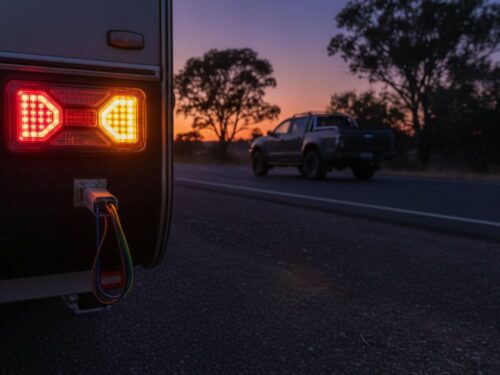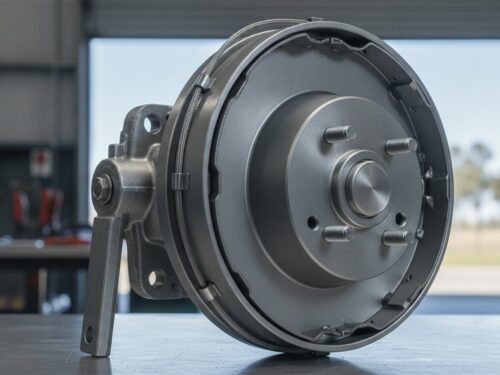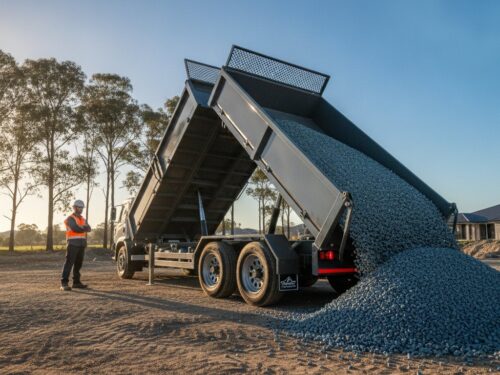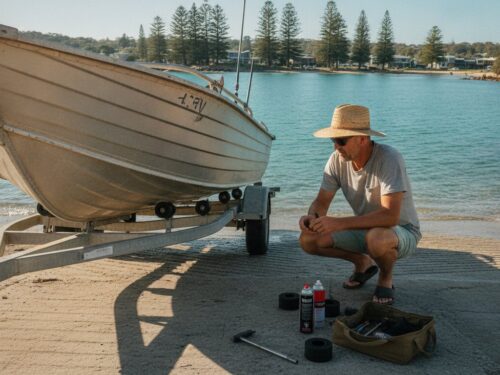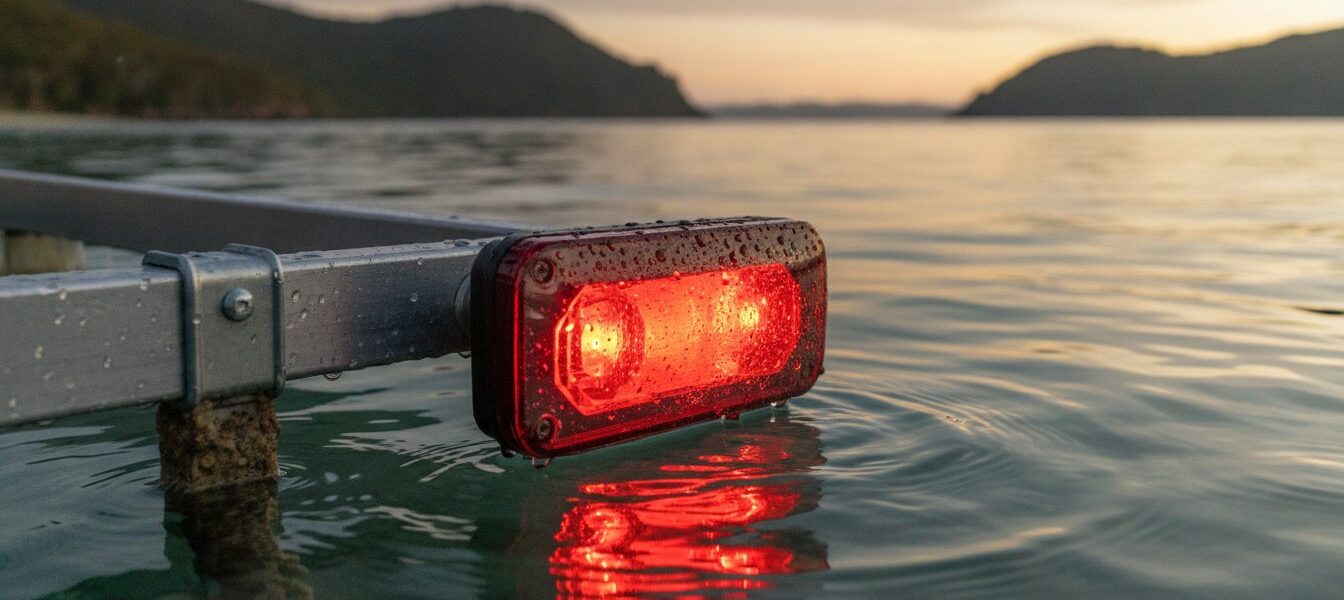
Most “waterproof” trailer lights aren’t actually built for the reality of a saltwater boat ramp. Saltwater is relentless. Standard housings rarely keep moisture away from sensitive electronics for long. You need hardware that handles total immersion without shorting out or corroding from the inside. Using high-quality LED submersible tail lights is the only way to ensure your trailer stays visible and legal after repeated dunking.
If you’re frustrated by flickering bulbs and the risk of fines during night transport, you aren’t alone. Frequent component failure due to water ingress is a constant problem for boat and jet ski owners. We’ll show you how to select and install durable lighting that offers a genuine fit-and-forget solution. You’ll learn exactly what IP ratings like IP67 and IP69K mean for your equipment and how to ensure your trailer remains compliant with safety standards. We’ll also cover the importance of sealed wiring to prevent internal corrosion before it starts. This reference provides the practical technical details you need to secure your load and tow with confidence in any marine environment.
Key Takeaways
- Understand how hermetically sealed units prevent thermal shock and bulb failure during boat launches.
- Identify the critical differences between IP67 and IP68 ratings to ensure your lighting survives deep immersion.
- Select the right LED submersible tail lights to integrate essential functions like stop and indicator lamps into one durable housing.
- Master installation techniques using tinned copper wiring and drip loops to prevent internal corrosion.
- Ensure your boat or jet ski trailer remains compliant with safety standards in harsh saltwater conditions.
Understanding the Importance of Submersible Lighting for Marine Trailers
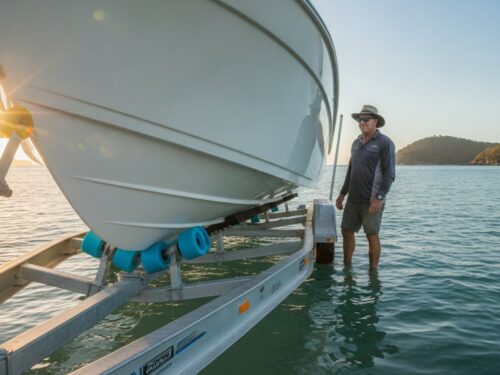
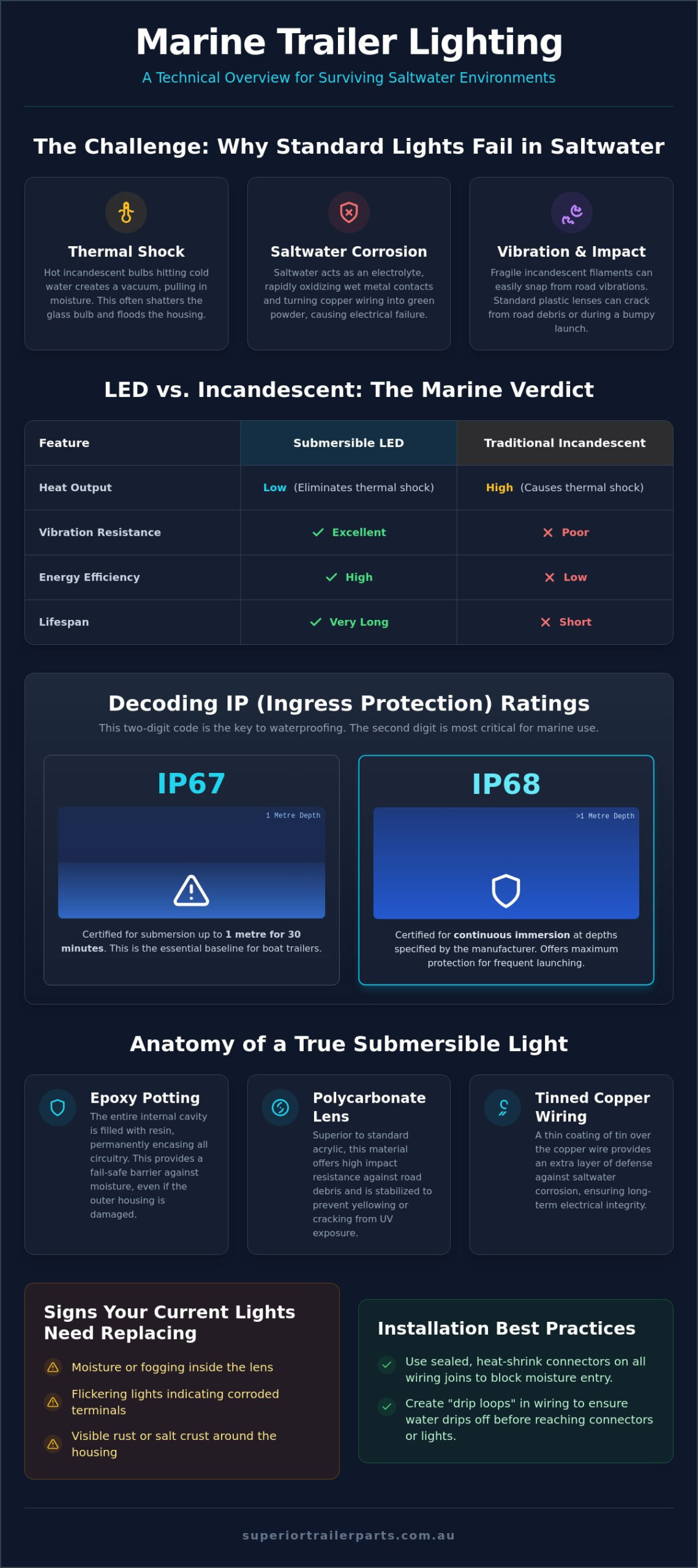
A submersible trailer light is a hermetically sealed unit designed to withstand temporary immersion during boat or jet ski launches. This isn’t just about a tight plastic cover. True submersibility requires the internal electronics to be completely isolated from the outside environment. This isolation is often measured by the IP Code, which tells you exactly how much pressure and moisture the unit can handle. Without a proper seal, saltwater enters the housing and begins destroying the components immediately. Standard lights might survive a splash, but they won’t survive being dunked at the ramp.
Thermal shock is the primary killer of traditional trailer lighting. Incandescent bulbs generate significant heat during operation. When you back a trailer into cold water, the sudden temperature drop causes the air inside the lamp to contract. This creates a vacuum that pulls water through the gaskets and into the socket. In many cases, the glass bulb itself will shatter upon contact with the water. LED submersible tail lights solve this problem because they operate at much lower temperatures. There’s no vacuum effect and no fragile glass to break. This makes them the only reliable choice for marine applications.
Corrosion mechanics are another major concern for any trailer owner. Saltwater acts as an electrolyte. When electricity flows through wet metal contacts, it triggers rapid oxidation. This destroys filaments and turns copper wiring into green powder. Once this process starts, the light becomes unreliable and will eventually fail. Ensuring your signals remain visible after multiple launches is a safety imperative. If your lights fail on the way home from the ramp, you risk heavy fines and dangerous collisions. You can find reliable boat trailer parts that use sealed technology to prevent these issues from the start.
Incandescent vs. LED: The Marine Verdict
LEDs are inherently better for marine use. They don’t have filaments that can snap. This makes them highly resistant to the vibration and shock common on rough Australian roads. They also offer extreme energy efficiency. A full set of LED lamps draws a fraction of the current required by incandescent versions. This puts less strain on your towing vehicle’s electrical system and reduces the risk of blown fuses. LED submersible tail lights provide a more durable, longer-lasting solution for the harsh conditions of the coast.
Signs Your Current Trailer Lights Need Replacing
Check your lamps for moisture build-up or fogging inside the lens. This is a clear sign the seal’s failed. Flickering lights often indicate that salt has already corroded the internal terminals. You should also look for visible rust or salt crusting around the lamp housing. If you see these signs, it’s time to upgrade. Replacing failing units early prevents electrical shorts that could damage your vehicle’s wiring. Don’t wait for a complete failure on a dark highway to take action.
Decoding IP Ratings and LED Efficiency for Trailer Lamps
The IP rating is the most reliable way to judge if LED submersible tail lights will survive the marine environment. This two-digit code represents Ingress Protection. The first digit measures resistance to solids like dust or sand. The second digit measures resistance to water. For boat trailers, the second digit is the most critical factor for longevity.
IP67 is the baseline for any trailer that enters the water. It indicates the lamp can be submerged up to 1 metre for 30 minutes. IP68 goes further, allowing for continuous immersion at greater depths. While many manufacturers claim waterproof status, true protection often comes from epoxy potting. This process involves filling the entire internal cavity of the lamp with a specialized resin. This resin encases the LED circuitry, preventing moisture from ever touching the components, even if the outer housing cracks or leaks. This is a significant upgrade over standard housings that rely solely on rubber gaskets.
The lens material also dictates longevity. Standard plastic or acrylic lenses often become brittle and yellow under the harsh Australian sun. Polycarbonate lenses offer superior impact resistance and UV stability. They don’t shatter easily when struck by road debris or during a bumpy launch. Using high-quality materials ensures your setup meets Federal motor vehicle safety standards for visibility and reliability. It’s about more than just staying legal; it’s about ensuring your trailer is visible to other drivers in all conditions.
What IP67 Really Means for Your Boat Trailer
IP67 provides protection against temporary immersion. This is usually sufficient for standard boat ramps where the trailer is in the water for less than 15 minutes. High-quality Australian trailer lamps undergo rigorous testing to ensure these seals hold under pressure. If you regularly launch in deep water or leave your trailer submerged for extended periods, looking for a higher rating is a smart move. You can find a range of heavy-duty boat trailer parts designed to handle these exact conditions.
The Advantage of 10-30V Multi-Voltage Circuitry
Modern LED submersible tail lights often feature 10-30V multi-voltage circuitry. This design allows the lights to operate on both 12V passenger cars and 24V commercial trucks without modification. It also provides a buffer against voltage drops and power surges that occur during vehicle startup. These circuits include reverse polarity protection, which prevents damage if the wires are connected incorrectly. This level of electrical engineering ensures the lamps remain bright and functional regardless of the towing vehicle’s specific output.
Selecting the Right Submersible Light Kit for Your Trailer
Choosing a kit involves more than picking the brightest option. You need a rear combination lamp that integrates stop, tail, and indicator functions into a single unit. Most modern LED submersible tail lights also include a dedicated license plate lamp on at least one side. This keeps your setup clean and reduces the number of individual components that can fail. If you’re towing a boat or jet ski, look for kits that explicitly state they’re designed for marine immersion. Standard trailer kits won’t last in the salt.
Size is a practical consideration often overlooked. Measure your trailer frame before buying. A lamp that overhangs the metal is a snag hazard at the ramp and is easily damaged during tight maneuvers. Select a profile that sits flush or tucked within the frame for maximum protection. For legal compliance, ensure the unit has integrated reflectors. This removes the need for extra stick-on parts that eventually peel off after repeated exposure to water and sun.
The debate between hard-wired and plug-and-play kits usually comes down to long-term reliability. Plug-and-play systems offer speed during installation, but every connector is a potential point for water ingress. Hard-wiring your lamps with resin-filled heat-shrink connectors provides a more permanent, waterproof bond. This ensures your electrical system meets the rigorous standards found in the Federal Motor Vehicle Safety Standards regarding wiring integrity and visibility. Selecting high-quality LED submersible tail lights ensures your rig remains visible to other drivers, even during late-night hauls.
ADR Compliance: Staying Legal on Australian Roads
Australian Design Rules (ADR) dictate exactly where and how your trailer lights must be mounted. You must have a visible license plate lamp and specific spacing between indicators to remain compliant. Using E-Marked or ADR-compliant lights isn’t optional. It’s a requirement for registration and insurance. If you’re involved in an accident with non-compliant lighting, your insurance claim could be denied. Always check the product specifications for ADR approval before purchase.
Marine-Specific Features to Look For
Standard steel bolts will rust within weeks of saltwater exposure. Look for kits that include stainless steel mounting hardware to prevent unsightly rust streaks on your trailer frame. Pre-wired “tails” are also essential. These allow you to make your wiring connections higher up the trailer frame, away from the main splash zone. For a broader view on keeping your rig in top shape, check our resource on Essential Boat Trailer Parts. Focusing on these small details prevents major electrical headaches later.
Installation Best Practices for Long-Term Waterproof Integrity
Installing LED submersible tail lights involves more than just bolting them to the frame. The wiring is the most vulnerable part of the system. Standard copper wire is porous at a microscopic level. Saltwater uses capillary action to “wick” moisture up the strands, often traveling several metres inside the insulation. This leads to internal blackening and high resistance. Always use tinned copper wiring for marine trailers. Tinned wire features a thin layer of tin over each copper strand, which provides a critical barrier against corrosion and ensures the electrical current remains stable.
Your connection method determines how long the system lasts. Avoid basic crimp connectors or electrical tape. These allow moisture to seep in almost immediately. Use heat-shrink solder joiners instead. These sleeves contain a ring of low-temperature solder and a waterproof adhesive. When heated, the solder melts for a strong electrical bond while the adhesive seals the joint against the environment. This creates a permanent, waterproof connection that won’t vibrate loose on corrugated roads. It’s a professional solution that prevents the most common cause of trailer light failure.
A “drip loop” is a simple but effective physical safeguard. Before the cable enters the lamp housing, allow it to hang in a small U-shape. Gravity pulls water to the bottom of the loop where it drips off, rather than letting it run straight down the cable and into the entry point of the lamp. This reduces pressure on the seals during heavy rain or launches. Always test the circuit with a multimeter or trailer tester before your first launch to ensure all signals are clear and ground connections are solid. Proper testing prevents frustration at the boat ramp.
Wiring for the Saltwater Environment
Organized cable runs prevent snagging and electrical shorts. Using a high-quality 7-core trailer cable keeps your installation clean and protected within a single outer sheath. This is much more durable than running individual loose wires along the frame. If you need a technical reference to ensure your indicators and brakes are synced correctly, refer to our trailer parts documentation for standard pin-out configurations. Proper cable management is the first step in a reliable marine lighting setup.
Mounting and Sealing Techniques
Mount the lamps on a perfectly flat surface. If the trailer frame is uneven, tightening the mounting bolts can warp the plastic housing and break the hermetic seal. Apply a generous amount of dielectric grease to all plugs and connectors. This non-conductive grease repels moisture and prevents oxidation on metal terminals. Inspect your setup annually for lens cracks or signs of seal failure. For heavy-duty components that stand up to the Australian climate, explore our full range of boat trailer parts today.
Heavy-Duty Lighting Solutions from Superior Trailer Parts
Being an Australian-owned and operated business means we stand behind what we sell. We provide nationwide shipping to all city and regional hubs. This ensures you get high-quality LED submersible tail lights whether you’re in a metro area or a remote coastal town. You can easily pair your new lighting with our extensive range of boat trailer parts to refresh your entire rig. From rollers to winches, we stock the components that keep your boat moving safely. Our inventory is managed locally, allowing us to maintain high standards of quality control across all our marine trailer accessories.
Complete Trailer Support
A reliable trailer needs more than just good lights. We supply components for the full build, including high-strength trailer axles designed for heavy loads and harsh environments. If you’re upgrading from an old incandescent system, our team provides expert advice to help you make the switch. We ensure your new lighting integrates perfectly with your existing electrical setup. Every order is processed for fast dispatch to minimize your downtime. We respect your time and prioritize getting your trailer back on the road. Our goal is to be your comprehensive resource for technical support and industry knowledge.
Next Steps for Your Trailer Upgrade
Before ordering, identify your current vehicle plug type. Check if you need a 7-pin flat or a round adapter. Measure the available mounting space on your trailer frame to ensure the new lamps fit without overhang or interference. If you’re dealing with a complex wiring setup or a custom build, contact our team for technical support. We provide the specific information you need to complete your project correctly the first time. Focus on quality components to ensure long-term performance in harsh marine environments. Investing in the right hardware now prevents costly repairs and safety issues later.
Secure Your Marine Trailer for the Long Haul
Choosing the right hardware is a matter of safety and legal compliance. You now understand how IP ratings and epoxy potting create a barrier against saltwater ingress. Proper installation with tinned copper wiring and heat-shrink joiners ensures your electrical system remains stable after repeated immersion. Don’t risk fines or accidents by relying on standard lights that aren’t built for the ramp. Investing in quality components now prevents expensive roadside repairs later.
Superior Trailer Parts is a 100% Australian-owned and operated specialist. We stock heavy-duty components designed for local conditions and offer nationwide shipping across Australia. Our LED submersible tail lights provide the resilience needed for both professional fleet managers and individual boaters. We stand behind our products and provide the technical support you need for a successful upgrade. Browse our range of LED Submersible Tail Lights to find a fit-and-forget solution for your rig. Get your trailer ready for the next launch and tow with total peace of mind.
Frequently Asked Questions
Can I submerge LED trailer lights in saltwater?
Yes, you can submerge them if they are specifically designed for marine use. Saltwater is highly corrosive and will destroy standard electronics. You must choose LED submersible tail lights that are hermetically sealed, preferably with epoxy potting. This potting encases the circuitry in resin, preventing salt from reaching the metal components and causing failure.
What is the best IP rating for a boat trailer light?
IP68 is the best choice for trailers that enter the water frequently. While IP67 is the minimum standard for temporary immersion up to 1 metre, IP68 offers a higher level of protection for deeper launches. It ensures the seals can handle the increased pressure of being submerged for longer periods. Always verify the rating before purchasing your lighting kit.
Do I need a special resistor for LED trailer lights?
It depends on your towing vehicle. Some modern cars use a low-current detection system to monitor bulbs. Because LEDs draw very little power, the car might signal a “bulb out” error or flash the indicators too quickly. You can solve this by installing load resistors or using lights with built-in CANbus compatibility. Check your vehicle’s manual for specific electrical requirements.
How do I stop my trailer light connections from corroding?
Use tinned copper wiring and waterproof joiners. Saltwater uses capillary action to pull moisture into standard copper wires, causing them to rot from the inside out. Solder-filled heat-shrink connectors provide a permanent, watertight seal. Apply dielectric grease to all plug terminals to repel water and prevent oxidation. This maintenance routine keeps your signals reliable and bright.
Are LED trailer lights legal in Australia?
Yes, provided they comply with Australian Design Rules (ADR). All lighting must meet specific standards for brightness, colour, and placement on the trailer frame. Look for products that explicitly state ADR compliance. Using non-compliant lights can lead to fines and may void your insurance if you’re involved in a collision during transport.
What is the difference between IP67 and IP68 waterproof ratings?
The difference lies in the depth and duration of immersion. IP67 protects against water ingress at depths of up to 1 metre for a maximum of 30 minutes. IP68 is a more stringent standard for continuous immersion at greater depths. For boat trailers that might stay submerged during difficult launches, IP68 provides a necessary safety margin over the baseline IP67 rating.