A single measurement error during your trailer build can turn a reliable workhorse into a roadside liability. When you’re standing in the workshop asking, “what size axle do i need for my trailer,” the answer involves more than just a tape measure. It’s about balancing load capacity with physical dimensions to ensure your rig is safe and road-legal.
Most builders feel the pressure of getting these technical details right. You want a trailer that tracks straight and handles harsh conditions without bearing failure. It’s common to feel uncertain when matching bearings to axle sizes or deciphering measuring terminology. This article provides the technical clarity required to calculate load ratings, measure lengths accurately, and select the right axle profile for your specific application.
By following this practical breakdown, you’ll gain the confidence to purchase the right part the first time. We will cover the essential steps to ensure your build meets Australian Design Rules (ADR) and delivers long-term durability. We’ll examine how to match your Aggregate Trailer Mass to the right steel profile and ensure your suspension is up to the task.
Key Takeaways
- Calculate your Aggregate Trailer Mass (ATM) to ensure the axle rating exceeds the combined weight of your trailer and its maximum payload.
- Use the industry-standard “Face-to-Face” hub measurement instead of “Tip-to-Tip” to guarantee a precise fit for replacement parts.
- Learn how to decide what size axle do i need for my trailer by evaluating the structural advantages of square versus round beams for utility use.
- Match axle spindles with the correct LM or Slimline bearings and braking systems to maintain road legality and prevent bearing failure.
- Select high-tensile steel components that meet Australian Design Rules to ensure your trailer survives demanding industrial and transport conditions.
Calculating Load Capacity and Aggregate Trailer Mass (ATM)
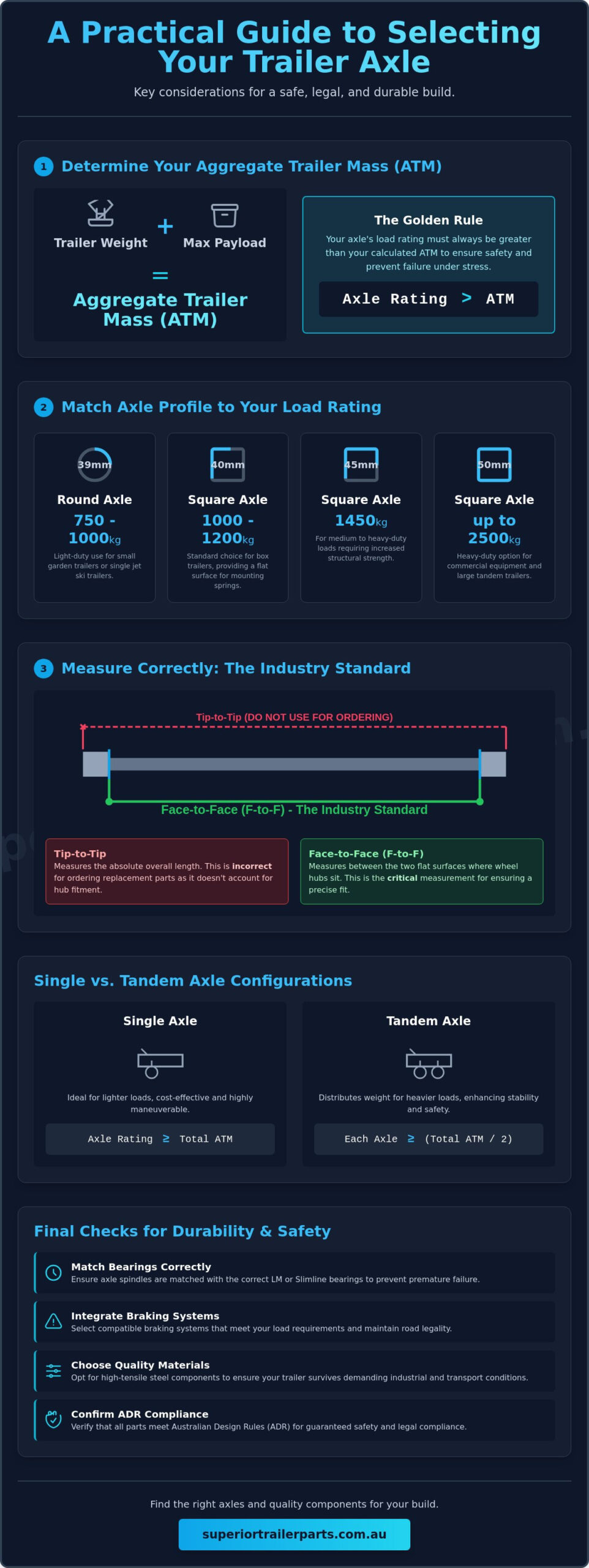
Aggregate Trailer Mass (ATM) is the total weight of your trailer plus its maximum possible load. It is the most critical figure to identify before you start building or repairing. You calculate this by adding the tare weight of the trailer to the weight of everything you plan to carry. Determining what size axle do i need for my trailer depends entirely on this final number. If you underestimate your ATM, you risk structural failure and legal penalties on the road.
Standard Load Ratings by Axle Size
Australian trailer builders use specific axle profiles to meet load requirements. You can find these standard axles in various thicknesses to suit different applications. Understanding these trailer axle basics allows you to match the hardware to your specific transport needs. The following ratings are industry standards for single axle configurations:
- 39mm Round Axles: These are designed for light-duty use. They are typically rated for loads between 750kg and 1000kg. These work well for small garden trailers or single jet ski trailers.
- 40mm Square Axles: This is the standard choice for 1000kg to 1200kg box trailers. The square profile provides a flat surface that makes it easier to mount leaf springs securely.
- 45mm Square Axles: These are required for medium to heavy-duty loads. They are generally rated for 1450kg.
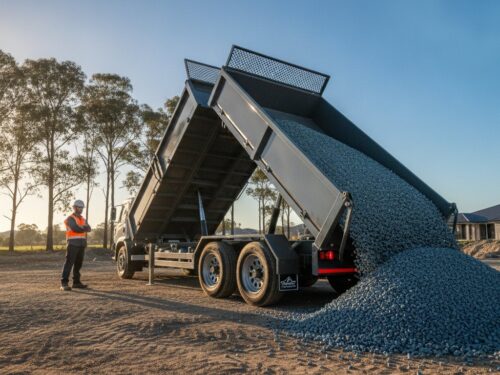
- 50mm Square Axles: These heavy-duty options are required for loads up to 2500kg. They offer the rigidity needed for commercial equipment and large tandem trailers.
Single vs Tandem Axle Requirements
Single axles are ideal for maneuverability and cost-efficiency with lighter loads. However, heavier trailers require tandem axle setups to distribute weight effectively. To find the required rating for a tandem trailer, you divide the total ATM by two. For a trailer with a 2000kg ATM, you need two axles each rated for at least 1000kg. It’s best to use identical axles for both positions to ensure consistent braking and suspension performance. This symmetry prevents one axle from taking more stress than the other. This reduces the chance of premature tyre wear or bearing failure during transit.
Measuring Axle Length: Face-to-Face vs Tip-to-Tip
Precision measurement is the only way to avoid tyre scrub or chassis interference. When determining what size axle do i need for my trailer, you must distinguish between “Tip-to-Tip” and “Face-to-Face” measurements. Tip-to-Tip refers to the overall length of the axle beam from one end to the other. While this is useful for shipping logistics, it is rarely the measurement a supplier needs to build or provide your axle. Using the wrong starting point often results in a part that simply does not fit the frame.
Face-to-Face (F-to-F) is the industry standard for ordering. This measurement captures the distance between the two flat surfaces where the wheel hubs sit. If this distance is incorrect, your tyres may rub against the trailer frame or protrude dangerously past the mudguards. While Federal axle weight limits focus on load capacity, physical dimensions determine road legality regarding maximum vehicle width. Accurate measurements ensure your trailer remains within legal limits while providing enough clearance for suspension travel. You will need a steel tape measure and a straight edge to get these figures right.
The Face-to-Face Measurement Process
To measure an existing trailer, you should strip the assembly down for accuracy. Follow these steps to get a reliable figure:
- Expose the spindle: Remove the wheels and hubs. Measuring over the top of hubs leads to inaccuracies.
- Locate the machined shoulder: Find the base of the machined shoulder on one side. This is where the inner bearing and seal will eventually sit.
- Measure across: Pull your tape measure to the identical shoulder on the opposite side. This is your Face-to-Face measurement.
Calculating Axle Length for New Builds
Designing a trailer from scratch requires you to work outwards from the chassis. Start with your chassis width. You must then factor in the clearance between the tyre sidewall and the trailer frame. This gap should usually be between 25mm and 50mm to allow for tyre bulge and suspension movement. You must also account for rim backspace. Backspace is the distance from the hub mounting surface to the inside edge of the wheel rim. If you use rims with a large offset, your hub faces must sit wider to compensate. If you are unsure about these calculations, view our range of axles to see standard sizing options. Identifying these variables early prevents the need for costly wheel spacers or chassis modifications later.
Selecting the Axle Profile: Round vs Square Designs
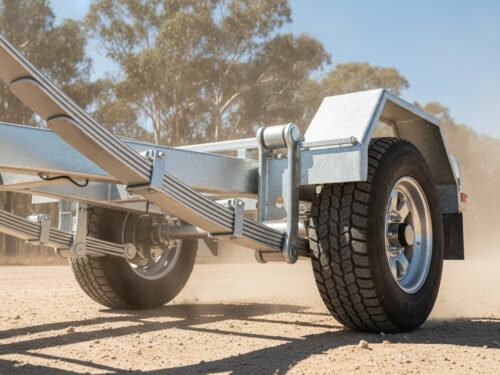
Choosing between a round or square profile is a decision based on structural requirements rather than preference. Square axles are the industry standard for Australian utility trailers because they provide a flat mounting surface for suspension components. This ensures that parts remain seated correctly during transit. Round axles are often preferred for lighter marine applications, such as boat trailers, where aesthetics and specific hub requirements differ. Both profiles serve distinct purposes in the transport sector.
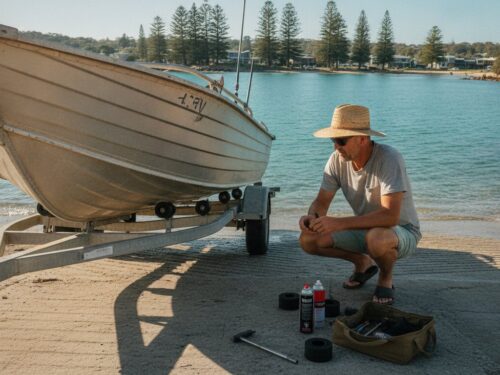
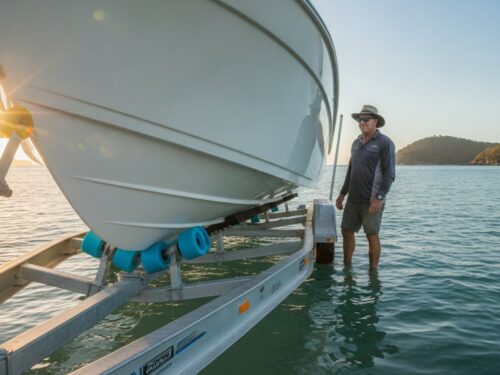
If you are operating in marine environments, galvanisation is essential. Saltwater causes rapid corrosion on raw steel axle beams. A galvanised finish protects the structural integrity of the metal, extending the life of your equipment. While square axles can be galvanised, round axles are frequently used on boat trailers because their shape allows for easier cleaning and maintenance in corrosive conditions. When asking what size axle do i need for my trailer, consider the environment as much as the weight. Durability in harsh regional conditions depends on selecting the right material finish from the start.
When to Use 39mm Round Axles
The Strength of 40mm and 45mm Square Axles
Square axles offer superior resistance to bowing under heavy loads. This is particularly important for tandem configurations where weight distribution is critical to safety. The flat surface area of a square beam provides a more stable seat for leaf springs. This stability prevents the axle from rotating or shifting under heavy braking force. It creates a rigid assembly that handles vibration better than round profiles in industrial settings.
A 45mm square axle provides significantly more rigidity than a 39mm round option. This makes square profiles the reliable choice for fleet managers and individual users who need hardware that survives demanding conditions. Secure mounting with galvanised U-bolts ensures the entire suspension system remains aligned. This directness in design allows for quick information retrieval when you’re matching components in the workshop. High-tensile square steel remains the benchmark for Australian trailers that need to perform under pressure.
Matching Axle Sizes with Hubs, Bearings, and Braking Systems
Selecting an axle beam is only the first step. You must also match the machined spindle at each end to the correct hubs and bearings. The spindle diameter dictates which bearing sets you can use. If you are asking what size axle do i need for my trailer, you are also asking which bearings will carry your load without overheating. Mismatched components lead to premature wear and potential hub failure on the road. Precision here is non-negotiable for long-term reliability.
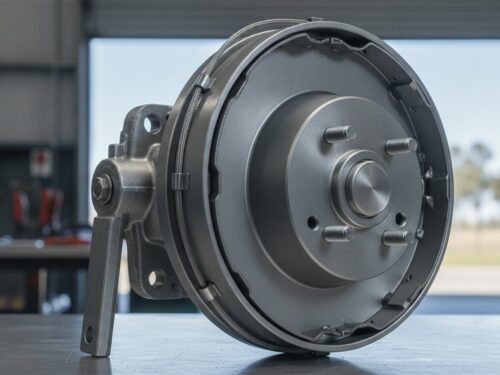
Axle capacity also determines your braking requirements under Australian Design Rules. Light trailers often use lazy hubs, which are unbraked assemblies designed for minimal weight. As your ATM increases, you must transition to braked systems to remain road-legal. Heavier 45mm and 50mm axles generally require larger bearing sets and more robust braking hardware to handle the increased kinetic energy of a loaded trailer. Always ensure your hub’s stud pattern matches your intended wheel rims to avoid fitment issues later.
Bearing Types: Holden vs Ford vs Slimline
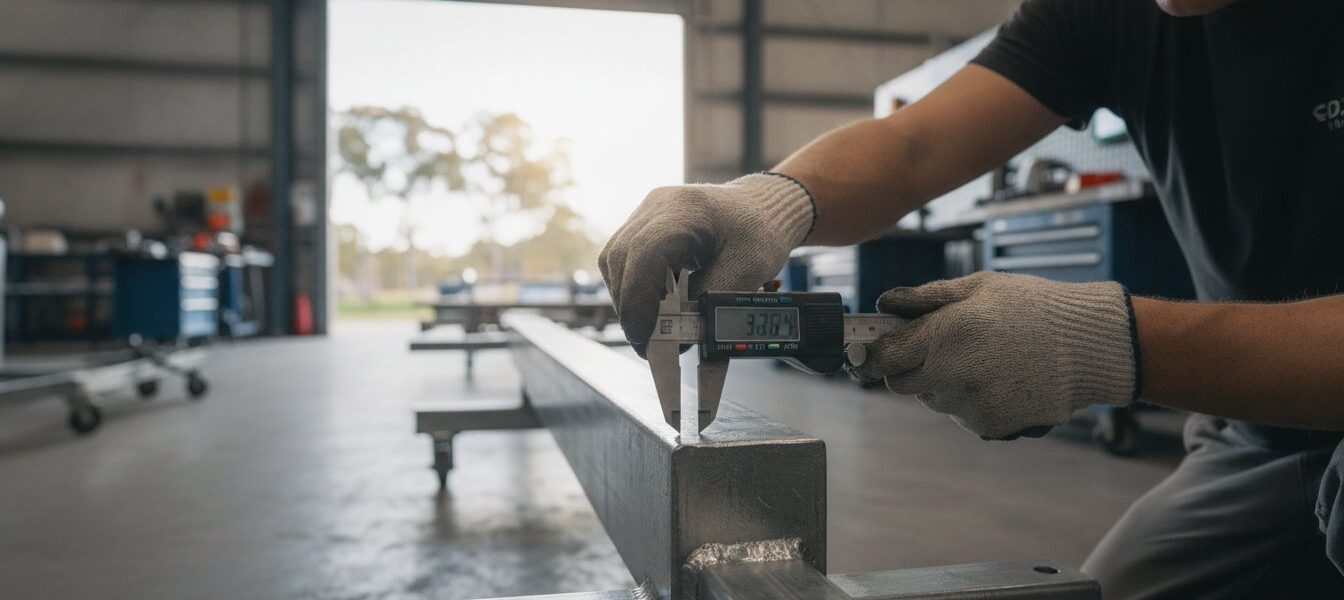
Bearing sets are categorized by their inner and outer diameters. Most 39mm round and 40mm square axles use Holden (LM) bearings, which are suitable for light-duty applications up to 1000kg. Ford (Slimline) bearings are the standard for 1450kg ratings and are commonly found on 45mm square axles. If you are building a heavy-duty rig, Parallel bearings use two identical large bearings to increase surface area and durability. You can identify your current type by checking the part numbers stamped on the bearing races before you place an order. Don’t rely on visual inspection alone; use a vernier caliper to confirm spindle thickness.
Integrating Braking Systems
Braking requirements are strictly regulated based on the trailer’s Gross Trailer Mass (GTM). For trailers between 750kg and 2000kg, you must have brakes fitted to at least one axle. 9 inch mechanical drum brakes are a cost-effective solution for trailers up to 1400kg. Once you exceed 2000kg GTM, you are legally required to have power-operated brakes on all wheels. 10 inch electric drum brakes are the preferred choice for these heavier applications. Matching brakes and calipers to your chosen axle thickness ensures the mounting plates align perfectly with the hub assembly. This prevents uneven pad wear and ensures maximum stopping power when you need it most.
If you need to upgrade your existing setup for better performance, browse our full range of axles and matching hub kits to find the right fit for your build.
Ensuring Durability with Quality Trailer Components
Durability starts with the material. Australian conditions demand high-tensile steel for every axle beam. Inferior alloys flex under load, leading to metal fatigue and eventual failure. When you have determined what size axle do i need for my trailer, ensure the steel meets local standards for thickness and strength. Local expertise is vital because Australian roads range from smooth highways to corrugated bush tracks. Choosing parts engineered for these extremes ensures your trailer remains a reliable tool for years.
Maintenance is the final pillar of trailer safety. Regularly check your bearing lubrication to prevent heat buildup and seizing. Grease loses its effectiveness over time, especially in marine environments. Inspect your axle beam for any signs of bowing or surface rust that could compromise its structural integrity. A proactive approach to maintenance saves time and prevents expensive roadside repairs. It’s about respecting the hardware and the work it performs.
Mounting and Hardware
Proper installation is as important as the axle itself. Use galvanised U-bolts to secure the axle to your leaf springs. Never reuse old U-bolts. These components stretch when torqued, and a second installation compromises their clamping force. Loose hardware leads to axle shifting and dangerous handling. Check your axle alignment and retighten all bolts after the first 100km of towing. This initial “settling” period is when most hardware issues occur.
Sourcing Reliable Parts
Quality components are the foundation of a safe build. We provide high-quality axles designed for national delivery and heavy-duty use. If you have specific questions about load ratings or custom configurations, contact us for expert advice. Our team understands the technical requirements of the transport sector. We help you find immediate solutions to mechanical problems without marketing rhetoric. Identifying what size axle do i need for my trailer becomes a simple process with the right technical support.
Final Pre-Purchase Checklist:
- Confirm the Face-to-Face measurement matches your chassis and wheel offset.
- Ensure the axle rating exceeds your intended Aggregate Trailer Mass (ATM).
- Match your bearing types (Holden, Ford, or Parallel) to the spindle size.
- Check that your braking system meets Australian Design Rules for your trailer’s weight.
- Inspect all mounting hardware and replace any worn U-bolts or nuts.
Build Your Trailer with Confidence
Selecting the right components is the difference between a reliable rig and a safety hazard. You now have the technical knowledge to calculate your Aggregate Trailer Mass and perform accurate Face-to-Face measurements. These steps ensure your axle fits perfectly and handles your intended load without failure. Determining what size axle do i need for my trailer is a straightforward process when you prioritize physical dimensions and structural ratings. Matching these to ADR-compliant hubs and braking systems guarantees your trailer remains road-legal and durable under harsh conditions.
We are an Australian-owned and operated specialist providing hardware that stands up to the demands of the transport sector. We offer nationwide shipping on all parts to ensure you get the solutions you need quickly. Browse our range of high-quality trailer axles and components to find the right fit for your project. High-tensile steel and precision engineering will give you the peace of mind required for your next heavy-duty build. Get your trailer back on the road with parts you can trust.
Frequently Asked Questions
How do I know if I need a 39mm or 45mm axle?
Base your choice on the Aggregate Trailer Mass (ATM) of your build. A 39mm round axle is generally rated for light-duty applications up to 1000kg. If your loaded trailer weight exceeds this limit, you must upgrade to a 45mm square axle, which is rated for 1450kg. Always select an axle rating that provides a safety margin above your maximum expected load.
What is the maximum width allowed for a trailer in Australia?
The maximum legal width for a trailer on Australian roads is 2.5 metres. This measurement is taken at the widest point, which usually includes the wheels or mudguards. Ensuring your face-to-face axle measurement accounts for tyre bulge is critical to staying within this limit. Exceeding 2.5 metres makes the trailer illegal for standard road use.
Can I replace a round axle with a square one?
You can replace a round axle with a square profile as long as the face-to-face measurement remains identical. Square axles are often preferred for utility trailers because the flat surface provides a more stable mounting point for leaf springs. You will need to purchase new galvanised U-bolts that match the square dimensions of the new axle beam.
How do I measure the face-to-face distance on my trailer?
Measure the distance between the machined shoulders on each spindle where the hubs sit. You should remove the wheels and hubs to get an accurate reading with a steel tape measure. This figure is the industry standard for ordering. It ensures your hubs and wheels will sit at the correct width to clear the trailer chassis.
Do I need brakes on a single axle trailer?
Brakes are legally required in Australia if the Gross Trailer Mass (GTM) is over 750kg. If you are asking what size axle do i need for my trailer and your loaded weight is above this threshold, you must install a braking system. Trailers with a GTM below 750kg can use unbraked lazy hubs, but heavier loads require mechanical or electric brakes.
What happens if I overload my trailer axle?
Overloading causes the axle beam to flex beyond its structural limit, leading to permanent bowing. This deformation ruins wheel alignment and causes rapid, uneven tyre wear. Excessive weight also generates extreme heat in the bearings, which can lead to hub seizure or spindle failure while you are towing at high speeds.
How often should I check my trailer axle and bearings?
Inspect your axle assembly and bearings every 12 months or every 10,000km. If you use a boat trailer in saltwater, you should perform these checks after every few trips. Look for signs of grease leakage, physical damage to the axle beam, or play in the hub assembly. Regular lubrication is the best way to prevent roadside breakdowns.
What is the difference between a lazy hub and a braked hub?
A lazy hub is a simple, unbraked assembly used when the trailer’s GTM is under 750kg. It provides a mounting point for the wheel but has no stopping power of its own. A braked hub includes a drum or disc that connects to a braking system. Using braked hubs is a legal requirement for heavier trailers and significantly improves towing safety.