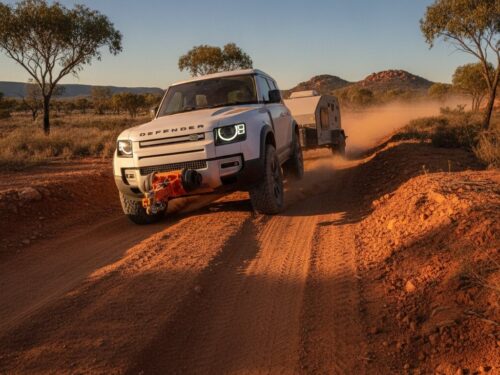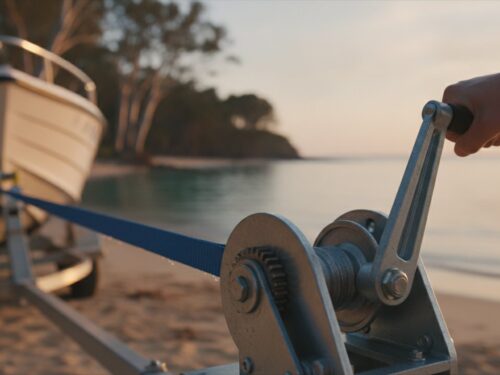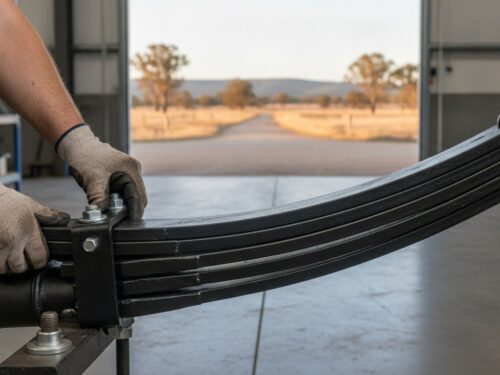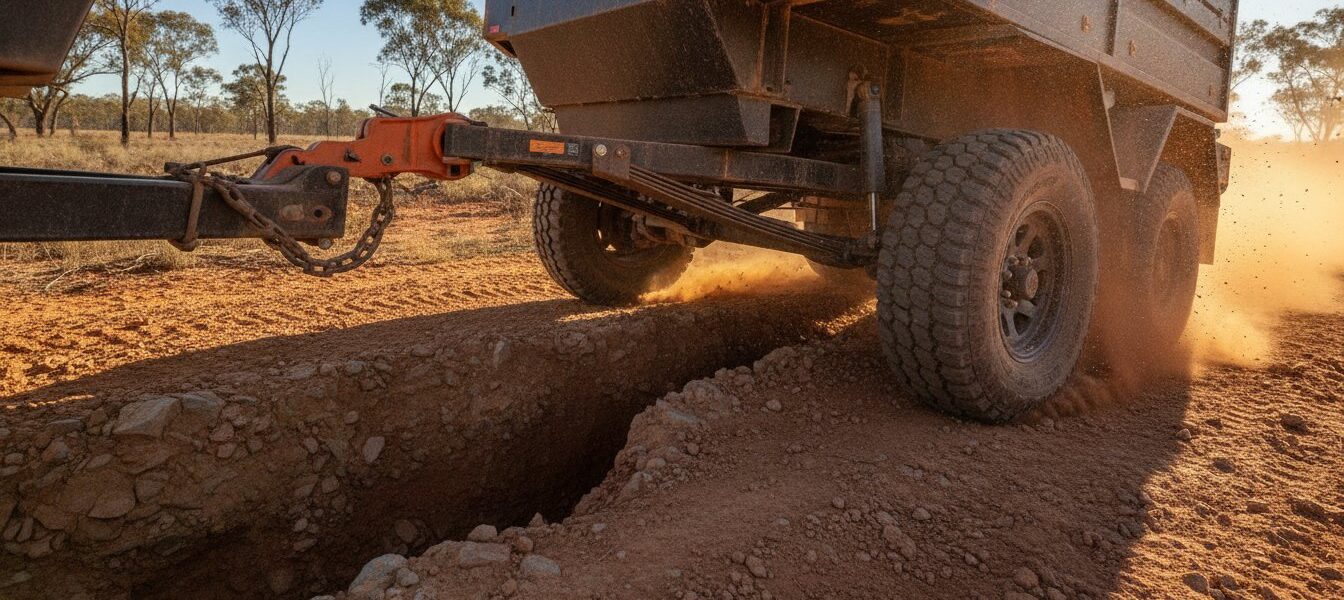
What if the standard hitch you trust is actually the weakest link in your off-road setup? You know that remote Australian tracks don’t forgive technical shortcuts. Constant corrugations and steep washouts can rattle a poorly spec’d trailer to pieces in a single afternoon. It’s frustrating to face component failure when you’re hundreds of kilometers from the nearest workshop. You need gear that’s built for more than just a highway run.
As an off road trailer parts specialist, we understand that durability is a requirement, not an option. We’ll help you identify the heavy-duty components required to build or maintain a trailer that survives the harshest terrain. You’ll learn how to select the right square axles, poly block couplings, and leaf springs to increase ground clearance and maintain reliable braking in thick dust or mud. We’ll look at how to source hardware that complies with Vehicle Standards Bulletin 1 and Australian Design Rules. This ensures your trailer remains legal and resilient on every track. This information helps you move from confusion over load ratings to total confidence in your hardware’s performance.
Key Takeaways
- Understand why 45mm and 50mm square axles are the industry standard for resisting structural fatigue on corrugated Australian tracks.
- Learn how poly block off-road couplings prevent binding and allow for the extreme articulation needed in deep ruts and washouts.
- Compare the dampening benefits of 5 leaf eye-to-eye springs against standard setups to protect your trailer frame from high vertical G-forces.
- Partner with an off road trailer parts specialist to source heavy-duty components that comply with national engineering standards for remote travel.
- Identify reliable braking systems, such as 10 inch electric drum brakes, designed to perform consistently in heavy dust and mud.
Requirements for Off-Road Trailer Engineering
An Off-road trailer must handle forces that would snap a standard box trailer in half. Highway trailers are engineered for smooth asphalt and predictable loads. Off-road conditions introduce vertical G-forces that can reach three times the weight of the trailer during hard impacts. Corrugated tracks create a high-frequency vibration that loosens every bolt and stresses every weld. This isn’t just about strength. It’s about resilience.
Dust ingress and water crossings are the next hurdle. Standard seals fail in fine bull dust. Water crossings can flood bearings and short out electrical systems. High ground clearance is essential to prevent the chassis from bottoming out in deep washouts or ruts. As an off road trailer parts specialist, we’ve seen that off-road engineering requires a different mindset. You must build for the worst-case scenario to ensure you make it home.
Standard vs. Off-Road Component Stress
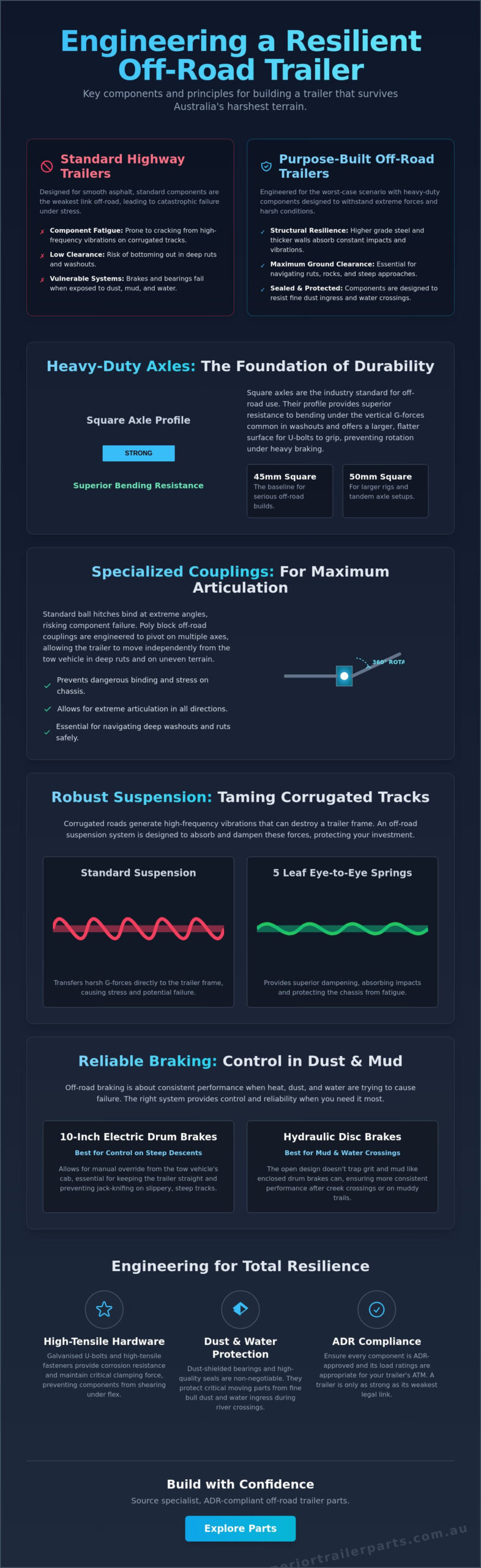
Standard components aren’t built for lateral stress. When you descend a steep, rocky incline, the trailer’s weight shifts unevenly. This puts immense pressure on the axle and suspension mounts. Standard mild steel suffers from material fatigue much faster under constant vibration. Off-road hardware uses thicker wall sections and higher grades of steel to absorb these cycles without cracking. A specialist knows that standard components often fail at the weld points first under these conditions.
The Role of High-Tensile Hardware
Every fastener must be up to the task. Galvanised U-bolts are a primary example. They provide the necessary corrosion resistance for creek crossings while maintaining the clamping force required to keep the axle seated. High-tensile fasteners prevent shearing when the trailer chassis flexes over uneven ground. Without reinforced mounting points, even the most expensive suspension system will eventually tear away from the frame.
Australian Design Rules (ADR) Compliance
Engineering for the bush doesn’t mean ignoring the law. Every off-road component must adhere to national safety standards. Working with an off road trailer parts specialist ensures you stay legal while increasing durability. You must verify the load ratings for every individual component in the assembly. This includes everything from the axles to the safety chains. A trailer is only as strong as its weakest ADR-approved link.
Heavy-Duty Axles and Braking Systems
Axles endure the most direct abuse on any remote track. A failed axle usually means an expensive recovery mission. Square axles offer a distinct advantage over round profiles because they provide superior resistance to bending. Round axles are common on light-duty trailers, but they often bow under the vertical loads found in washouts. Choosing the right profile is a job for an off road trailer parts specialist who understands the physics of corrugated terrain. Square steel provides more surface area for U-bolts to grip, which prevents the axle from rotating under heavy braking torque.
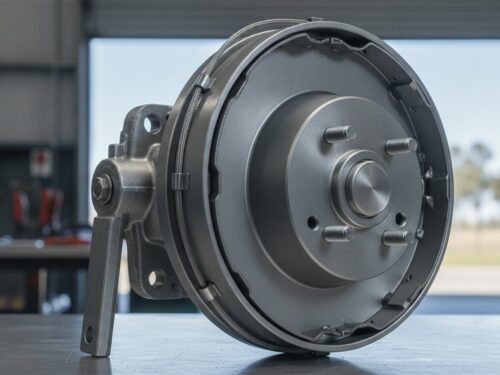
Heat and contamination are the primary enemies of off-road braking. Standard highway brakes often fail when they become clogged with bull dust or submerged in river crossings. You need a system that remains responsive even when the hardware is coated in grit. Reliable braking isn’t just about stopping power. It’s about heat dissipation and ease of maintenance in the field. Disc brakes are generally easier to clean, while electric drum brakes offer better integration with modern tow vehicle controllers.
Selecting the Right Axle Profile
45mm square axles are the baseline for serious off-road builds. They handle the torque and impact of corrugated roads without flexing. For larger rigs or tandem setups, 50mm square axles provide the necessary rigidity to prevent structural failure. You can find technical specifications and load ratings in this comprehensive axle resource. Always match your axle choice to the maximum anticipated ATM of your trailer to avoid premature fatigue.
Off-Road Braking Technology
Braking in the bush is about control. 10 inch electric drum brakes are a popular choice because they allow the driver to manually override the trailer’s brakes from the cab. This is vital when you’re descending steep, slippery tracks and need to keep the trailer straight. If you frequent creek crossings or drive through thick mud, hydraulic disc brake kits are a better investment. They don’t trap grit like drum brakes do. Ensure you use dust-shielded bearings to protect the internal components from fine particles. Check your current load requirements before you speak with our team about a custom axle setup.
- 45mm Square Axles: Ideal for single-axle trailers up to 1450kg.
- 50mm Square Axles: Essential for heavy tandem builds or 2-tonne single axles.
- Electric Drum Brakes: Best for fine-tuned driver control on steep descents.
- Hydraulic Disc Brakes: Superior performance in wet and muddy conditions.
Specialized Off-Road Couplings and Hitches
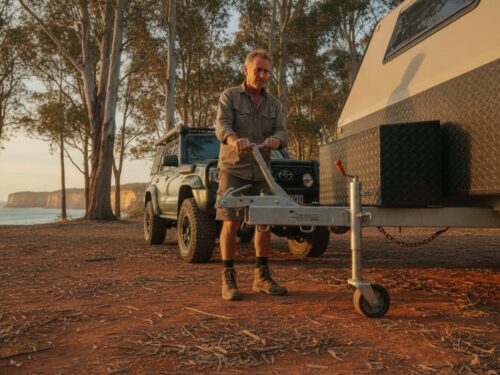
Standard 50mm ball hitches are designed for the highway. They work well until your vehicle is climbing a steep ledge while the trailer is still in a dip. In this scenario, the neck of a standard ball hitch can bind or even snap. Worse, the ball can pop out of the housing under extreme tension. An off road trailer parts specialist will always recommend a coupling designed for 360-degree rotation. This allows the trailer to twist independently of the tow vehicle without putting stress on the chassis or the tow bar.
Articulation is the primary difference between a highway trailer and a true off-road rig. High-angle articulation ensures that your trailer follows through washouts and over rocks without acting as a lever that lifts your vehicle’s rear wheels. Quick-release mechanisms are also essential. If you get bogged in sand or mud, you need to be able to disconnect the trailer quickly, even when it’s at an awkward angle. Standard hitches often jam under load, making recovery nearly impossible without a jack.
The Poly Block Advantage
Poly block hitches use a heavy-duty polyurethane block to provide the connection point. This material is superior for remote travel because it absorbs shock and vibration better than metal-on-metal systems. It reduces the constant clunking felt through the tow vehicle, providing a silent towing experience on rough terrain. You can explore our range of specialized couplings to find a unit that matches your trailer’s weight and mounting pattern. These units are specifically designed to handle the grit and grime of Australian tracks without seizing.
Articulation and Safety
Safety doesn’t stop at the hitch. Your secondary safety chains must be rated for the full Gross Trailer Mass (GTM) of the loaded trailer. Don’t rely on standard hardware store chains. Ensure they are long enough to allow for full articulation but short enough to catch the drawbar before it hits the ground. Proper hitch height is also critical. A hitch that sits too low reduces your departure angle, making it likely to scrape or hang up on obstacles. A specialist setup maintains a level profile between the vehicle and trailer. This ensures the weight distribution remains consistent across the axles discussed in the previous section, preventing the trailer from swaying at speed.
Suspension Systems for Corrugated Tracks
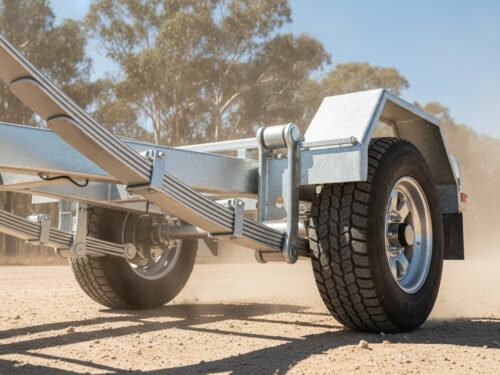
Corrugated tracks act like a jackhammer on your trailer’s chassis. The suspension is the only barrier protecting your frame and cargo from this constant vibration. While independent coil systems are an option, leaf springs remain the most reliable choice for remote travel. They are simple, durable, and repairable in the field. If a leaf snaps in a remote area, you can often secure it with a heavy-duty clamp to reach the next town. An off road trailer parts specialist prioritizes this kind of mechanical simplicity because it prevents a minor failure from becoming a permanent breakdown.
Dust is the other major enemy of suspension longevity. Fine bull dust enters every moving part and acts as an abrasive. Standard dry bushes will fail quickly under these conditions. You need hardware that can withstand grit without seizing or wearing through the mounting pins. Greasable shackles allow you to flush out contaminants during your daily maintenance checks. This ensures your suspension continues to move freely through its full range of travel.
Eye-to-Eye vs. Slipper Springs
Slipper springs are the standard for highway trailers. They are cost-effective but have significant drawbacks on rough terrain. In extreme flex situations, a slipper spring can actually “walk” out of its keeper, leaving the axle unsupported. 5 leaf eye-to-eye springs provide a much more controlled rebound. Because they are bolted at both ends, they keep the axle securely positioned even during deep washouts. Check our leaf spring selection for heavy-duty options that offer better dampening on corrugated roads.
Tandem Axle Dynamics
Tandem axle trailers face unique challenges in ruts and washouts. Without a load-sharing system, one axle can be forced to carry the entire weight of the trailer as it crosses an obstacle. Rocker roller sets are essential for maintaining tyre contact on uneven ground. These systems allow the front and rear springs to work together, distributing the load evenly across both axles. This prevents individual component overload and keeps the trailer stable at speed. Heavier off-road builds typically require 6 or 7 leaf configurations to handle the increased ATM without sagging. If you’re building a tandem rig, browse our rocker roller spring sets to ensure your suspension is up to the task.
- 5 Leaf Eye-to-Eye Springs: Superior rebound control and axle security.
- Rocker Roller Sets: Essential for load sharing on tandem off-road trailers.
- Greasable Shackles: Necessary for flushing out dust and extending bush life.
- Nylon Bushes: High-wear resistance for dry, dusty environments.
Sourcing Specialist Trailer Hardware in Australia
Building a trailer for the bush requires more than just heavy steel. You need a supply chain that understands the specific stresses of Australian terrain. Sourcing components from a dedicated off road trailer parts specialist ensures that every part in your assembly is designed to work together. This compatibility is vital for maintaining ADR compliance and avoiding mechanical failure on remote tracks. Buying from a one-stop shop also reduces logistical headaches. It minimizes shipping costs for heavy items like 50mm square axles and rocker roller spring sets. When every component comes from the same reliable source, you eliminate the risk of mismatched hardware during the assembly phase.
Nationwide Accessibility and Support
Reliable delivery is essential for builders located outside major metropolitan areas. We provide nationwide shipping to ensure that high-quality hardware reaches every corner of the country, from coastal workshops to remote cattle stations. Beyond just supplying parts, we offer the technical knowledge required for complex manufacturing projects. Whether you are upgrading a 7×4 single axle box trailer or building a custom tandem rig, expert advice is always available. You can contact our technical team for specific hardware dimensions and load ratings before you start your build. This support helps you navigate the complexities of national safety standards and ensures your trailer is fit for purpose.
Quality Assurance and Reliability
- Nationwide Shipping: Access heavy-duty parts from any region in Australia.
- Technical Expertise: Receive ADR-compliant advice for custom trailer builds.
- Component Compatibility: Ensure your axles, brakes, and suspension work as a single system.
- Regional Dependability: Source hardware designed specifically for local environmental extremes.
Prepare Your Trailer for Remote Tracks
Selecting hardware for the Australian bush requires a focus on high-tensile strength and mechanical simplicity. You now understand why 50mm square axles and poly block couplings are necessary to handle the extreme articulation and vibration of corrugated roads. Choosing eye-to-eye leaf springs over standard slipper systems ensures your axle remains secure during deep washouts. This approach minimizes the risk of structural fatigue and keeps your trailer legal under national safety standards. As an off road trailer parts specialist, we provide the heavy-duty components required to keep your rig moving.
We are Australian-owned and operated, providing the regional dependability you need for remote travel. Our team offers specialist technical support for custom builds and provides nationwide shipping on all components. Don’t risk a breakdown on a remote track by using underspecified hardware. Browse our full range of specialist trailer parts to start your build with confidence. Your next adventure depends on the reliability of your hardware. Get the job done right the first time and enjoy the peace of mind that comes with professional-grade engineering.
Frequently Asked Questions
What is the best axle for an off-road trailer?
Square axles are the industry standard for off-road applications because they resist bending under high vertical G-forces. A 45mm or 50mm square axle offers superior rigidity compared to round alternatives. This strength is essential for maintaining wheel alignment while crossing deep ruts or washouts. An off road trailer parts specialist can help you determine the specific load rating required for your trailer’s maximum ATM to prevent structural bowing.
Do I need electric brakes for off-road towing?
Electric brakes are highly recommended for off-road towing because they offer manual override control from the cab. 10 inch electric drum brakes allow you to apply the trailer brakes independently to straighten the rig during steep, slippery descents. This prevents the trailer from pushing the vehicle or jackknifing on loose surfaces. It’s a vital safety feature that provides much more control than mechanical over-ride systems on technical tracks.
Why should I use a poly block coupling instead of a standard ball hitch?
Poly block couplings provide 360-degree rotation and higher articulation angles than a standard 50mm ball hitch. Standard hitches can bind or snap when the vehicle and trailer are at extreme opposing angles in deep ruts. The polyurethane block also absorbs shock and vibration from corrugated tracks. This protects your chassis and tow bar from the constant metal-on-metal impact found in standard highway setups.
How do I protect my trailer bearings from dust and water?
You must use dust-shielded bearings and high-quality seals to prevent contamination in remote areas. Fine bull dust and creek water will quickly destroy standard bearings if they aren’t properly protected. Maintenance is also a priority. Use greasable shackles and hubs to flush out grit after every major trip through harsh environments. This ensures the internal components remain lubricated and free from abrasive particles.
What leaf spring count is best for a 1500kg off-road trailer?
A 5 leaf eye-to-eye spring set is the most effective choice for a 1500kg off-road trailer. This configuration provides the necessary dampening to handle corrugated tracks without being so stiff that it causes the trailer to bounce. Eye-to-eye springs offer more controlled rebound and security than slipper springs. This ensures the axle remains correctly positioned even during extreme suspension travel in washouts or rocky terrain.
Can I use standard LED lights for water crossings?
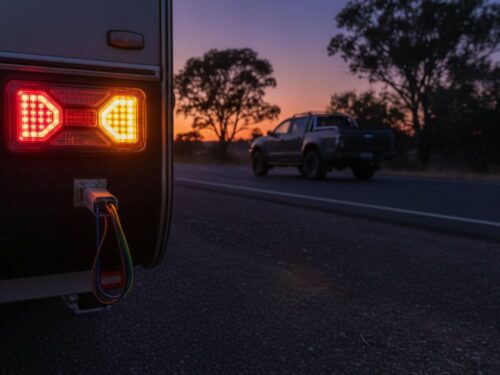
You should only use LED submersible tail lights for trailers that encounter water crossings. Standard LED lights aren’t always fully sealed against high-pressure water ingress or fine dust. Submersible units are specifically designed to remain functional even when completely underwater. This prevents electrical shorts and ensures you remain legal on the road after leaving the creek. Always check your trailer plug adapters for corrosion after submerged crossings.
How often should I inspect my off-road trailer suspension?
Inspect your suspension before and after every trip into remote areas. Check for loose galvanised U-bolts, worn bushes, and any signs of leaf spring fatigue or cracking. Corrugations can loosen fasteners that were perfectly tight at the start of the day. As an off road trailer parts specialist, we recommend a daily visual check of all mounting points and shackles when traveling on unsealed tracks for long periods.