A misaligned boat retrieval is more than a nuisance; it’s a direct threat to your hull’s structural integrity. Most boaters accept the frustration of multiple loading attempts and heavy physical strain as an unavoidable part of the day. You’ve likely spent too much time manually winching or repositioning a vessel in heavy currents while other ramp users wait. It’s a high-stress situation that leads to preventable damage. Installing self centering boat trailer rollers changes this dynamic by turning a difficult retrieval into a predictable, drive-on process.
Efficient loading requires hardware that performs under pressure. Durability and performance are the only metrics that matter when you’re operating solo at a busy ramp. By upgrading your trailer hardware, you can eliminate loading frustration and ensure long-term protection for your boat hull. This article explains the geometric principles behind self-centering systems and how the right combination of roller taper and bracket pivot creates a seamless loading experience. We will look at how these components reduce physical strain and keep your boat locked on center, regardless of the water conditions.
Key Takeaways
- Understand how tapered V-shaped designs use gravity to align the keel automatically for a straight load every time.
- Learn the specific roles of keel and wobble rollers in a self centering boat trailer rollers system to ensure maximum hull stability.
- Discover how self-aligning hardware simplifies solo retrievals and significantly reduces time spent on congested boat ramps.
- Identify the essential tools and maintenance steps, including the use of marine grease, required to retrofit your existing trailer.
- Differentiate between standard imports and high-performance poly rollers built to withstand harsh local marine conditions.
The Mechanics of Self Centering Boat Trailer Rollers
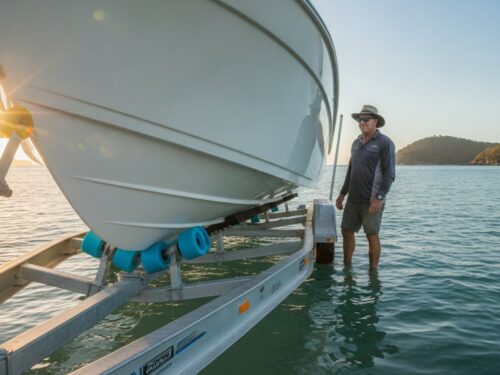
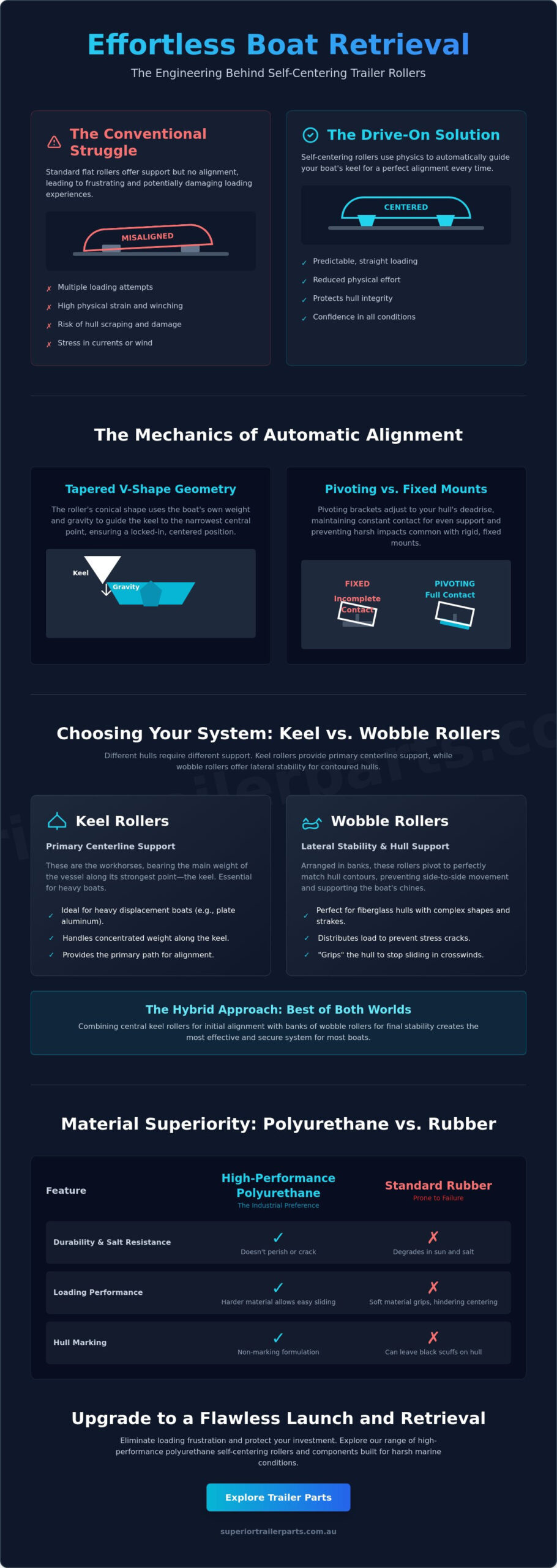
Self centering boat trailer rollers are not just supports; they are active alignment tools. A standard cylindrical roller is reactive. It supports weight but does nothing to correct a poor approach. If a gust of wind or a strong current pushes your boat six inches to the left, a flat roller will let the keel stay there. This often results in the hull scraping the trailer frame or sitting crooked during transport. These specialized boat trailer parts use geometric design to create a path of least resistance that leads directly to the center of the trailer.
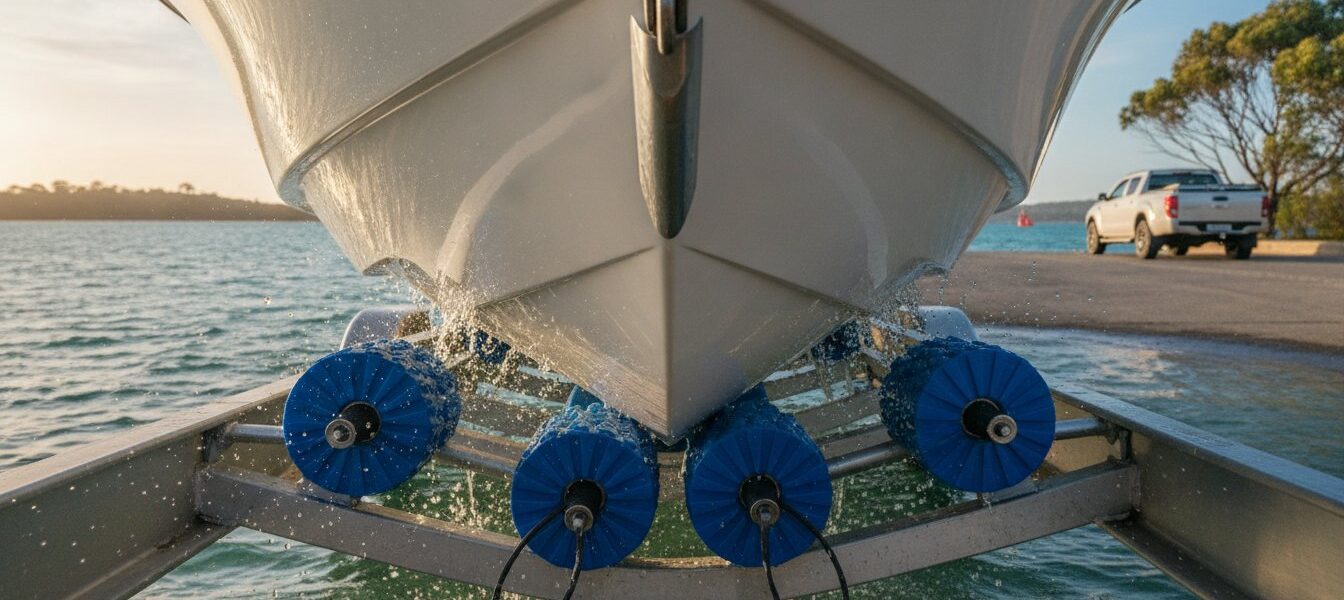
The Trailer (vehicle) industry relies on these components to handle the lateral forces encountered during retrieval. Standard rollers fail because they lack a directional bias. If the hull hits a flat surface off-center, it remains there, often leading to frame contact or uneven weight distribution. The V-shape design of self centering boat trailer rollers works by utilizing the boat’s own weight and the tension of the winch. As the keel contacts the wider diameter of the roller, gravity pulls it down toward the narrower center. This keeps the vessel locked in position even if the stern is still being pushed by the tide.
Tapered Geometry and Keel Alignment
The decreasing diameter toward the center creates a natural track for the keel to follow. Material hardness is a major factor in this process. Soft rubber rollers tend to grip the hull, which can stall the centering action. Harder materials like polyurethane allow the keel to slide laterally until it reaches the center point. The centering effect is a direct result of the roller’s conical shape forcing the keel toward the narrowest point through gravitational and mechanical pressure.
Pivoting Brackets vs. Fixed Mounts
While tapered rollers handle the keel, pivoting brackets manage the hull’s deadrise. A fixed mount is static. If your boat approaches at a slight angle, a fixed roller only makes contact on one edge. Pivoting systems allow the entire roller assembly to tilt and adjust as the boat moves onto the trailer. This flexibility provides a significant mechanical advantage during the initial winch-on phase. The pivot allows the rollers to climb the hull, providing constant contact and preventing the thumping often felt with fixed hardware. Multi-roller self-aligning systems offer superior load distribution, ensuring that no single point of the hull takes the full weight of the vessel as it transitions from the water to the trailer.
Comparing Keel Rollers and Wobble Roller Systems
Choosing the right configuration for self centering boat trailer rollers depends on your hull material and weight distribution. Keel rollers and wobble rollers serve different mechanical purposes. Keel rollers act as the primary weight-bearing components. They sit directly under the strongest part of the boat to provide vertical support. Wobble rollers provide lateral stability. They don’t carry the main load but prevent the boat from tilting or sliding sideways during retrieval. A hybrid approach often provides the best results for most operators.
Keel Rollers for Heavy Displacement
Heavy plate aluminium boats rely on central keel support for proper alignment. The keel is engineered to handle concentrated weight. If you use side supports as the primary load bearers on a heavy boat, you risk hull deformation. In Australia, standard keel rollers are typically designed for 16mm or 20mm pin diameters. Material choice is critical for performance. Polyurethane is the industrial preference over traditional rubber. It’s more durable and doesn’t perish in harsh salt environments. Harder polyurethane also facilitates a better slide. This allows the hull to move into the center track without the friction that rubber rollers often create.
Wobble Rollers for Hull Contours
Fiberglass hulls have complex shapes and strakes that require distributed support. Unlike rigid aluminium plates, fiberglass can develop stress cracks if the load is concentrated in one small area. Wobble rollers “grip” the strakes of the hull. This prevents the boat from sliding off-center when you’re loading in a crosswind or current. The arms on these systems are self-adjusting. They pivot to match the specific deadrise of your hull as the boat moves forward onto the trailer. You can explore our range of wobble rollers to see how different configurations support various hull designs.
A hybrid setup uses keel rollers for initial alignment and wobble rollers for final stability. This combination ensures the boat stays locked on the center line during the entire winching process. Maintaining this balance is a key part of Boat Trailer Safety. It reduces the risk of the vessel shifting during road transport. If you’re unsure which hardware fits your specific frame, you can find high-quality keel rollers and brackets designed for heavy-duty use in our marine hardware category. Proper hardware selection ensures your trailer performs reliably every time you hit the ramp.
The Advantages of Self-Aligning Systems for Solo Operators
Retrieving a vessel alone requires precision hardware. You cannot be at the winch and the stern simultaneously to guide the boat onto the trailer. Self centering boat trailer rollers act as a mechanical deckhand. They catch the bow and force it toward the center-line without manual intervention. This setup eliminates the need for a helper to stand in the water or on the ramp. It turns a high-stress task into a routine operation. When you operate solo, you need equipment that compensates for the lack of an extra set of hands.
Speed at the ramp is a matter of professional courtesy and operational efficiency. Congested ramps lead to rushed decisions and equipment failure. A predictable retrieval process allows you to clear the lane faster, which reduces friction with other boaters. This hardware specifically prevents “ramp rash,” which occurs when a misaligned hull scrapes the trailer frame. Gelcoat repairs are expensive and can sideline your vessel for weeks. High-quality boat trailer parts are a preventative measure against structural and cosmetic damage that often goes unnoticed until it’s too late.
Safety and Risk Mitigation
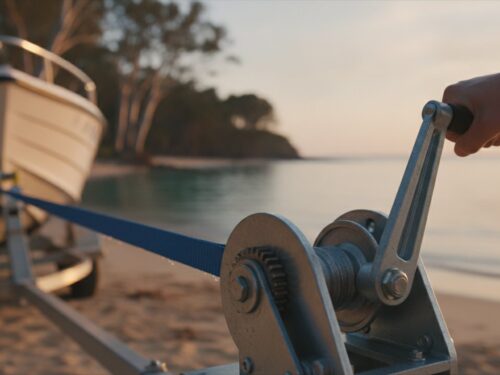
Safety remains the primary reason to upgrade your loading system. An off-center boat creates uneven weight distribution across the trailer axles. This imbalance puts excessive strain on your winch cable and manual boat winches. Self centering boat trailer rollers reduce the risk of the boat sliding off the side of the trailer during a steep retrieval. You won’t have to stop and make dangerous winch-post adjustments while the cable is under maximum tension. The hardware keeps the vessel stable and centered while you secure the safety chain and prepare for road transport.
Efficiency in High-Current Environments
Cross-currents and wind gusts cause most loading failures. They push the stern out of alignment just as the bow meets the trailer. The design of self-centering hardware provides a critical “catch” point that standard rollers lack. This counters lateral forces immediately upon contact. It creates a reliable “drive-on” experience for those with the appropriate trailer setup. You can maintain steady momentum knowing the rollers will guide the keel into the central track. This predictability is vital when weather conditions deteriorate and you need to exit the water quickly before a storm hits.
Installing and Maintaining Your Trailer Loading Hardware
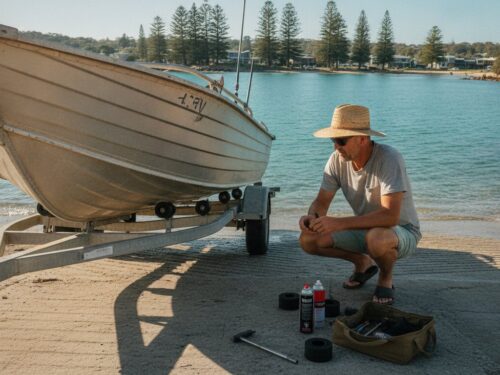
Retrofitting your trailer with self centering boat trailer rollers is a practical mechanical upgrade that requires standard hand tools. You will need a socket set, open-ended spanners, and high-quality waterproof marine grease. Before starting, ensure your trailer is on level ground and the boat is securely supported if you aren’t performing the swap at the ramp. Using galvanised hardware is a non-negotiable requirement for salt-water environments. Zinc-plated alternatives will corrode rapidly, leading to seized bolts and structural failure during transport.
Correct height alignment is the most critical factor during installation. The rollers must sit at a height that allows the keel to clear the trailer cross-members without creating excessive vertical lift. If the rollers are set too high, they put unnecessary strain on the winch post and bow stop. If they are too low, the centering effect is lost because the hull will strike the trailer frame before the roller can guide it. Aim for a configuration where the keel makes contact with the first self centering boat trailer rollers while the bow is still submerged. This initial contact point dictates the success of the entire retrieval.
Retrofitting Steps for Australian Trailers
Measure your cross-member width before purchasing new brackets. Australian trailers typically utilize 50mm, 75mm, or 100mm square sections. Ensure your replacement brackets match these dimensions to prevent shifting under load. When mounting the hardware, set the roller angle to match your hull’s deadrise. This ensures maximum surface contact and prevents the keel from “jumping” the roller. Secure the assembly using heavy-duty hardware to maintain alignment. You can find galvanised U-bolts for your installation to ensure the brackets remain locked in place during heavy use.
Long-Term Maintenance Checklist
Marine hardware operates in a highly corrosive environment. Perform a visual inspection every six months to ensure the system remains reliable. Follow this checklist to maintain peak performance:
- Inspect poly rollers: Look for flat spots caused by prolonged storage or UV degradation that can harden the material and reduce grip.
- Lubricate pivot points: Apply waterproof marine grease to the internal pins and pivot points to ensure the rollers spin freely.
- Check fasteners: Examine split pins and washers for signs of “tea staining” or heavy rust that could lead to a roller falling off during transit.
- Verify bracket torque: Ensure U-bolts haven’t vibrated loose, which can cause the roller assembly to tilt out of alignment.
If you are starting a new build or replacing worn components, view our heavy-duty keel rollers to ensure your trailer is equipped for the harshest conditions. Consistent maintenance prevents the mechanical failures that cause stress at the boat ramp.
Selecting Quality Marine Components for Reliable Transport
Australian marine environments are unforgiving. Road vibration, high UV exposure, and constant salt-water immersion will quickly expose the weaknesses in sub-standard hardware. Selecting high-quality self centering boat trailer rollers is a matter of long-term vehicle maintenance and safety. Cheap imports often utilize low-grade plastics that crack under pressure or perish in the sun. Professional operators prioritize heavy-duty poly rollers because they maintain their shape and functionality over years of service. Durable components ensure that your trailer remains a reliable tool rather than a source of mechanical frustration.
Material selection is the primary differentiator between a basic trailer and a professional-grade transport system. Superior Trailer Parts provides hardware tested for local conditions. We prioritize materials that offer high load-bearing capacity and low friction. This ensures the self centering boat trailer rollers remain effective even as the components age. A fully optimised setup reduces the total cost of ownership by preventing damage to the boat and reducing the frequency of hardware replacements.
Durability in Harsh Marine Conditions
Salt water acts as a catalyst for corrosion, especially in moving parts like roller pins and brackets. High-density polyethylene is the industry standard for longevity because it is chemically inert and resistant to impact. Standard rubber rollers often leave black marks on fiberglass hulls and rot after minimal exposure to salt. Choosing hot-dipped galvanised steel brackets is essential for saltwater use to prevent structural rust from compromising your trailer’s integrity. These components provide the resilience needed for frequent launching in coastal areas.
Comprehensive Trailer Support
A reliable trailer functions as a complete system. You must pair your rollers with compatible hardware to maximise efficiency. Ensure your manual boat winches are rated for your vessel’s displacement and that your LED submersible tail lights are fully sealed against water ingress. Integrating these parts correctly prevents failures at the ramp. For technical information on hardware specifications, view our range of boat trailer parts. If you need help with specific measurements or compatibility, contact us for technical advice on your trailer setup.
Use this final checklist to verify your setup before your next trip:
- Material match: Confirm rollers are polyurethane or HDPE for fiberglass or aluminium hulls.
- Hardware finish: Verify all U-bolts and brackets are hot-dipped galvanised.
- Weight rating: Ensure the roller count and axle capacity match the boat’s total weight.
- System check: Test the winch and lights for full functionality before leaving the driveway.
Optimise Your Trailer for Efficient Marine Retrieval
Efficient boat retrieval is a result of choosing hardware that works with physics rather than against it. You now understand how tapered geometry and pivoting brackets create a path that leads every keel to the center point. By upgrading to self centering boat trailer rollers, you eliminate the guesswork and physical strain that often define a day at the ramp. These systems turn a high-stress solo operation into a routine, predictable task. Quality remains the most important factor for long-term reliability in harsh salt-water environments.
Superior Trailer Parts is an Australian owned and operated business. We are specialists in heavy-duty marine hardware designed for local conditions. We provide durable solutions that protect your hull from ramp rash and structural stress. Our team offers nationwide shipping to ensure you have access to the professional-grade components required for a safe, drive-on trailer experience. Browse our full range of high-quality boat trailer rollers today to find the right fit for your vessel. Equipping your trailer with the right hardware ensures your focus remains on the water rather than the logistics of the ramp.
Frequently Asked Questions
Will self-centering rollers work on both aluminium and fiberglass boats?
Self-centering rollers are compatible with both hull types. For fiberglass vessels, use polyurethane rollers to prevent the black scuff marks often associated with traditional rubber. Aluminium boats benefit from the high load-bearing capacity of these rollers, which keep the heavy keel aligned on the trailer frame. Ensure the roller material is hard enough to facilitate a slide without gripping the hull surface.
Do I need to replace all my rollers with self-centering versions?
You don’t need to replace every component on your trailer. Most operators find that installing self centering boat trailer rollers at the rear entry point provides the most significant alignment benefit. This initial contact point dictates the boat’s path as it moves forward. You can keep standard rollers or wobble rollers on the rest of the frame for secondary support and stability.
Can I install self-centering rollers myself or do I need a mechanic?
Installation is a straightforward task for most trailer owners and doesn’t require a mechanic. You only need basic hand tools like a socket set and spanners to swap out existing hardware. Ensure you use galvanised U-bolts and brackets to maintain structural integrity in marine environments. Always verify that the new rollers are aligned with your bow stop before tightening the fasteners.
What is the best material for boat trailer rollers in Australia?
Polyurethane and high-density polyethylene (HDPE) are the superior choices for Australian conditions. These materials resist UV degradation and salt-water corrosion better than traditional rubber. Rubber tends to perish and split when exposed to the high temperatures found in regional Australia. Harder poly materials also provide a lower friction surface, which improves the centering action during retrieval.
How often should I lubricate the pins in my self-centering roller system?
Inspect and lubricate your roller pins every six months. If you launch frequently in saltwater, more regular maintenance is required to prevent seizing. Use a high-quality waterproof marine grease to ensure the rollers spin freely. Regular lubrication prevents salt buildup from grinding down the internal pins, which can lead to premature mechanical failure and difficult loading.
Will self-centering rollers help with driving the boat onto the trailer?
These rollers are specifically designed to support a drive-on retrieval. The tapered design catches the keel and forces it toward the center as the boat moves forward under its own power. This reduces the reliance on heavy winching and manual alignment. It’s an ideal setup for experienced operators who want to clear the ramp quickly and efficiently.
Are these rollers compatible with multi-roller wobble systems?
They are fully compatible and often used in a hybrid configuration. Keel-based self centering boat trailer rollers handle the primary alignment while wobble rollers provide lateral support for the hull’s sides. This combination offers the most stable loading platform for larger vessels. It ensures the boat stays locked on the center line while the wobble rollers prevent any side-to-side tilting.
What happens if the self-centering roller gets stuck or stops spinning?
A seized roller increases friction and can cause the keel to skid rather than roll. This makes retrieval significantly harder and can lead to hull scuffing or damaged gelcoat. If a roller stops spinning, remove the pin to inspect for debris. Clean out any salt or sand, check for rust on the pin, and re-grease the assembly before reinstallation to restore smooth operation.