A trailer plug adapter 7 pin to 12 pin will get your indicators blinking, but it won’t magically power a caravan’s heavy-duty fridge or internal battery charger. Many owners assume a simple physical bridge solves every electrical requirement. In reality, an adapter is a convenient tool for light-duty towing rather than a high-current power solution. Data shows that faulty lighting accounts for roughly 15% of trailer defect notices during roadside inspections. This makes a secure connection a matter of legal compliance as much as convenience.
It’s frustrating to realize your vehicle’s 7-pin socket doesn’t match the 12-pin plug on your new trailer. You’re likely worried about mismatched pins, melted wires, or whether your auxiliary accessories will function at all. We understand that reliability matters when you’re hauling gear. This reference explains how to bridge the gap between these two standards while respecting the physical limitations of your vehicle’s wiring.
You’ll learn the difference between standard and heavy-duty pins, the requirements of Australian Standard AS 4177.5-2004, and how to ensure your brake lights and blinkers function correctly every time you hitch up. We’ll examine why a physical connection doesn’t always equal a powered circuit.
Key Takeaways
- Understand how a trailer plug adapter 7 pin to 12 pin functions as a conversion interface for standard lighting.
- Recognize that while adapters solve physical fitment issues, they cannot supply high-current power for fridges or battery chargers.
- Learn the specific pin assignments for lighting circuits to ensure your indicators and brake lights meet legal requirements.
- Master the installation process by ensuring the vehicle’s locking flap is fully engaged for a secure, vibration-resistant connection.
- Identify why choosing ADR-compliant components with brass terminals is essential for long-term performance on harsh roads.
Understanding the 7-Pin to 12-Pin Trailer Connection
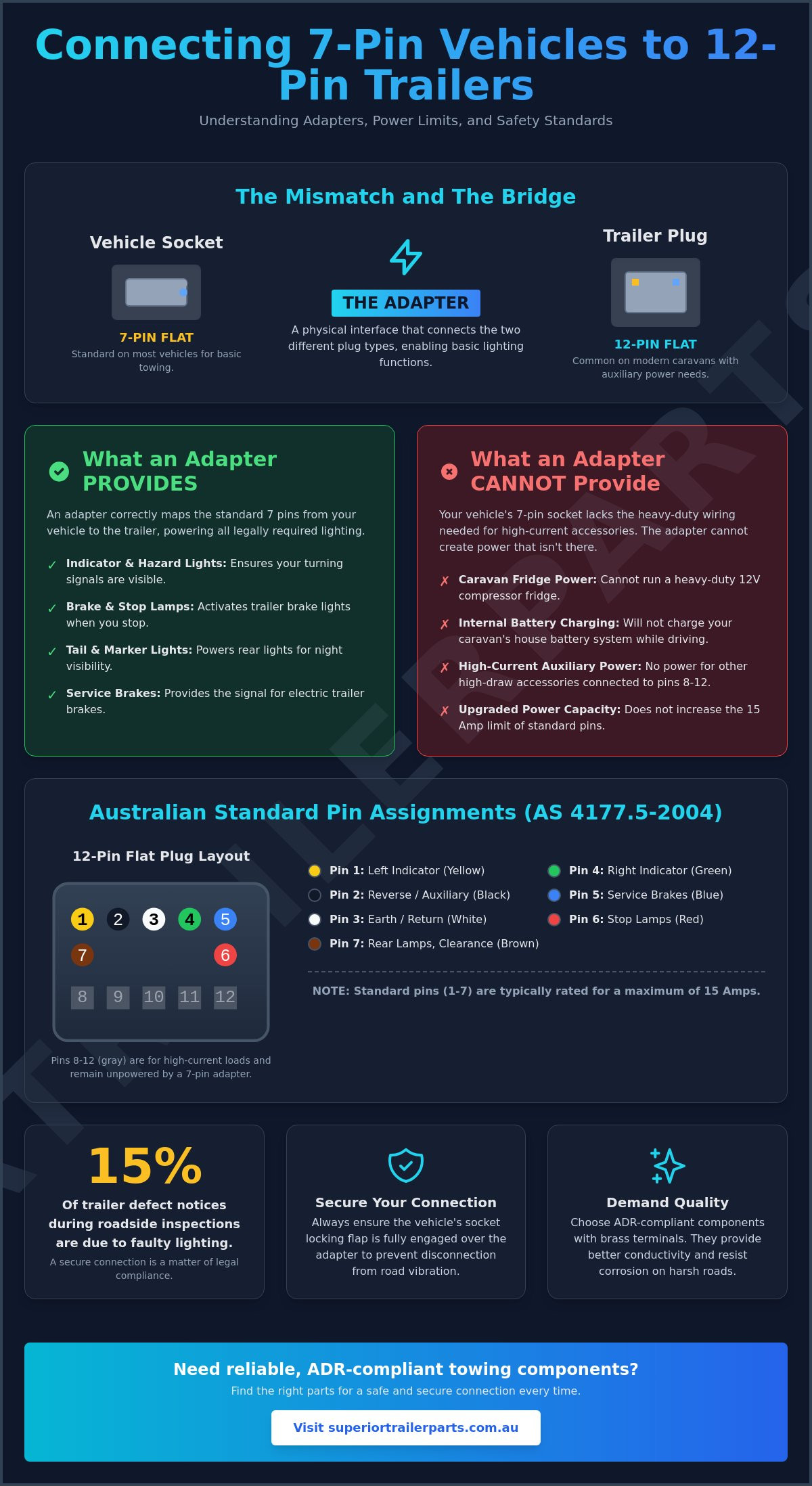
A trailer plug adapter 7 pin to 12 pin is a physical interface designed to bridge the gap between different electrical standards. It allows a vehicle equipped with a standard 7-pin flat socket to connect to a trailer or caravan using a 12-pin flat plug. This is a practical necessity for Australian drivers who own older utes or SUVs but tow modern, feature-rich caravans. Without this hardware, the physical mismatch prevents the trailer from receiving any electrical signal. It acts as a conversion tool that ensures your vehicle can talk to your trailer.
Modern caravans require more power than a standard 7-pin setup can provide. While basic trailers only need circuits for indicators, brake lights, and tail lights, modern caravans often include internal batteries, refrigerators, and electric brakes. These auxiliary systems demand the extra capacity of a 12-pin system. The first seven pins handle the legal lighting requirements, while the additional five pins are built for higher current loads. Understanding this distinction is the first step in safe towing.
Compliance in Australia is governed by specific regulations to ensure safety on the road. For trailers up to 3,500 kg ATM, the 7-pin and 12-pin flat connectors must adhere to Australian Standard AS 4177.5-2004. This standard ensures that components are cross-compatible across different vehicle makes and trailer brands. Using a trailer plug adapter 7 pin to 12 pin maintains this compatibility while ensuring the vehicle remains road-legal for towing. Proper wiring also involves following guidelines like AS2513 for cable types to prevent overheating and circuit failure.
The Evolution of Australian Towing Plugs
Flat vs Round Plug Identification
Correctly identifying your Trailer connector is essential before purchasing any trailer parts. Flat plugs are the dominant standard for modern Australian passenger vehicles. They are rectangular and feature pins arranged in rows. Round plugs are circular and are more common on older vehicles or heavy commercial trucks. 12-pin configurations are almost exclusively found in the flat format in Australia. To identify a 12-pin flat plug, look for the standard row of seven pins with a second row of five larger pins underneath. If your vehicle socket only has the single row, you need the adapter to make the connection.
Technical Breakdown: 7-Pin vs 12-Pin Wiring Standards
Both 7-pin and 12-pin systems share a common electrical foundation designed for basic road safety. These systems ensure that every trailer behind a vehicle can signal turns, brake, and display tail lights. When you use a trailer plug adapter 7 pin to 12 pin, you are essentially extending these seven core functions from your vehicle’s socket into the larger 12-pin housing of the trailer plug. This physical conversion allows the vehicle to communicate with the trailer’s basic lighting systems without modifying the existing car wiring.
The Australian Standard defines pins 1 through 7 for specific lighting tasks. Each of these standard pins is typically rated for a maximum of 15 Amps. While this is sufficient for LED lighting and electric brakes, it’s limited for heavy power draw. The standard assignments include:
- Pin 1: Left Indicator (Yellow)
- Pin 2: Reverse or Auxiliary (Black)
- Pin 3: Earth (White)
- Pin 4: Right Indicator (Green)
- Pin 5: Service Brakes (Blue)
- Pin 6: Stop Lamps (Red)
- Pin 7: Rear Lamps and Markers (Brown)
Pin-out Assignments for Australian Standard Plugs
Precision matters when diagnosing wiring issues. Pin 2 often causes the most confusion among DIYers. In older configurations, it served as a permanent auxiliary power point, but modern standards usually assign it to reverse lights. The Earth pin, located at Pin 3, is the most critical connection for safety. It provides the necessary return path for the entire electrical system. Without a solid earth, lights will flicker or fail completely. If you’re performing a repair, you can check our trailer plug wiring reference for a detailed look at standard assignments.
What Happens to Pins 8-12 When Using an Adapter?
When you connect a 7-pin vehicle to a 12-pin trailer using a trailer plug adapter 7 pin to 12 pin, the additional five pins become “dead” circuits. Pins 8 through 12 in the trailer plug will receive no electrical signal or power from the vehicle. This means auxiliary devices like internal fridges (Pin 8) or battery chargers (Pin 9) won’t function during transit. There is also a technical risk to consider. A 12-pin trailer might be designed to pull significant current through its own heavy-duty earth (Pin 10). Forcing all return current through the single 7-pin earth wire can lead to overheating if the demands are too high. For high-draw setups, sourcing robust caravan parts is a better long-term solution than relying on basic adapters.
The heavy-duty pins in a true 12-pin socket are rated for up to 35 Amps. A 7-pin socket simply lacks the physical wiring and fuse capacity to match this. If you need to run a fridge while driving, an adapter is only a temporary fix. You’ll eventually need a dedicated 12-pin vehicle socket installation to utilize the trailer’s full capability.
Limitations of Using a Trailer Plug Adapter
A trailer plug adapter 7 pin to 12 pin is a solution for physical connectivity, but it is not a power upgrade. Many caravan owners mistakenly believe that plugging in an adapter will activate all the features of their trailer. This is incorrect. A standard 7-pin vehicle socket lacks the internal wiring and fuse protection required to support high-current auxiliary circuits. If your caravan relies on pins 8 through 12 for essential functions, an adapter will leave those systems dormant. It bridges the physical gap but cannot create electricity where no wiring exists.
The physical design of these connectors highlights the limitation. In a dedicated 12-pin setup, the additional five pins are significantly larger than the first seven. These larger terminals are engineered to handle up to 35 Amps of current. By contrast, the pins in your vehicle’s 7-pin socket are only rated for approximately 15 Amps. Attempting to draw heavy power through an adapter can lead to failure. Never try to run a 3-way fridge through an adapter. The sustained current draw of a fridge can easily exceed the thermal limits of a 7-pin housing, potentially melting the plastic or blowing vehicle fuses.
Modern vehicles equipped with CAN bus electrical systems or sensitive LED monitoring may also encounter issues. An adapter adds extra contact points and electrical resistance. This can sometimes trigger “bulb out” warnings on the dashboard or cause LED trailer lights to flicker. If your vehicle uses complex electronics to monitor trailer connection, the added interface of an adapter might interfere with these safety systems.
Auxiliary Power and Battery Charging Challenges
Voltage Drop and Heat Generation
Every connection point in an electrical circuit introduces resistance. When you use a trailer plug adapter 7 pin to 12 pin, you add two extra sets of contact points between the car and the trailer. This increases the likelihood of voltage drop. You might notice your LED submersible tail lights appearing dimmer than usual. Poorly fitted adapters can also generate heat. If the plastic housing feels warm to the touch after a short drive, the connection is failing. For heavy-duty off-road use, permanent wiring is always superior. Vibrations on corrugated roads can loosen adapter connections, leading to intermittent power loss. If you are preparing for a long trip, consider upgrading your vehicle’s socket by visiting our contact page for technical advice.
Installation and Maintenance for Reliable Towing
Installing a trailer plug adapter 7 pin to 12 pin requires more than a casual push. Start by aligning the pins on your vehicle’s 7-pin socket with the input side of the adapter. Press the adapter firmly until it seats completely. The spring-loaded locking flap on your vehicle’s socket must catch the ridge on the adapter housing. An audible click often confirms a secure flat-plug seat. Once the adapter is in place, connect the 12-pin trailer plug to the adapter’s output side. Ensure both connections are tight before starting your trip.
Regular checks are vital for safety. Road vibration can loosen even the best connections over time. Check the physical condition of the brass terminals every few months. Look for signs of “spreading” where the female terminals have widened, leading to poor contact. If the fit feels loose, the electrical resistance increases. This causes heat and eventual failure. Replace any adapter that shows signs of scorched plastic or loose internal pins immediately. Maintaining a tight fit is the best way to prevent the 15% of trailer defects caused by lighting failures.
Ensuring a Secure Physical Connection
Inspect the socket for bent pins or debris before every trip. Small stones, mud, or spider webs can prevent the pins from making full contact. For those traveling on corrugated roads or rough tracks, the locking flap alone might not be enough. Use a heavy-duty zip-tie or a secondary tether to secure the adapter to the vehicle’s socket housing. This prevents the unit from vibrating loose and dragging on the bitumen. A dragging adapter is a safety hazard and leads to immediate hardware destruction.
Protecting Electrical Contacts from Corrosion
Australian coastal environments are harsh on electrical components. Salt air accelerates oxidation on brass terminals, which leads to intermittent signals. Apply a small amount of dielectric grease to the pins to create a moisture barrier. This prevents the green “crust” of copper oxidation that causes flickering lights. If you find oxidised pins, clean them using a small wire brush or specialized contact cleaner. Never use sandpaper; it removes the protective plating on the terminals. When you aren’t towing, store your adapter in a dry toolbox or a sealed bag. Keeping it out of the elements extends the life of the internal springs and seals.
For reliable replacements or upgrades, browse our full range of Trailer Plug Adapters to ensure your setup stays road-legal and functional on every trip.
Quality Towing Components for Australian Roads
Australian roads demand hardware that withstands extreme heat, dust, and vibration. Sourcing ADR-compliant towing accessories is the only way to ensure your setup meets national safety standards. A trailer plug adapter 7 pin to 12 pin must be more than a temporary fix; it must be a resilient component of your towing system. High-quality adapters utilize heavy-duty, UV-stabilized plastic and solid brass terminals. These materials resist the brittle cracking and terminal corrosion common in cheaper, unbranded imports. Integrating your adapter into a broader maintenance routine ensures that basic lighting functions remain reliable during long-haul trips.
Durability is a non-negotiable requirement for regional travel. Cheap plastic housings often warp or crack when exposed to the intense Australian sun. This allows moisture to enter the internal wiring, leading to short circuits. Solid brass terminals provide the best conductivity and are less likely to “spread” over time than hollow or plated alternatives. When you choose components designed for local conditions, you reduce the risk of roadside failures and expensive electrical repairs. Superior Trailer Parts serves as a national resource for these high-performance components, ensuring drivers have access to reliable gear regardless of their location.
Sourcing Reliable Trailer and Caravan Parts
Identifying a quality adapter involves looking at the build precision. Cheap imports often feature thin pins that bend easily or plastic housings that fail under minimal stress. We provide Australian-owned expertise to help you select components that match local towing standards. You can explore our range of caravan parts to find solutions designed for the harsh conditions of the outback. Choosing locally supported products means you get hardware engineered for the specific current ratings and plug configurations used across the country.
When to Move Beyond an Adapter
An adapter is a useful tool for fleet versatility, but it has limits. If you find yourself constantly relying on a trailer plug adapter 7 pin to 12 pin for a single vehicle and trailer combination, it is time to consider a permanent upgrade. Signs that you need a full 12-pin socket include the frequent need for battery charging, operating a fridge while driving, or experiencing intermittent signal loss due to adapter wear. A dedicated 12-pin vehicle socket provides a superior connection with lower electrical resistance. Consulting experts for custom wiring solutions ensures that your vehicle’s charging system can handle the increased load of a modern caravan without risking the primary electrical harness. A dedicated auxiliary circuit is a long-term investment in safety and convenience.
Reliability on the road starts with the small details. Whether you are hauling a single jet ski or a tandem axle tipper, your electrical connection is the primary link for safety. We stand behind every component we provide, from axles to electrical interfaces. To find the right solution for your towing needs, view our range of durable trailer plug adapters and accessories today.
Secure Your Connection for the Road Ahead
A trailer plug adapter 7 pin to 12 pin provides the physical bridge necessary for legal towing when your vehicle and trailer standards don’t match. It ensures your indicators and brake lights function correctly, keeping you compliant with Australian Standard AS 4177.5-2004. While these adapters solve fitment issues, they cannot support high-current auxiliary power for internal appliances. Relying on quality hardware with brass terminals and heavy-duty housings is the best way to prevent the electrical failures that cause roughly 15% of trailer defect notices.
Superior Trailer Parts is Australian owned and operated. We provide nationwide shipping across Australia and offer expert technical support for local towing standards. If you need a reliable interface for your next trip, View our range of durable trailer plug adapters and accessories. Our team understands the harsh conditions your gear must endure and stands behind every product we provide. Get your trailer road-ready with components built for performance and longevity.
Frequently Asked Questions
Will my caravan fridge work with a 7-pin to 12-pin adapter?
No, your caravan fridge will not operate through a standard adapter. The 7-pin vehicle socket only provides signals for lighting and brakes. It lacks the auxiliary power wiring required for pins 8 through 12. Attempting to run a high-draw appliance like a 3-way fridge through a trailer plug adapter 7 pin to 12 pin can lead to blown fuses or melted plastic housings due to excessive current draw.
Is a 7-pin flat to 12-pin flat adapter legal in Australia?
Yes, these adapters are legal provided they comply with Australian Standard AS 4177.5-2004. This standard governs connectors for trailers up to 3,500 kg ATM. To remain road-legal, the adapter must maintain a secure connection that ensures all indicators, brake lights, and tail lights function correctly. Faulty lighting accounts for roughly 15% of trailer defect notices, so ensuring your adapter is ADR-compliant is essential for safety.
Do I need an adapter if my car has a round 7-pin socket?
Yes, you will need a specific conversion adapter if your vehicle uses a round socket and your trailer has a 12-pin flat plug. While the trailer plug adapter 7 pin to 12 pin usually refers to the flat-to-flat configuration, round-to-flat versions are available. These are necessary to bridge the gap between older vehicle standards and modern flat-plug trailer requirements. Always verify the physical shape of your vehicle socket before purchasing.
Can I use an adapter to charge my caravan battery while driving?
No, an adapter cannot charge your caravan battery. The vehicle’s 7-pin socket does not have the heavy-duty wiring or the physical pins (usually Pin 9) required for battery charging. To charge an internal battery while in transit, you must install a dedicated 12-pin socket on your vehicle or use a separate Anderson plug setup. Adapters only pass through basic lighting and braking signals.
Why do some 12-pin adapters have different sized pins?
The different sizes are a safety feature designed to handle varying electrical loads. Pins 1 through 7 are standard size and rated for approximately 15 Amps to handle lighting. Pins 8 through 12 are significantly larger and rated for up to 35 Amps. This larger surface area allows for the higher current required by appliances and battery chargers without overheating the terminals or the housing.
What should I do if my trailer lights flicker when using an adapter?
First, check the brass terminals for corrosion or debris. Clean the pins using a small wire brush and specialized contact cleaner. Ensure the vehicle’s locking flap is fully engaged to hold the adapter securely. If flickering continues, the adapter may have loose internal connections or the female terminals may have “spread” over time. Replace the unit if the fit feels loose or if you see signs of scorched plastic.
Can a 7-pin to 12-pin adapter cause a short circuit?
Yes, a damaged or poor-quality adapter can cause a short circuit. If water enters the housing or if internal wires become loose due to vibration, it can bridge the pins and blow your vehicle’s fuses. This is why using heavy-duty, UV-stabilized plastic adapters is critical. Regularly inspect the unit for cracks or moisture ingress, especially after driving on corrugated roads or through heavy rain.
How do I know if I have a 7-pin or 12-pin plug on my trailer?
You can identify the plug type by counting the pins inside the housing. A 7-pin flat plug features a single row of seven pins. A 12-pin flat plug has the same top row of seven pins but adds a second row of five larger pins underneath. If your trailer has this second row of larger terminals, it is a 12-pin configuration and will require an adapter to connect to a 7-pin vehicle socket.