A quick visual walk-around is not a safety inspection. Real security on the road comes from checking the mechanical integrity of your hardware, not just hoping for the best. Most drivers worry about a wheel bearing failure or a total electrical fault during a long haul. These issues are frustrating and entirely preventable. Our peace of mind trailer safety checklist provides a rigorous component-level framework to identify wear and prevent roadside failures. It ensures your equipment meets Australian safety standards for every journey. You will gain a professional-grade inspection routine that covers the essentials of heavy and light towing.
We’ll explain how to check your 50mm square axles, evaluate 10 inch electric drum brakes, and inspect galvanised U-bolts for signs of fatigue. You will learn the clear difference between a part that needs a simple adjustment and one that requires immediate replacement. This technical breakdown gives you the confidence that your trailer is roadworthy before you hit the highway. Stop guessing about the state of your 4 leaf slipper springs or your coupling. Follow this routine to keep your cargo secure and your schedule intact.
Key Takeaways
- Move from reactive repairs to a proactive maintenance strategy. Visual checks are insufficient for heavy-duty Australian road conditions.
- Learn to jack up the trailer to identify vertical wheel play and inspect axle beams for bowing or fatigue.
- Verify connection security by testing coupling tension and safety chain integrity.
- Use a peace of mind trailer safety checklist to audit electrical terminals and braking systems before every long haul.
- Apply a professional framework to determine when to repair or replace aging components like axles and slipper springs.
The Fundamentals of a Trailer Safety Strategy
Proactive maintenance is the foundation of reliability. True security comes from knowing every component is fit for purpose. A peace of mind trailer safety checklist shifts your focus from hoping nothing breaks to knowing nothing will. Australian conditions are unforgiving. Heat, corrugated roads, and heavy loads put extreme stress on mechanical parts. A quick visual walk-around cannot detect a hairline crack in a weld or a dry bearing deep inside a hub. You must look closer at your axles and mechanical hardware.
Towing an unroadworthy trailer in Australia carries significant risks. State authorities enforce strict standards for roadworthiness. If your trailer fails on the highway, you face more than just repair costs. Fines are common; however, the bigger risk is insurance. Most providers will deny claims if they determine the vehicle was not maintained to Australian standards. Whether you are hauling gear in box trailers or moving a boat, compliance is non-negotiable. Our framework focuses on three core pillars: running gear, connection points, and control systems.
Understanding Australian Towing Regulations
Australian Design Rules (ADR) set the national standards for vehicle safety and theft resistance. Every trailer must have a valid VIN plate. This plate displays the Aggregate Trailer Mass (ATM). This is the total weight of the trailer and its maximum load. Exceeding this limit or using non-compliant trailer parts compromises structural integrity. This applies to all types of trailers found on our roads. Using generic components that don’t meet ADR specifications is a gamble that risks both safety and legal standing.
Setting Up for a Professional-Grade Inspection
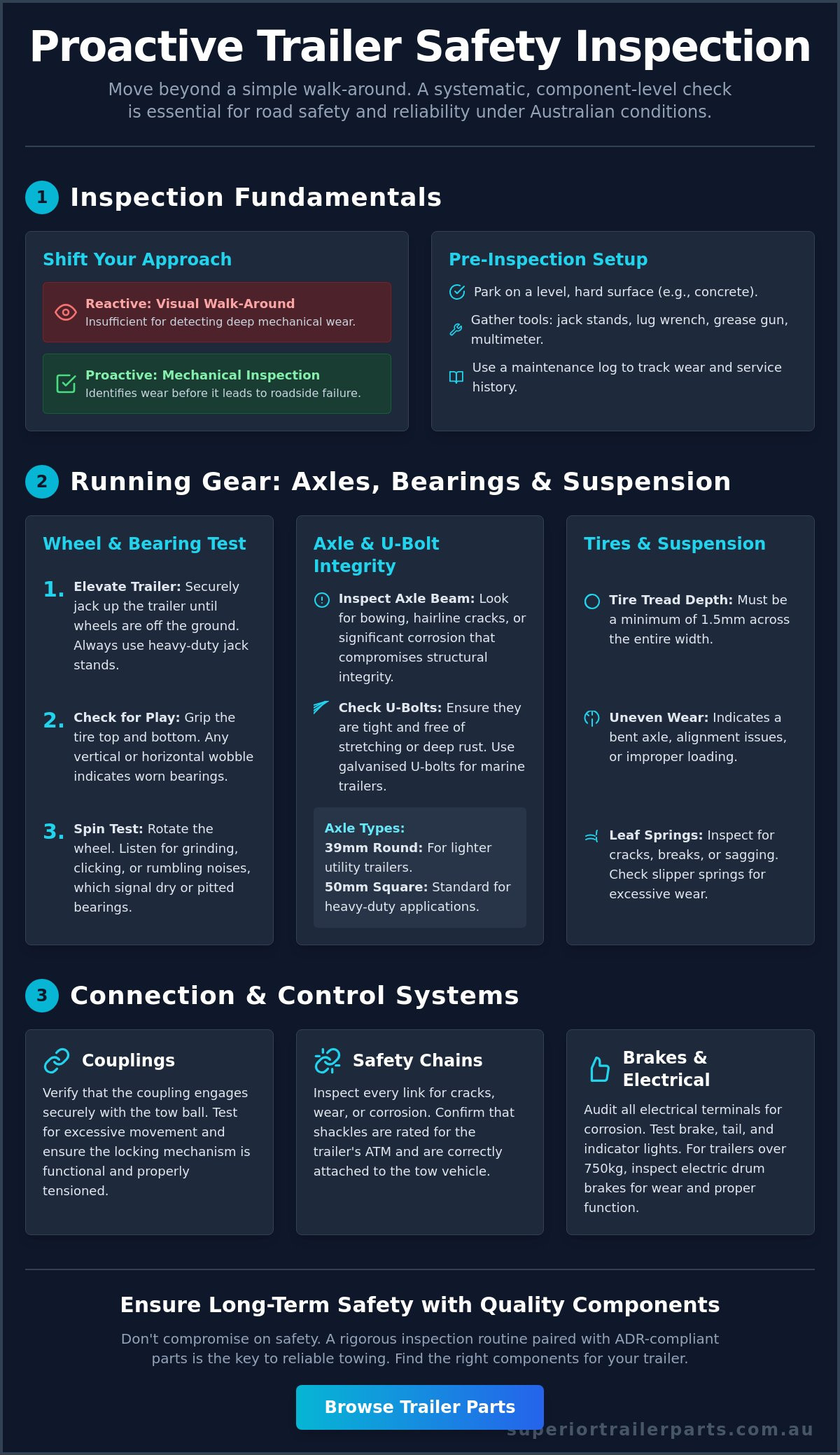
Preparation is essential for an accurate assessment. Park on a level, hard surface like concrete. This ensures the suspension settles correctly and jack stands remain stable. You will need a specific set of tools. Gather high-quality jack stands, a lug wrench, a grease gun, and a multimeter. A maintenance log is also a valuable asset. Recording the dates when you greased the hubs or checked the leaf springs helps track wear patterns. Using a peace of mind trailer safety checklist during these sessions ensures you never miss a critical bolt or electrical terminal. This systematic approach identifies issues before they become roadside failures.
Inspecting the Running Gear: Axles, Bearings, and Suspension
The running gear is the most stressed part of any trailer. It manages the entire weight of your load while enduring constant vibration and road impact. To begin a proper audit, you must jack up the trailer until the wheels clear the ground. Secure the frame with heavy-duty jack stands before starting. This is a vital step in your peace of mind trailer safety checklist 2026. Once elevated, grab the tire at the top and bottom to check for vertical play, then side-to-side for horizontal movement. Any noticeable clicking or wobbling indicates worn bearings or a loose spindle nut.
Examine the axle beam for structural defects. Look for bowing, hairline cracks, or deep corrosion that could lead to a catastrophic failure. You should also verify tire health. Check for a minimum tread depth of 1.5mm across the entire width. Uneven wear on the inside or outside edges usually points to a bent axle or incorrect alignment. If you find significant damage, it’s time to browse our range of replacement axles to restore your trailer’s integrity.
Axle and U-Bolt Integrity
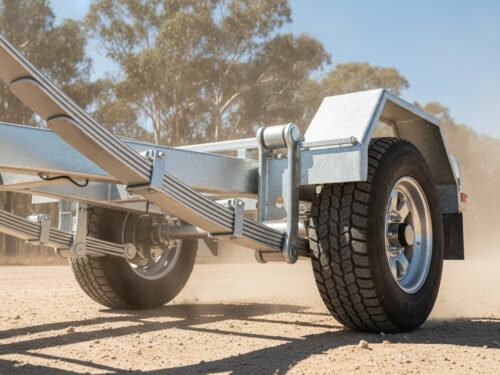
Load requirements dictate your axle choice. We supply 39mm round axles for lighter utility trailers, while 50mm square axles are the standard for heavy-duty applications. Axle “camber” is a slight upward curve in the beam designed to flatten under weight, which ensures the tires stay flat against the road. Check your U-bolts for signs of stretching or rust. For marine environments, galvanised U-bolts are essential because they resist the corrosive effects of salt water better than standard zinc finishes.
The Wheel Bearing Reliability Test
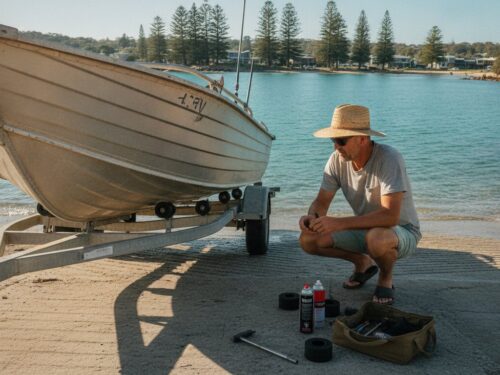
Spin each wheel by hand. It should rotate freely and quietly. If you hear grinding, clicking, or a low rumbling noise, the bearings are likely pitted or dry. Look at the back of the hub for grease spray. A failing rear seal allows lubricant to escape, which eventually leads to bearing over-heating and seizure. You can find more detail on hub maintenance in our article on Essential Trailer Parts: A Resource for Maintenance and Repair.
Suspension Systems: Slipper vs. Eye-to-Eye
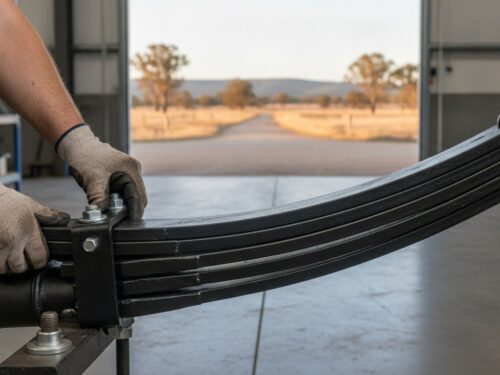
Inspect your springs for flattened arches or cracked leaves. 4 leaf slipper springs are common on single axle trailers but require inspection at the rear sliding contact point where friction occurs. For eye-to-eye springs, check the nylon or brass bushes for perishing. If the trailer feels unstable or “walks” behind the vehicle, the bushes are likely shot. For tandem axle setups, consider upgrading to rocker roller spring sets. These allow for better load sharing between the two axles on uneven terrain, reducing the stress on individual components.
Securing the Connection: Couplings and Safety Chains
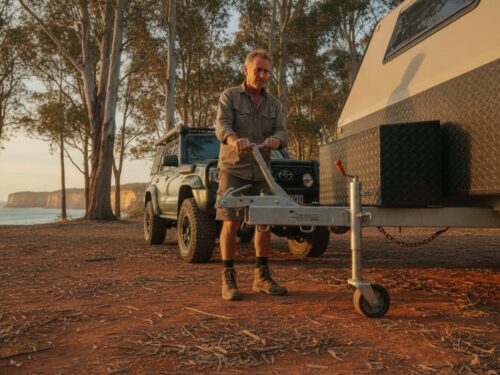
The connection between your tow vehicle and trailer is the single most critical point of failure. A failure at this point results in a total loss of control. Inspecting this area is a core requirement for a peace of mind trailer safety checklist 2026. Start with the coupling head. Mount the trailer to the tow ball and lock the trigger. Attempt to lift the drawbar manually. If you feel excessive vertical play or hear a clunking sound, the internal components are worn. A loose fit causes jarring during acceleration and braking, which eventually damages the tow vehicle’s hitch assembly.
Test the latch mechanism for smooth operation. The trigger should snap back into place with strong spring tension. If the latch sticks or feels sluggish, it likely contains grit or the internal spring has fatigued. Clean the mechanism and apply a light coating of grease. If the tension remains weak after cleaning, replace the unit immediately. You cannot afford to compromise on this component. While you are there, check the D-shackles. Australian standards require shackles to be marked with an “S” or “W” to indicate their grade and load rating. Never use unrated hardware-store shackles for towing.
Coupling Wear and Adjustment
Maintenance requirements vary by coupling type. For standard 2 hole fixed couplings, you can often adjust the tension by tightening the internal nut to reduce play on the ball. However, override couplings require a more detailed check. Look for signs of wear in the sliding housing. If the shaft has excessive lateral movement, the internal bushes are worn. This leads to erratic braking. For regional travel, poly block off-road couplings offer a better range of movement. They handle the extreme articulation of corrugated tracks where standard ball couplings might bind.
Safety Chain Standards
Safety chains are your last line of defence. They must be permanently fixed to the trailer frame, usually by welding. Inspect every link for stretching, thinning, or heavy rust. If a link looks deformed, the chain has been stressed and needs replacement. Always use the “cross-under” technique when connecting to the tow vehicle. By crossing the chains under the drawbar, you create a cradle. If the coupling fails, this cradle catches the trailer tongue. This prevents the drawbar from digging into the road surface and helps maintain some steering control as you pull over.
Visibility and Control: Brakes and Electrical Systems
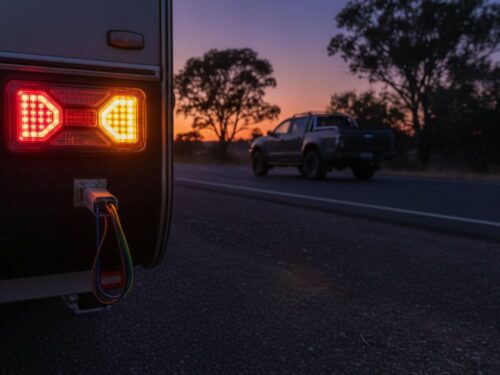
Electrical systems provide the only communication link between your tow vehicle and the drivers behind you. If your lights fail, your intentions remain hidden, which creates a high risk of rear-end collisions. Start your inspection at the trailer plug. Open the cover and look for green corrosion on the pins. This copper oxidation increases resistance and causes intermittent power loss. Use a small wire brush to clean the terminals and ensure each internal wire is screwed tight. Integrating these electrical audits into your peace of mind trailer safety checklist 2026 prevents the frustration of troubleshooting a light failure on the side of a busy highway.
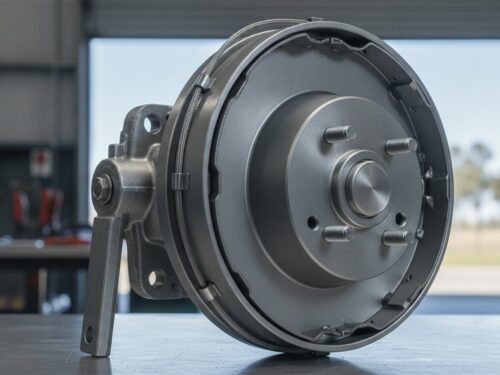
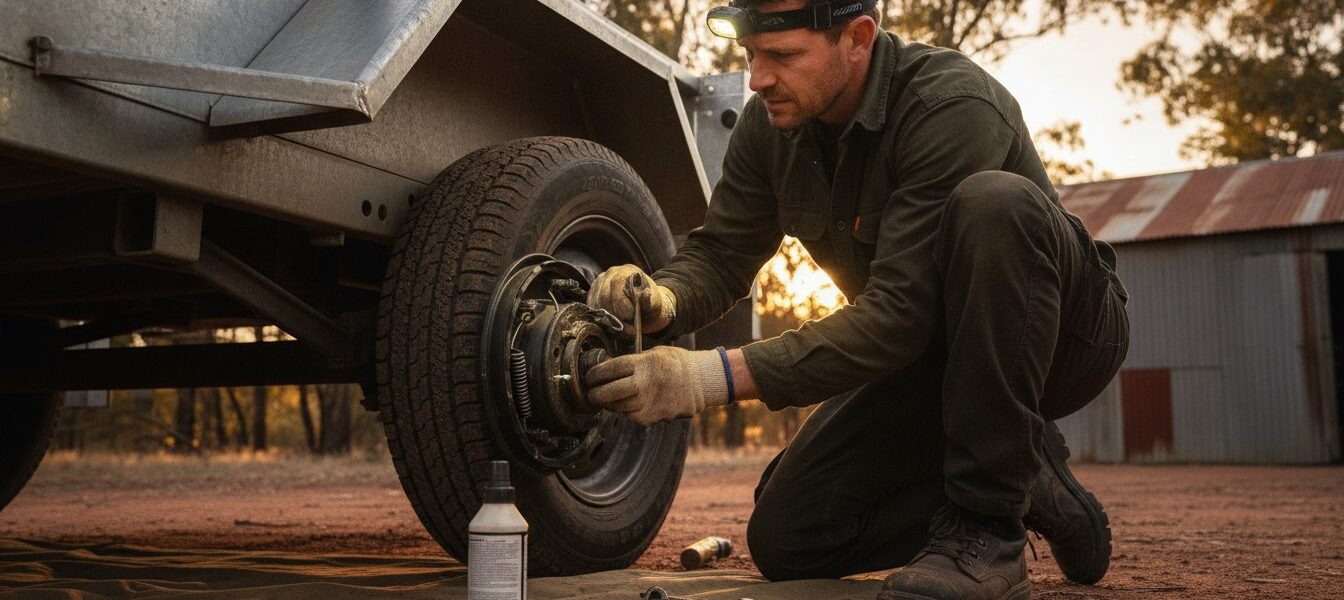
Braking performance is equally critical. For trailers equipped with brakes, you must inspect the friction material regularly. Most drums have inspection ports on the rear backing plate. Remove the rubber plug and use a torch to check the remaining thickness of the brake shoes or pads. If the material is less than 2mm thick, it requires immediate replacement. For trailers over 2,000kg, you must also test the breakaway system. Pull the pin on the drawbar unit while the trailer is disconnected from the vehicle. The trailer brakes should lock instantly and remain engaged. This system relies on a charged onboard battery, so verify the battery voltage before every trip.
Electrical Troubleshooting
Moisture is the primary enemy of trailer electrics. Apply a small amount of dielectric grease to the plug terminals to seal out water and prevent future oxidation. If you frequently launch boats, consider upgrading to LED submersible tail lights. These units are vacuum-sealed to prevent salt water from corroding the circuit boards. For complex issues or rewiring projects, refer to our guide on Trailer Plug Wiring: The Standard Reference for Australian Towing to ensure your pin configurations match the national standard.
Braking System Performance
Maintenance needs differ based on your setup. We stock mechanical drum brakes for straightforward utility trailers, while hydraulic discs are often preferred for heavy-duty marine use. If you use a hydraulic system, check the master cylinder fluid level. Dark or cloudy fluid indicates moisture contamination and needs a flush. You can test electric brake magnets by having a helper activate the manual override on the brake controller while you hold a compass near the wheel hub; the needle will deflect if the magnet is energised. If you find worn components during these tests, you can order high-quality trailer parts directly from our warehouse to ensure a precise fit.
Sourcing Quality Components for Long-Term Safety
The foundation of any peace of mind trailer safety checklist 2026 is the quality of the hardware you choose. A trailer is only as reliable as its weakest component. When parts show signs of wear, you need a clear decision framework. If the chassis is sound, replacing worn items is the right move. If the frame is compromised, replace the whole unit. Generic parts from non-specialist retailers are a risk. They often lack the durability needed for Australian conditions. Sourcing from local experts gives you access to technical support and parts built for the job.
Choosing an Australian-owned supplier provides more than just a product. It gives you a point of accountability. If a part doesn’t fit or you need a specific load rating for a custom build, you can speak to a specialist who knows the local regulations. This local knowledge is vital for staying compliant with Australian Design Rules. Generic overseas parts often lack the necessary markings or documentation for ROVER registration requirements. Investing in quality hardware is the only way to ensure your trailer remains a reliable asset for years.
The Superior Advantage
We provide a range of assembled box trailers built to withstand industrial use. If you are located in a remote regional area, our nationwide shipping ensures you get the hardware you need without delay. If you’re unsure which spindle size fits your hub or which spring rate matches your load, contact the expert team for direct technical advice. We don’t just sell parts; we provide the knowledge to keep your equipment roadworthy and safe.
Maintenance Schedule Summary
Safety is an ongoing commitment. It’s not a one-time event. Use this tiered schedule to stay on top of your maintenance. Small issues caught early prevent expensive roadside repairs later.
- Pre-trip: Check coupling security, test all lighting functions, and verify tyre pressures.
- Quarterly: Grease the wheel bearings, check U-bolt tension, and inspect the trailer plug for corrosion.
- Annual: Inspect the brake shoes, check the axle for bowing, and look for cracks in the leaf springs.
Regularly following a peace of mind trailer safety checklist 2026 ensures that small wear items don’t turn into highway disasters. Browse our full range of trailer parts to find the right components for your next service. Your safety on the road depends on the quality of your equipment and the rigour of your routine.
Secure Your Load for the Road Ahead
Superior Trailer Parts is an established Australian-owned and operated business. We provide the durable hardware needed for any repair or upgrade. We offer nationwide shipping on all components and provide expert technical support for your DIY maintenance projects. Don’t wait for a component to fail on the highway. High-quality axles, brakes, and couplings are essential for long-term performance. Shop ADR-Compliant Trailer Parts at Superior Trailer Parts today and keep your trailer in peak condition. Safe towing starts with quality parts and a regular inspection routine.
Frequently Asked Questions
How often should I really check my trailer wheel bearings?
You should inspect and regrease your wheel bearings every 10,000 kilometres or once a year. If you own a boat trailer, this interval should be every six months or after any deep submersion in salt water. Heat and moisture are the primary causes of grease breakdown. Regular inspections are a core part of a peace of mind trailer safety checklist. Don’t wait for a rumbling sound to investigate.
What is the most common cause of trailer accidents on the highway?
Mechanical failure of wheel bearings and tyres is the leading cause of trailer-related accidents. Improper load distribution also contributes significantly by causing trailer sway at high speeds. Ensure your load is balanced with roughly 10 percent of the total weight on the tow ball. Checking your 50mm square axles for alignment issues helps prevent uneven tyre wear and blowouts.
Can I use a 7-pin plug on a vehicle with a 12-pin socket?
Yes, you can plug a 7-pin flat plug into a 12-pin flat socket. The first seven pins on a 12-pin socket are configured to match the standard 7-pin layout. The additional five pins are for high-current applications like fridge power or battery charging. Use a trailer plug adapter if your vehicle and trailer use different shapes, such as round versus flat.
How do I know if my trailer leaf springs are worn out?
Inspect the arch of the springs while the trailer is loaded. If the leaves are flat or inverted, they have lost their tension and need replacement. Look for cracks near the centre bolt or the eyes. If one side of the trailer sits lower than the other, it indicates a fatigued spring. Worn bushes in eye-to-eye springs will also cause the trailer to track poorly.
Is it legal to tow a trailer if one indicator light is not working?
No, it is not legal to tow a trailer with any non-functional lighting. Australian Design Rules require all indicators, brake lights, and clearance lights to work perfectly. A single failed bulb can result in a fine and makes your intentions unclear to other drivers. Always perform a light check before leaving your driveway to ensure compliance and safety on the road.
What is the difference between a slipper spring and an eye-to-eye spring?
Slipper springs are fixed at the front and slide through a slipper box at the rear. They are simple and cost-effective for light utility trailers. Eye-to-eye springs are fixed at both ends using shackle bolts and bushes. This design provides a smoother ride and better axle control. Tandem trailers often use eye-to-eye springs as part of a rocker roller set for better load sharing on uneven terrain.
Do I need electric brakes for a standard 7×4 box trailer?
You only require brakes if the Gross Trailer Mass (GTM) exceeds 750kg. Most standard 6×4 and 7×4 box trailers are rated for 750kg and don’t require brakes. However, if you plan to carry heavy loads that push the total weight over this limit, you must install 9 inch mechanical drum brakes or electric alternatives. Always check your trailer’s VIN plate for the rated Aggregate Trailer Mass.
How can I prevent my boat trailer lights from failing due to salt water?
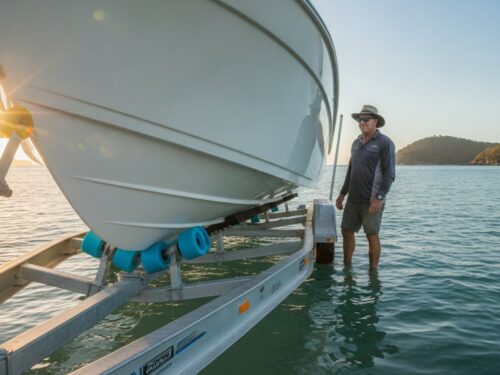
Install LED submersible tail lights to prevent water ingress. These units are vacuum-sealed to protect the internal circuitry from salt water corrosion. Apply dielectric grease to the terminals inside the trailer plug to create a moisture-proof seal. Rinsing the lights and the galvanised U-bolts with fresh water after every boat ramp launch also extends the life of your electrical and mechanical hardware.