Why do so many trailer hubs fail just when you’re furthest from home? Most boat owners and long-distance haulers accept messy grease maintenance and seized bearings as an unavoidable part of towing. It doesn’t have to be that way. Understanding trailer bearing protector benefits is the first step toward a more reliable setup. These components aren’t just passive covers; they’re active pressure management systems designed to keep your bearings running cool and clean under harsh conditions.
While standard maintenance schedules suggest a full service every 12 months or 10,000 kilometers, the reality of Australian roads often demands more protection. We’ll show you how bearing protectors create a constant physical barrier that prevents contamination and significantly reduces the risk of mechanical failure. By maintaining positive internal pressure, these devices ensure your hubs stay packed with grease even when they’re submerged at the boat ramp. This article explains how to extend the intervals between bearing repacks and gain the confidence you need for your next long-distance haul. You’ll learn how to protect your investment and keep your trailer on the road longer.
Key Takeaways
- Understand how spring-loaded piston mechanisms maintain internal pressure to block dust and moisture from entering your trailer hubs.
- Identify the primary trailer bearing protector benefits for long-distance towing, including reduced friction-related heat and grit exclusion.
- Prevent saltwater ingress during boat launching by neutralizing the vacuum effect caused by rapid hub cooling.
- Learn how to accurately measure hub bore diameters to select the correct protector size for common Australian standards.
- Maintain long-term hub reliability through simple visual grease level checks that protect your rear inner seals from damage.
What are Trailer Bearing Protectors and How Do They Function?
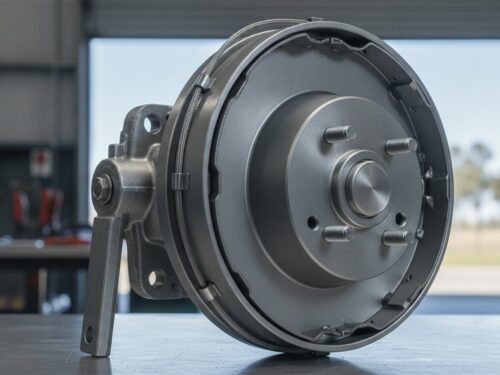
A trailer bearing protector is a specialized hub cap designed to replace standard, passive dust covers. These units are typically constructed from high-quality chrome-plated steel or stainless steel to resist the harsh corrosion common in Australian coastal environments. Unlike a basic cap, a protector is a mechanical assembly featuring an internal spring-loaded piston. This piston maintains a constant reservoir of grease under pressure inside the hub assembly. One of the primary trailer bearing protector benefits is the active exclusion of contaminants, ensuring that internal components remain fully lubricated even in demanding environments. These devices are compatible with most common trailer axles, including 39mm round and 45mm square variants found on most domestic and commercial trailers.
The Mechanics of Positive Pressure
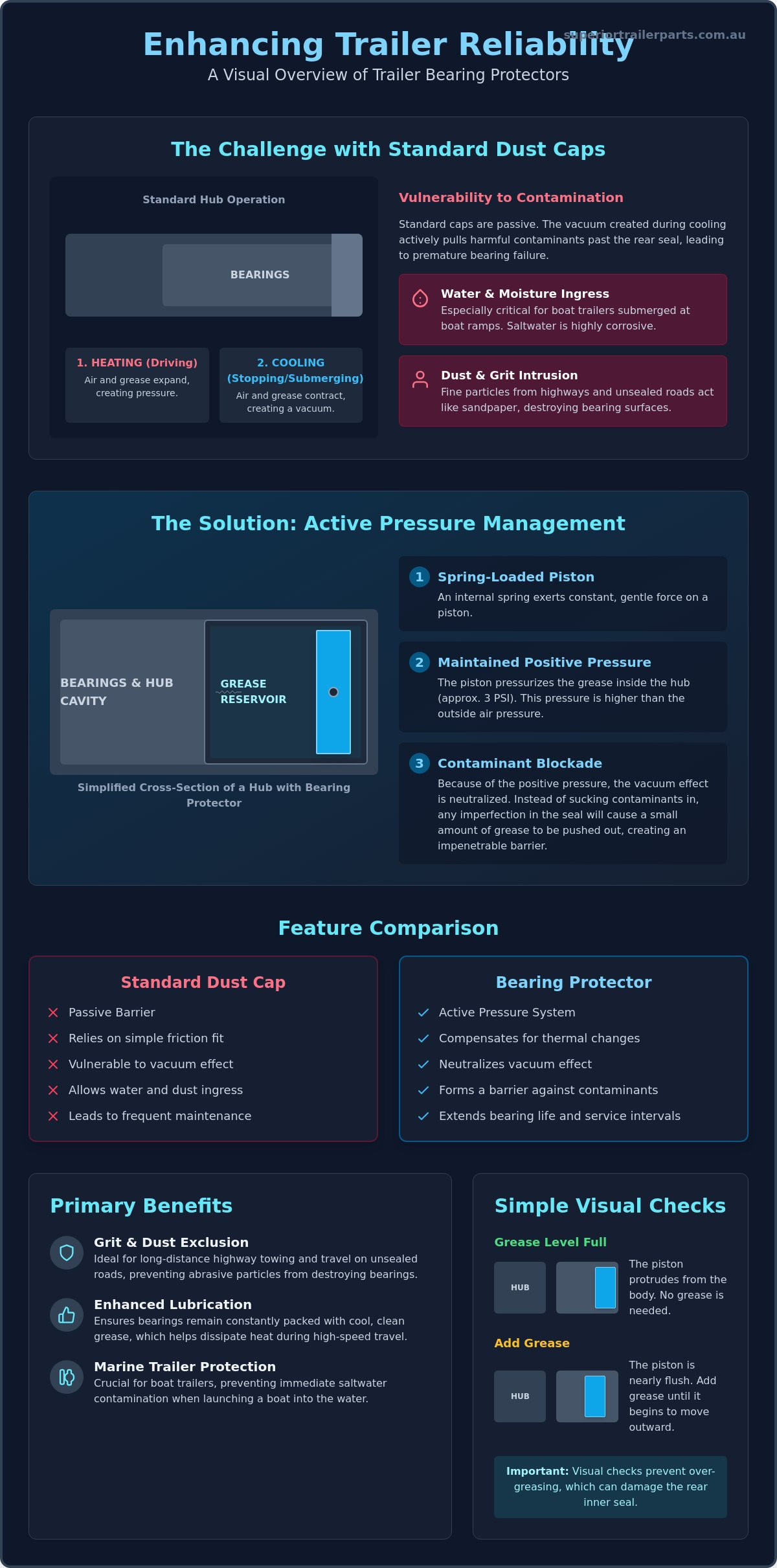
The core of the device is the internal spring. This spring exerts steady force against a moving piston, which in turn presses against the grease stored within the hub. This creates a state of positive internal pressure. When the hub is correctly filled via the integrated grease nipple in the center, the piston moves outward to indicate the reservoir is full. This pressure ensures that if a seal has a minor imperfection, grease will slowly weep out rather than allowing water or dust to enter. Keeping the hub full of clean lubricant is essential for the longevity of Tapered roller bearings, which carry the entire weight of the trailer load. This constant pressure system acts as a reliable first line of defense against the fine grit found on Australian highways and unsealed tracks.
Bearing Protectors vs. Standard Dust Caps
Standard dust caps are passive barriers. They rely on a simple friction fit to keep road grime away from the bearings. While they work for short trips in dry conditions, they offer no protection against pressure changes. As you drive, the air and grease inside a hub heat up and expand. When you stop, they cool down and contract, creating a vacuum inside the hub. A standard cap cannot stop this vacuum from sucking in moisture or dust through the rear seal. In contrast, a bearing protector uses its spring-loaded reservoir to fill that void. It provides an active seal that standard caps simply cannot match. This structural difference is why protectors are preferred for heavy-duty applications. They move with the thermal changes of the hub, ensuring the lubricant stays where it belongs. Choosing an active system over a passive one is a practical decision for any owner who values mechanical reliability.
Primary Trailer Bearing Protector Benefits for Long-Distance Towing
Heat Dissipation and Lubrication Consistency
Thermal expansion in trailer hubs occurs when the internal air and grease increase in volume due to friction-generated heat, often creating enough pressure to bypass standard dust caps or compromise rear seals. Without a pressure-relief system, this expansion can force grease out, leaving the bearings dry. Bearing protectors accommodate this expansion by allowing the internal piston to move while maintaining a functional seal. This ensures consistent lubrication remains in contact with the rollers even when temperatures fluctuate during a long day on the road. It prevents the grease from thinning out and migrating away from the critical contact points.
Extending the Life of Your Trailer Components
Dust and grit are equally dangerous on unsealed roads or highway shoulders. Fine particles act like sandpaper if they enter the bearing race, leading to rapid pitting and failure. Standard caps often vibrate loose or fail to seal out this fine dust over time. Because bearing protectors maintain positive internal pressure, they actively push back against incoming debris. This exclusion of grit prevents premature wear on the rollers and cups, extending the service life of your entire hub assembly. It also reduces the need for frequent, messy teardowns. Instead of a full bearing repack every few months, you can rely on simple grease gun top-ups to keep the system clean and functional.
The safety implications are clear. A bearing seizure at high speed is a catastrophic event that can lead to axle damage or wheel loss. Investing in quality protectors is a cost-effective way to avoid the expense of replacing entire axles or dealing with roadside recoveries in remote areas. For those looking to upgrade their setup, browsing high-quality trailer parts is a sensible starting point for preventative maintenance. Protecting your hubs ensures your trailer remains a reliable tool rather than a mechanical liability during your next cross-country trip.
Why Marine and Boat Trailers Require Active Bearing Protection
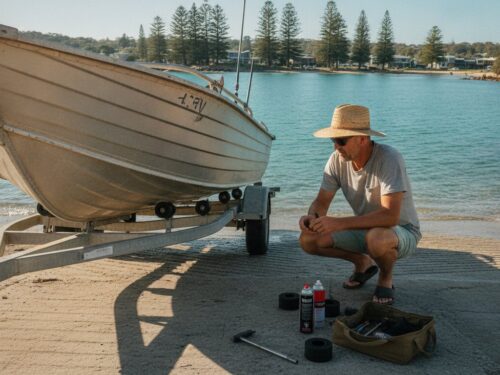
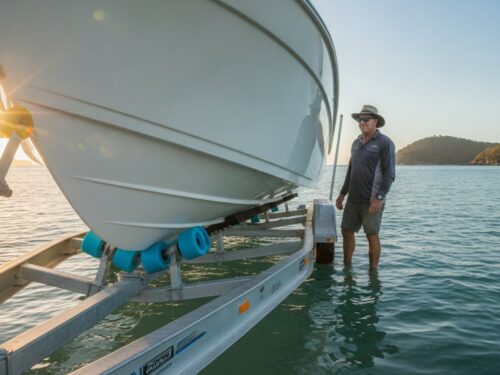
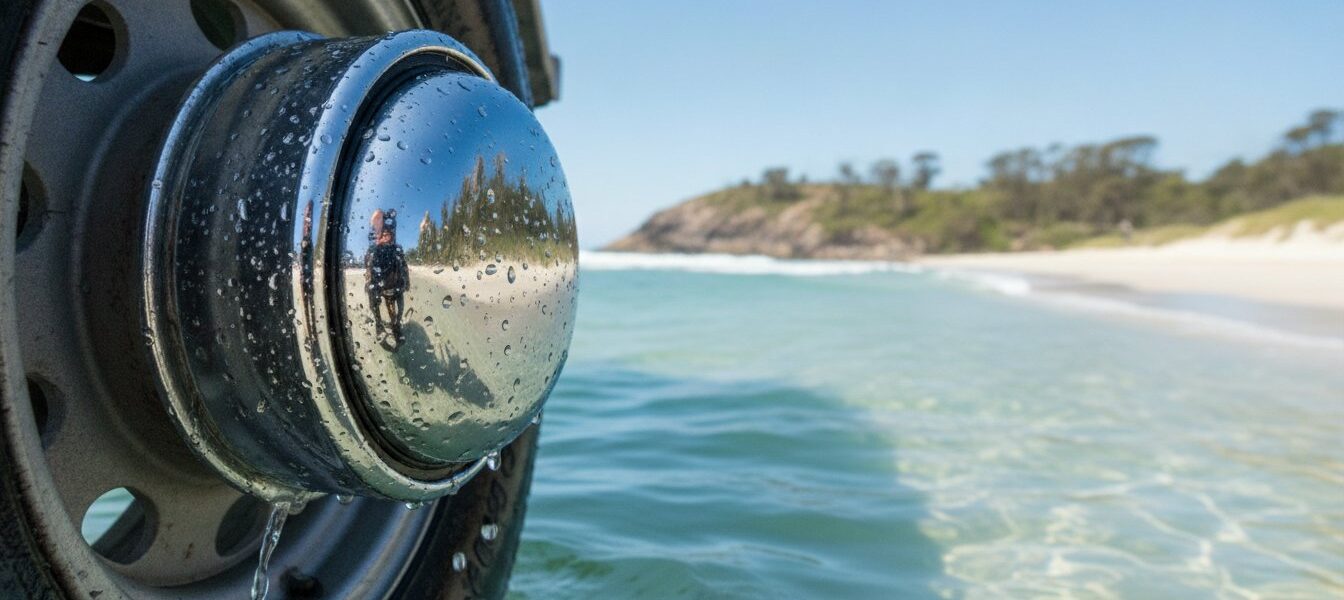
Marine environments present the most aggressive conditions for any towing setup. Boat trailers face a specific challenge that standard trailers rarely encounter: total hub submersion. When you arrive at the boat ramp, your hubs are typically hot from the drive. Submerging these hot components into cold water causes an immediate and drastic change in internal pressure. Understanding trailer bearing protector benefits in this specific scenario is vital for any boat owner who wants to avoid a seized hub on the highway. These devices are essential components within a reliable suite of boat trailer parts, providing a mechanical solution to a physical problem that standard caps cannot solve.
Counteracting Thermal Contraction
The vacuum effect is the primary cause of bearing failure in boat trailers. As the hot air and grease inside the hub cool rapidly during launching, they contract. This contraction creates a vacuum that pulls external moisture into the hub assembly. Without an active pressure system, the vacuum will suck water directly past the rear inner seal. Once saltwater enters the bearing race, it emulsifies the grease and begins to pit the metal surfaces almost immediately. A bearing protector prevents this by using its spring-loaded piston to move inward, filling the volume change and maintaining positive pressure. This ensures that the vacuum draws on the grease reservoir rather than pulling in outside water. This active response is the only way to reliably keep the bearing cavity dry during every launch and retrieval.
Material Selection for Coastal Conditions
Saltwater is unforgiving to inferior metals. While chrome-plated steel protectors are suitable for freshwater lakes, they often fail in coastal environments. Stainless steel models, specifically those using 304 or 316 grades, are non-negotiable for frequent saltwater use. Stainless steel resists the corrosive salt creep that can degrade the housing and the grease nipple over time. It’s also important to ensure a precise fit during installation. A loose protector allows salt to settle between the hub bore and the protector body, leading to galvanic corrosion. Choosing high-quality stainless hardware ensures your hubs remain sealed and your maintenance remains manageable after every trip to the coast. Don’t compromise on materials if you’re launching in the ocean; the cost of a seized hub far outweighs the price of stainless steel protectors.
Selection and Installation: Getting the Right Fit for Your Hubs
To realize the full trailer bearing protector benefits, you must ensure a precise interference fit between the protector and the hub bore. A protector that is even slightly loose will vibrate out on the highway, leading to a total loss of lubricant and potential bearing failure. Conversely, forcing a protector that is too large can crack the hub casting or the protector housing itself. In the Australian market, hub sizes are generally standardized, but manufacturing tolerances vary. Accurate measurement is the only way to guarantee a leak-free, pressurized seal that lasts for years of towing.
How to Measure Your Hub Bore
Precision is mandatory here. Use a high-quality vernier calliper to measure the internal diameter of the hub bore where the standard dust cap usually sits. Take measurements at three different points around the circle to check for “out-of-round” wear. If the hub has been hammered or damaged previously, the bore may be oval. This prevents the protector from seating correctly. Common Australian sizing standards include 45.2mm, 50.8mm, and 63.5mm. Never guess the size based on your axle type. While a 45mm square axle often uses a specific hub, different manufacturers use different castings. A physical measurement takes two minutes and prevents the frustration of ordering the wrong part.
Installation Best Practices
Before you begin the installation, verify the condition of the rear grease seal. A bearing protector works by creating positive internal pressure. If the rear seal is brittle, torn, or incorrectly seated, the pressure will simply force grease out the back of the hub. Clean the internal hub bore thoroughly with a rag and light solvent to remove old grease or grit. Use a small piece of fine-grit sandpaper to remove any burrs or rust from the leading edge of the bore. This ensures a smooth entry for the new protector.
To seat the protector, place a flat block of wood over the front face of the unit. Use a heavy mallet to tap the wood, driving the protector into the hub. The wood block distributes the force evenly and prevents you from denting the chrome or stainless steel housing. Continue tapping until the protector sits perfectly flush against the hub face. Perform the “rock test” by attempting to move the protector by hand. If there is any movement or “play,” the fit is insufficient. A proper installation should be immovable without a pry bar. If you are preparing for a major haul, check our professional-grade trailer components to ensure your running gear is up to the task.
Maintaining Your Wheel Bearings for Long-Term Reliability
Ongoing maintenance is where the real trailer bearing protector benefits become apparent. Instead of guessing the state of your lubrication, these devices provide a clear visual indicator of the hub’s internal condition. A properly maintained protector ensures that the bearings remain submerged in clean grease, regardless of road temperature or external moisture. You don’t need to dismantle the hub to verify its health; you simply need to observe the position of the internal piston. This proactive approach prevents the sudden failures that often plague trailers during long hauls or coastal trips.
The “Golden Rule” of Greasing
The internal piston is spring-loaded to provide a visual cue for grease levels. When the hub is full, the piston moves outward, and the spring compresses. You can test the level by rocking the piston with your finger. If it moves or “rocks” slightly, the hub is adequately pressurized. If the piston is bottomed out against the housing, it’s time to add more lubricant through the center grease nipple. However, more grease is not always better for your hub’s health. Excessive pressure from over-filling will force grease past the rear inner seal and onto your braking surfaces, causing immediate mechanical failure. Stop pumping as soon as the piston begins to move outward; this indicates the reservoir is sufficiently charged to handle thermal expansion.
Routine Inspection Checklist
Even with protectors installed, a quick physical check should be part of every trip. Use this checklist to ensure your system remains functional:
- The Temperature Test: After a short drive, touch the hub face. It should be warm, not hot. If the hub is too hot to hold your hand against, the bearings are likely worn or the grease is contaminated.
- Monitor Grease Slinging: Look for fresh grease streaks on the inside of the wheel rim. This “slinging” usually indicates a failed rear seal or an over-pressurized hub.
- Inspect the Protector Bra: The rubber outer cover, or “bra,” keeps the grease nipple clean and prevents lubricant from leaking onto the wheel. Replace these if they become cracked or brittle from UV exposure.
- Grease Selection: Use a high-quality, water-resistant lithium complex grease. For boat trailers, specific marine-grade lubricants are necessary to resist emulsification. You can find these specialized items in our range of boat trailer parts to ensure maximum protection.
Regularly monitoring these indicators will extend the intervals between full bearing repacks. While protectors significantly reduce the risk of contamination, they don’t eliminate the need for an annual manual inspection of the bearing races for pitting or discoloration. A well-maintained set of protectors is the best insurance policy for any Australian trailer owner who values reliability on the road.
Secure Your Trailer for the Long Haul
Superior Trailer Parts is Australian-owned and operated. We provide components specifically designed for harsh regional environments. We offer nationwide shipping on all components to keep you moving regardless of your location. Browse our range of high-quality trailer parts and accessories to find the right fit for your axle and hub setup. Taking these steps now ensures your trailer remains a reliable tool. Get your gear sorted and tow with confidence on your next trip.
Frequently Asked Questions
Do bearing protectors replace the need for regular bearing repacking?
Bearing protectors do not eliminate the need for periodic bearing repacking. While they significantly extend the life of your lubricant by preventing contamination, you should still perform a manual inspection every 12 months or 10,000 kilometers. This allows you to check for metal pitting or heat discoloration on the bearing races that grease alone cannot fix. Protectors are a preventative tool, not a permanent replacement for mechanical servicing.
How can I tell what size bearing protector I need for my trailer?
You must measure the internal diameter of your trailer’s hub bore using a vernier calliper to determine the correct size. Common Australian standards include 45.2mm, 50.8mm, and 63.5mm. Don’t rely on the axle type or trailer model, as hub castings vary between manufacturers. A precise interference fit is required to ensure the protector stays seated during high-speed highway travel.
Can I use bearing protectors on a trailer with electric or mechanical brakes?
You can use bearing protectors on trailers equipped with both electric and mechanical drum brakes. However, you must ensure the rear grease seals are in excellent condition before installation. If you over-pressurize the hub, grease can bypass the rear seal and contaminate the brake shoes or pads. This leads to a total loss of braking efficiency, which is a major safety risk during heavy hauling.
Why is grease leaking out of the front of my bearing protector?
Grease leaking from the front usually indicates that the internal reservoir is full and the pressure relief valve is functioning correctly. This often happens after the hub warms up during a drive and the grease expands. Check the rubber bra for cracks or tears, as these covers are designed to contain small amounts of weepage. If the leak is excessive, you may have over-filled the unit during your last service.
Is it possible to over-grease a bearing buddy and damage the trailer?
It is possible to over-grease the assembly, which can lead to rear seal failure and hub damage. One of the key trailer bearing protector benefits is the visual indicator provided by the spring-loaded piston. If you continue to pump grease after the piston has moved to its outer limit, the internal pressure will force the rear seal out of its seat. This allows grease to escape and contaminants to enter from the back.
How often should I pump new grease into the protectors?
You should only add grease when the visual indicator shows the internal piston has moved toward the “empty” position. There is no set timeframe for adding grease, as it depends on your towing frequency and environmental conditions. Perform a quick check before every trip by rocking the piston with your finger. If it feels solid and doesn’t move, the hub is correctly pressurized and doesn’t require more lubricant.
Do I need different bearing protectors for saltwater vs. freshwater use?
You should choose stainless steel protectors for saltwater applications to prevent rapid corrosion. While chrome-plated steel models are suitable for freshwater use, they will quickly succumb to salt creep in coastal environments. Stainless steel 304 or 316 grades provide the durability needed to withstand repeated submersion at boat ramps. This material choice is a critical part of realizing the long-term trailer bearing protector benefits in marine settings.
What should I do if the protector feels loose in the hub bore?
If a protector feels loose in the hub bore, do not attempt to tow with it. A loose fit means the unit will eventually vibrate out, leading to a loss of grease and bearing failure. You may need to check the hub bore for out-of-round wear or confirm you have the correct size for your specific hub. In some cases, a new hub casting is required if the bore has been stretched or damaged by previous installations.